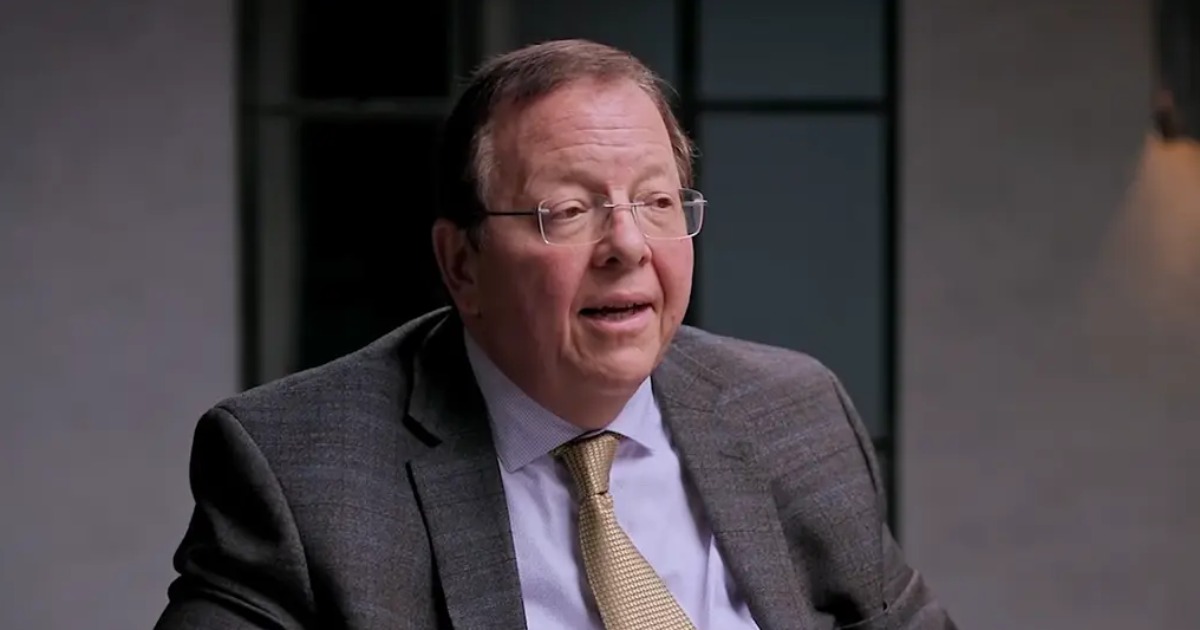
A former White House war advisor has issued an alarming warning about the next eight weeks, as emergency preparedness guidance encourages households to keep essential supplies in case of unexpected disruption.
Robert Pape, an American political scientist who has advised US administrations on national security, believes the period following the November 3 midterm elections could prove particularly dangerous.
Speaking on Steven Bartlett's The Diary of a CEO podcast, Pape outlined several scenarios involving political instability and international conflict that he fears could converge before the beginning of 2027.
His remarks come as Democrats prepare to take control of both chambers of Congress following the midterm elections, with the new Congress scheduled to convene in January.
Although Pape's comments concern potential developments rather than confirmed events, they have renewed attention on the importance of preparing for emergencies.
What did Robert Pape warn could happen in the next eight weeks?
Pape warned that the United States was entering a particularly sensitive period following the midterm elections.
He described an escalating series of risks involving domestic political tensions, the ongoing conflict with Iran and Russia's war in Ukraine.
"We are moving up rungs in escalation where risk is growing," Pape told Bartlett.
He suggested that the weeks ahead could be among the most dangerous since the Iran conflict began.
The political scientist identified three principal areas of concern.
The first involved the transition between the November elections and the seating of the newly elected Congress in January.
Pape expressed concern about the possibility of political unrest during this period, referring to the events of January 6, 2021, as an example of how tensions surrounding political transitions can escalate.
His second concern involved the possibility of further US military action against Iran.
He discussed a potential escalation in American strikes, warning that an intensified campaign could produce further retaliation and prolong the conflict.
The third concerned Russia's actions in Ukraine, particularly the possibility of additional attacks against civilian infrastructure during the winter.
Pape suggested that attacks on electricity infrastructure could leave communities without reliable power for extended periods.
These were scenarios raised by Pape, not confirmed plans or inevitable outcomes.
What items are people being urged to stockpile?
Against the backdrop of concerns about international instability, emergency preparedness organisations have advised households to maintain basic supplies that could help them cope with temporary disruption.
In the UK, the British Red Cross recommends preparing for up to 72 hours without normal access to essential services.
Its recommended emergency supplies include:
The advice is designed to help households manage emergencies such as storms, flooding, power cuts and interruptions to essential services.
It is not a warning that war or widespread disruption is imminent.
The British Red Cross also stresses that households do not need expensive specialist equipment or large quantities of supplies.
Instead, people can check what they already own and gradually build a practical emergency kit.
Why are households advised to keep three days of supplies?
The UK's official emergency preparedness guidance encourages people to be ready for temporary interruptions to electricity, water, transport and communications.
These disruptions can happen for many reasons unrelated to international conflict.
For example, severe weather can cause power cuts, while flooding can interrupt water supplies or prevent people from travelling to shops.
Keeping essential supplies at home can make these situations easier to manage while services are restored.
Government guidance recommends approximately three litres of drinking water per person per day, with additional water needed for cooking and hygiene.
It also encourages households to consider the needs of children, older relatives, pets and anyone who depends on medical equipment.
Importantly, officials recommend sensible preparation rather than panic buying.
Could the Iran war escalate further?
One of Pape's central concerns was the possibility of the conflict involving Iran becoming more prolonged and destructive.
He discussed the risks associated with expanding military operations and targeting additional infrastructure or leadership figures.
In his assessment, an escalation could trigger retaliatory actions and create pressure for further military responses.
Pape described this pattern as an escalation trap, in which attempts to achieve a decisive outcome instead produce additional conflict.
He argued that avoiding further escalation should be a priority while the newly elected Congress prepares to take office.
However, his analysis represents an assessment of potential risks rather than confirmation that a particular military operation will take place.
What did he say about Russia and Ukraine?
Pape also expressed concern about the possibility of Russia intensifying attacks on Ukraine during the winter months.
He suggested that Russian President Vladimir Putin could pursue a more aggressive approach if diplomatic negotiations failed to deliver the territorial outcomes Moscow wanted.
One scenario he raised involved attacks on Ukrainian electricity infrastructure, potentially leaving affected communities without power during cold weather.
Such attacks could have serious humanitarian consequences, particularly for vulnerable residents.
However, the specific developments Pape discussed remain possibilities rather than established future events.
What can people do to prepare without panicking?
Emergency preparedness organisations recommend focusing on realistic household needs rather than attempting to predict major international events.
For most people, that means ensuring they have enough drinking water, food, medication and basic equipment to manage a short interruption to normal services.
It can also be useful to keep phones charged, maintain an accessible list of emergency contacts and understand how to receive official alerts.
Households should review their supplies periodically to replace expired items and ensure batteries and power banks remain usable.
Pape's warning highlights his concerns about a potentially unstable period in international affairs, but it does not establish that a global conflict or domestic emergency will occur.
For the public, the distinction is important: preparing for ordinary emergencies can be sensible regardless of political developments, without assuming that the worst-case scenarios discussed by analysts will become reality.
Sources: UNILAD, November 9, 2026; Robert Pape's appearance on The Diary of a CEO, November 5, 2026; British Red Cross emergency preparedness guidance; UK Government Be Ready campaign.