A family day out at a popular American water park ended in tragedy when a 10-year-old boy died on what was once the world's tallest water slide.
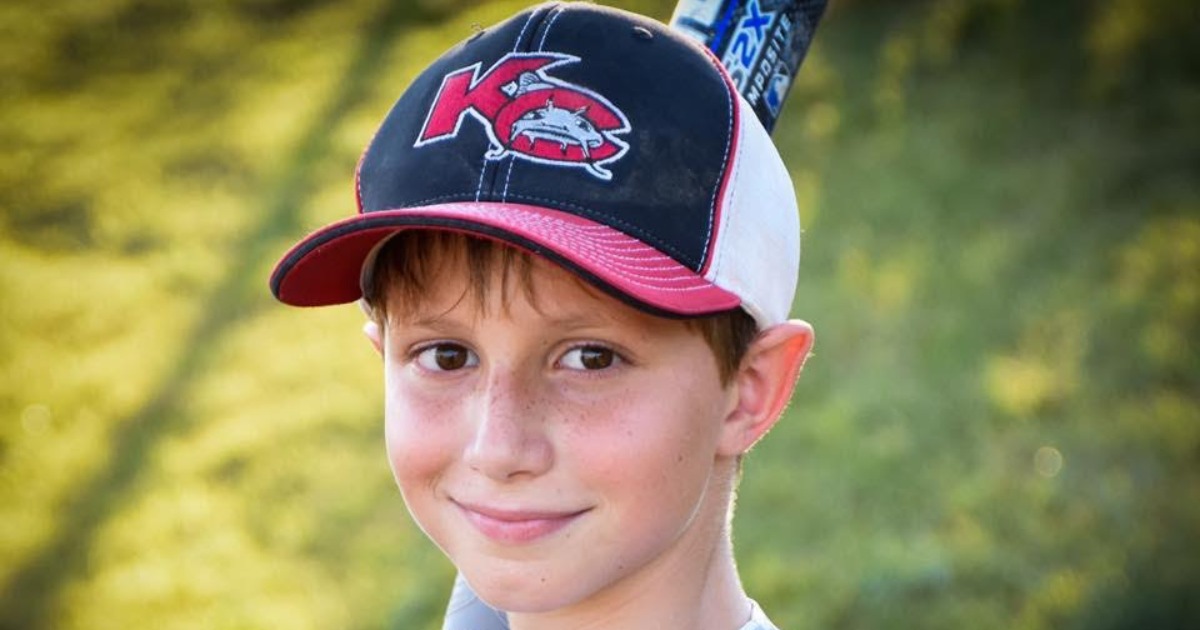
Caleb Schwab was visiting Schlitterbahn Water Park in Kansas City, Kansas, with his family on August 7, 2016, when the devastating incident occurred.
The attraction, known as Verrückt, had attracted international attention for its enormous height and high-speed drops.
But what happened during Caleb's ride would lead to serious questions about the attraction's safety, an investigation into its design and its permanent closure.
Witnesses who were at the park that day later described the heartbreaking scenes, while an investigation uncovered significant concerns about how the slide had been developed and tested.
What happened to Caleb Schwab on the water slide?
Caleb was riding Verrückt, a towering water slide that had been promoted as the tallest in the world.
The attraction carried passengers in multi-person rafts down a steep initial drop before sending them over a second hill and towards the end of the ride.
Riders could reach speeds of approximately 70mph during the descent.
On August 7, Caleb was riding alongside two other passengers when their raft became airborne as it travelled over part of the slide.
Caleb struck a metal support hoop that held protective netting above the attraction.
The impact caused catastrophic injuries, including decapitation, and he died at the scene.
The two other passengers were also injured, suffering a broken jaw and a facial fracture.
Caleb's older brother Nathan had already completed the ride and was waiting near the bottom when the tragedy occurred.
According to accounts of the incident, Nathan began shouting that his brother had flown from the attraction.
Other visitors reportedly attempted to prevent Caleb's parents from approaching the scene because of what had happened.
What did witnesses say about the tragedy?
Several people who were at Schlitterbahn Water Park that day later spoke about what they had witnessed.
Jess Sanford, who had ridden Verrückt earlier, told CNN that she became aware something was wrong after hearing an unusual sound.
She recalled turning towards the attraction and seeing the aftermath of the incident.
Sanford said she did not initially understand what had happened, but quickly realised that the situation was extremely serious.
She also recalled that those nearby appeared to recognise the severity of Caleb's injuries.
Another visitor, Melanie Gocke, raised concerns about the restraints used on the ride.
Gocke said she had ridden Verrückt earlier that day and found that the Velcro restraints did not feel particularly secure.
According to her account, she had been able to move within the restraints more easily than she expected.
Sanford similarly questioned whether the restraint system was appropriate for an attraction of such extreme height and speed.
The witnesses' comments became part of the wider public discussion about the safety measures in place on the ride.
However, their observations alone do not establish every technical factor that contributed to the accident.
What was Verrückt and why was it considered so extreme?
Verrückt opened at Schlitterbahn Water Park in Kansas City in 2014.
Its name comes from the German word meaning "crazy" or "insane", reflecting the attraction's unusual design.
The slide stood approximately 168 feet tall, making it taller than many major landmarks and earning it recognition as the world's tallest water slide.
Unlike a conventional water slide, Verrückt used multi-person rafts that carried riders down an almost vertical initial drop.
After reaching the bottom, the raft travelled upwards over a second hill before descending again towards the finish.
Protective netting was installed above sections of the slide, supported by metal hoops.
The netting was intended to prevent riders from leaving the ride's designated path.
However, the design of the second hill created serious safety concerns that became central to the investigation following Caleb's death.
What did investigators discover about the water slide?
Investigations following Caleb's death identified significant concerns about the design and testing of Verrückt.
According to reporting about the investigation, the attraction had not undergone the level of engineering analysis and testing expected for such an extreme ride.
Its unusual layout meant that rafts could behave unpredictably when travelling over the second hill.
Investigators examined whether the forces acting on the rafts could cause them to become airborne.
The attraction's restraint system and overhead support structures also came under scrutiny.
A documentary examining the tragedy described how developers had used sandbags during testing to simulate the weight of passengers.
Those tests reportedly revealed difficulties with keeping the rafts consistently on the intended path.
The investigation raised broader questions about how a record-breaking attraction had been approved for public use despite concerns about its design.
Why did the raft become airborne?
The available accounts indicate that Caleb's raft became airborne while travelling over the second hill.
On a water slide of this type, the interaction between speed, raft weight, passenger positioning and the shape of the track can affect how the raft moves.
If the raft loses contact with the slide surface, passengers may be exposed to hazards that would not exist during normal operation.
In Caleb's case, the raft's movement brought him into contact with an overhead metal support.
The incident demonstrated the serious consequences that can arise when an attraction's physical design and restraint systems do not adequately account for the forces experienced during a ride.
However, the precise contribution of individual design and operational factors should be distinguished from broader descriptions of the accident.
What happened to the water slide after Caleb's death?
Verrückt was closed immediately following the tragedy and never reopened to the public.
The incident led to investigations and legal proceedings concerning the attraction and those involved in its development and operation.
The slide was eventually dismantled.
Schlitterbahn Water Park continued operating for a period after the tragedy, but it did not reopen for the 2019 season.
The former water park site was subsequently cleared, bringing an end to the attraction that had once been promoted as one of the most extraordinary water slides in the world.
Although Verrückt had been designed to deliver an unforgettable thrill, its legacy became inseparable from the death of Caleb Schwab.
How did the tragedy affect water park safety discussions?
The death of Caleb Schwab drew national attention to the safety of extreme amusement park attractions.
It prompted questions about engineering standards, independent inspections, passenger restraints and the procedures used to test newly designed rides.
Unlike many traditional amusement park rides, water slides can involve complex interactions between water flow, gravity, passenger weight and the movement of rafts.
Those factors make careful design and testing particularly important for attractions involving high speeds or unusual layouts.
The Verrückt tragedy became a prominent example of why record-breaking attractions must be assessed for safety rather than judged solely by their height, speed or ability to attract visitors.
Remembering Caleb Schwab
Caleb was just 10 years old when he died during what should have been an enjoyable family outing.
His death devastated his family and shocked people across the United States.
For those who witnessed the tragedy, the events of August 7, 2016, left memories that continued to be discussed years later.
The accounts shared by visitors also offered a glimpse into the confusion and heartbreak experienced in the immediate aftermath.
Nearly a decade later, Caleb's story remains a reminder of the importance of rigorous safety standards and independent scrutiny when developing attractions intended for the public.
While Verrückt and the water park that housed it are now gone, the circumstances surrounding the tragedy continue to be examined in discussions about amusement ride safety.