Millions of Americans have been left wondering what will happen to Donald Trump's proposed $5,000 payments following the November 3 midterm elections.
The president announced the idea in September, promising what he called a "Trump Dividend" for adult American citizens.
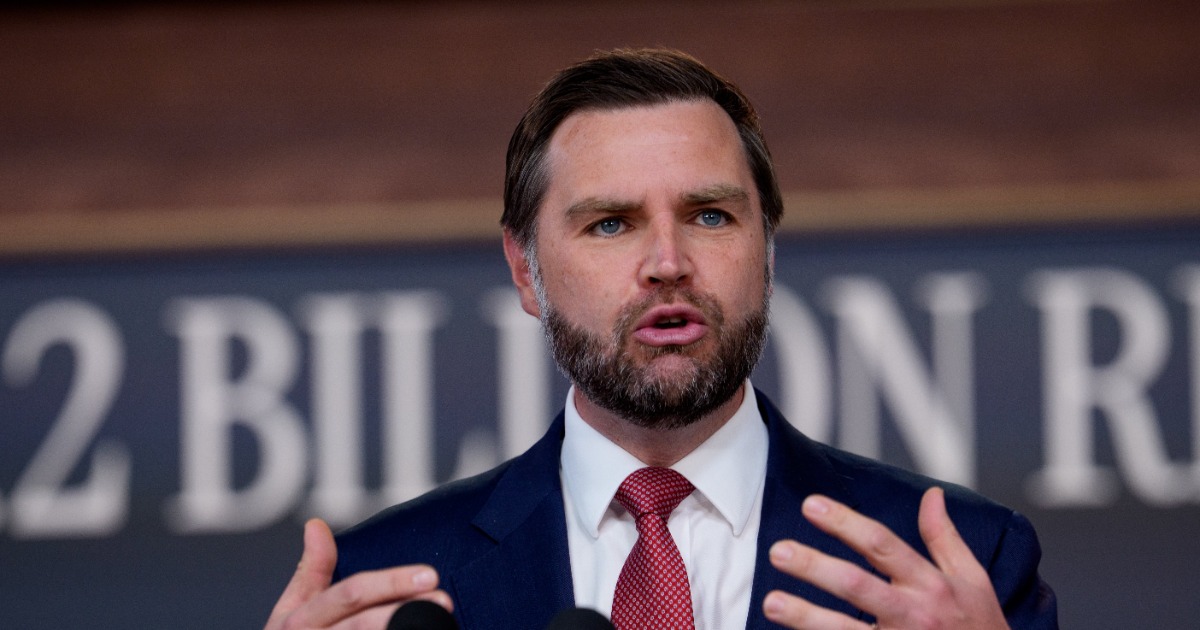
Vice President JD Vance subsequently offered further details about how the administration believed the payments could be funded.
However, the results of the midterm elections have raised serious questions about whether the proposal will move forward.
Here is what Americans need to know about the promise, Vance's comments and the next steps.
Will Americans still receive the $5,000 checks?
As of November 9, 2026, there is no approved $5,000 federal payment programme, and no payment date has been announced.
More importantly, Trump's original promise was explicitly conditional on Republicans retaining control of both the House of Representatives and the Senate in the November 3 elections.
That condition was not met.
Democrats secured control of both chambers, meaning the political circumstances Trump specified for issuing the payments no longer exist.
According to reporting by USA Today published on November 4, the election outcome has made the proposed payments significantly less likely to materialise.
However, the administration has not formally announced a replacement payment plan or a new route for delivering the promised $5,000.
That means Americans should not expect a cheque to arrive under the original proposal.
What did JD Vance say about the $5,000 payments?
Following Trump's September announcement, Vice President JD Vance discussed how the administration might finance the proposed payments.
Speaking on Fox News, Vance suggested that revenue generated by tariffs on imported goods could help fund the $5,000 dividends.
The idea was linked to Trump's argument that his administration's trade policies were generating additional revenue that could be returned to American citizens.
However, Vance's comments did not amount to confirmation that the payments had been approved or that the Treasury was preparing to distribute them.
There was also a substantial difference between the estimated cost of the proposal and the tariff revenue available to fund it.
Reuters reported that distributing $5,000 to approximately 240 million adult American citizens would cost around $1.2 trillion.
By comparison, the Congressional Budget Office estimated that tariff revenue for the fiscal year ending September 2026 was approximately $167 billion.
That left major questions about how the government could finance the payments without increasing borrowing or finding other sources of funding.
Vance's comments therefore offered a possible funding approach rather than a final decision.
What exactly did Donald Trump promise?
Trump first announced the $5,000 proposal during a Republican National Committee convention in Dallas on September 9.
He said he wanted to issue a payment to every adult American citizen if Republicans retained control of Congress in the midterm elections.
The president compared the proposal to a successful company distributing profits to its shareholders.
He also suggested that the money should be spent within the United States.
The White House subsequently promoted the plan, describing it as a way for Americans to benefit from the administration's economic policies.
However, the proposal did not establish a payment schedule, application process or final eligibility rules.
What happens next after the midterm elections?
There are several obstacles that would need to be addressed before any version of the $5,000 proposal could become a reality.
First, the administration would need to decide whether it still intends to pursue the payments despite the election result.
Trump's original pledge was tied to Republican victories in both chambers, so continuing the proposal would require a change from the conditions he previously announced.
Second, the government would need to identify a legally available source of funding.
Third, Congress would generally need to authorise the spending through legislation or another existing lawful mechanism.
Although Trump previously suggested he could deliver the payments without congressional approval, Reuters reported that Congress holds constitutional authority over federal spending.
With Democrats preparing to control both chambers when the new Congress convenes in January 2027, securing approval could prove politically difficult.
There is also the possibility of action during the outgoing Congress's remaining session, but no approved legislation establishing the $5,000 payments has been identified in the reporting reviewed.
Could the checks still happen in 2027?
A future payment programme remains theoretically possible if the administration proposes a new plan and obtains the necessary legal and financial approvals.
However, that would not mean the original promise had automatically survived the election.
It would require fresh decisions about eligibility, funding and congressional authorisation.
As things stand, there is no confirmed timetable for introducing such legislation and no official indication of when Americans might receive any money.
Consequently, there is no basis for treating the proposed $5,000 as an expected payment in 2027.
Who would have qualified for the payments?
Trump's original proposal was aimed at adult US citizens.
Unlike some earlier stimulus programmes, the initial announcement did not provide detailed income thresholds or explain whether higher earners would be excluded.
It also did not clarify how payments would be distributed, whether by direct deposit, mailed cheque or another method.
Because the programme was never formally established, no final eligibility criteria have been adopted.
Has the US government issued similar payments before?
Yes. The federal government distributed several rounds of direct economic impact payments during the COVID-19 pandemic.
Those payments were authorised through legislation passed by Congress and were subject to specific eligibility requirements.
Trump has also previously proposed other forms of direct payments, including a $2,000 tariff dividend and a separate idea involving savings generated through government efficiency measures.
Those proposals did not result in the broad payments originally discussed.
The existence of previous stimulus programmes therefore does not mean the latest $5,000 proposal has been authorised.
Should Americans apply for the $5,000 checks?
No official application process has been announced.
Americans should be cautious of websites, social media posts or messages claiming that they can register immediately for a $5,000 Trump Dividend.
There is currently no confirmed federal programme under which people can submit personal information to claim the proposed payment.
Any future legitimate programme would be communicated through official government channels, including the Treasury Department or Internal Revenue Service where applicable.
What is the latest position on Trump's $5,000 promise?
Trump's September announcement generated significant interest, particularly among Americans facing rising household expenses.
JD Vance subsequently suggested that tariff revenue could help pay for the proposed dividends, but that explanation did not resolve the programme's funding difficulties.
The November 3 election result has now created an additional obstacle because Republicans did not retain control of both chambers of Congress, as Trump had required.
The bottom line is that the $5,000 checks have not been approved, no payments are scheduled, and the original conditional promise is now unlikely to proceed in its announced form.
Unless the White House announces a revised proposal and the necessary approvals are secured, Americans should not make financial plans around receiving the money.
Sources: Reuters, September 10–11, 2026; CBS News, September 10, 2026; White House statement, September 10, 2026; Axios, September 11, 2026; USA Today reporting, November 4, 2026.