A detailed aviation analysis has explored how an exceptionally experienced pilot might have approached the final flight of the Learjet that crashed in Florida, killing all nine people on board.
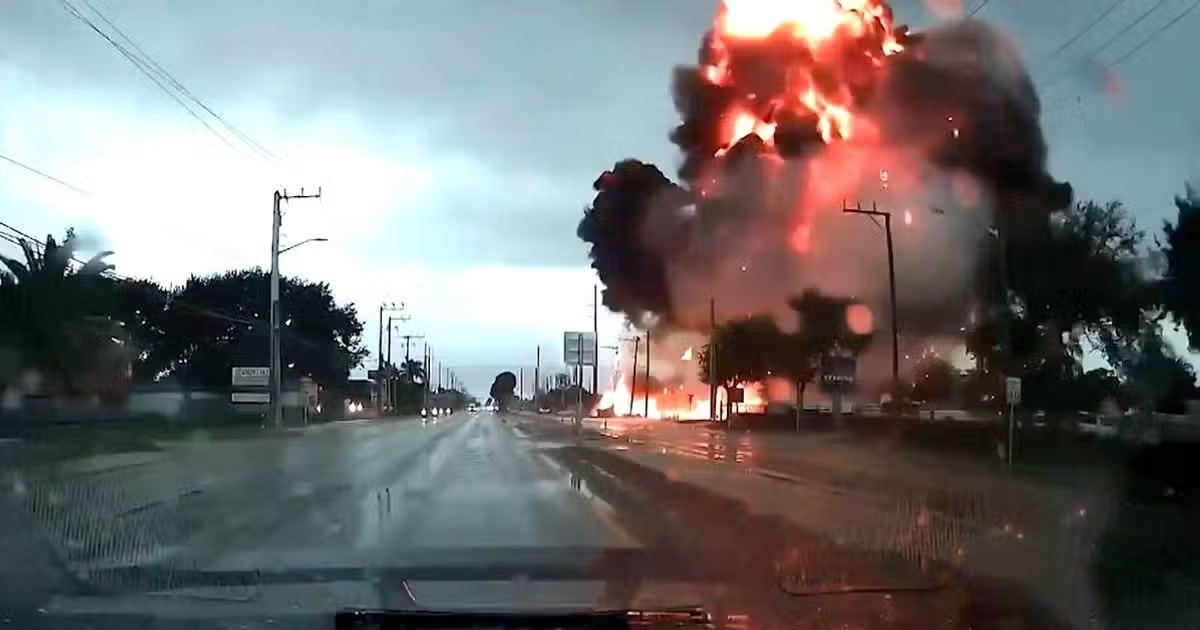
The Learjet 60 was travelling from Austin, Texas, to North Eleuthera in the Bahamas on Sunday, November 1, 2026, when it experienced a catastrophic emergency.
The aircraft reportedly descended from approximately 35,000 feet in just 77 seconds before crashing near Military Trail in Greenacres, Florida.
Among those killed were Captain Jeffrey Gregory, First Officer Nathalia Gadelha Filgueiras and seven passengers, including two young children.
As investigators continue examining the wreckage, a YouTube aviation analysis has attracted attention for exploring how a highly experienced pilot might have responded to the conditions encountered during the flight.
The video uses a fictional captain with decades of corporate aviation experience to examine potential decisions that could theoretically have changed the outcome.
However, the analysis is not an official reconstruction of the crash, and the National Transportation Safety Board (NTSB) has not established its cause.
What would an experienced captain have done differently?
The video introduces a hypothetical pilot named Captain Hail, who has 30 years of corporate jet experience and specialised training in recovering aircraft from dangerous flight conditions.
Unlike the real crew, the fictional captain has the benefit of knowing how the flight ultimately ended.
That distinction is important because the analysis examines decisions with hindsight rather than demonstrating that the actual pilots should have anticipated the disaster.
According to the simulation, the most important potential difference would have been avoiding the hazardous weather altogether, beginning with decisions made before takeoff.
The analysis describes weather advisories indicating that thunderstorms over parts of South Florida could reach altitudes exceeding 45,000 feet.
Such conditions could create serious challenges for a business jet attempting to fly above or around the storm system.
In the hypothetical scenario, Captain Hail would have considered delaying departure, carrying additional fuel or planning a substantial diversion around the affected region.
The simulation suggests possible routes around the weather rather than attempting to pass through an uncertain gap between storm cells.
These choices could have reduced exposure to hazardous conditions, although the video cannot establish whether any particular alternative would have prevented the real accident.
The reported air traffic control warning
One of the most closely examined parts of the flight involves communications between the crew and air traffic control.
According to previously reported audio, controllers warned the Learjet pilots about significant precipitation along their intended route towards the Bahamas.
The controller reportedly described the turn towards Freeport as looking particularly concerning, with moderate to extreme precipitation ahead.
The analysis suggests that the fictional captain would have treated this information as a reason to reassess the planned route and consider avoiding the wider area of severe weather.
The Federal Aviation Administration's Aeronautical Information Manual contains guidance about avoiding thunderstorms, including the risks associated with attempting to navigate through areas of extensive convective activity.
However, the reported exchange does not establish that the actual crew ignored a mandatory instruction.
Controllers can provide pilots with weather information, but flight crews must make operational decisions based on the aircraft's capabilities, available information and prevailing conditions.
Why the simulation questions the aircraft's descent
Another major focus of the analysis concerns the Learjet's altitude.
According to the reported flight sequence, the aircraft descended from approximately 41,000 feet to 35,000 feet before the emergency.
Retired airline captain John Cox questioned that decision in comments reported by the Associated Press.
He explained that remaining at a higher altitude can sometimes provide pilots with better visibility of thunderstorms and their surrounding cloud formations.
In the video, the fictional captain considers whether remaining higher would have provided a safer position from which to assess the weather.
The simulation suggests that, under appropriate circumstances, a pilot could advise air traffic control that an assigned descent could not safely be accepted.
However, maintaining a higher altitude is not automatically safer in every situation.
Aircraft performance limitations, turbulence, icing conditions and the vertical extent of thunderstorms must all be considered.
The available information does not establish whether remaining at 41,000 feet would have prevented the crash.
How icing and turbulence could complicate the situation
As the flight continued, the crew reportedly encountered icing and turbulence.
First Officer Filgueiras was reported to have informed air traffic control that the aircraft was experiencing manageable ice accumulation and moderate turbulence.
The crew also reportedly requested a climb to 37,000 feet.
In the simulation, the fictional captain considers the risks of attempting to climb while the aircraft may be experiencing reduced aerodynamic performance.
Ice accumulation can alter the shape of an aircraft's wings, increasing drag and reducing lift.
At high altitudes, aircraft can also operate within a relatively narrow margin between the speed required to avoid a stall and the maximum permitted operating speed.
This situation is sometimes described as coffin corner.
The analysis suggests that maintaining appropriate airspeed and avoiding unnecessary demands on the aircraft could be particularly important under such conditions.
It also examines how an autopilot attempting to maintain altitude could complicate matters if the aircraft were approaching an aerodynamic stall.
These are general aviation safety considerations rather than confirmed findings about what happened aboard the Learjet.
What would the hypothetical pilot do during the final dive?
The most dramatic portion of the video examines how a pilot might respond if an aircraft entered a steep, uncontrolled descent.
The analysis discusses principles taught during aircraft upset prevention and recovery training.
Such training focuses on recognising an unusual aircraft attitude, understanding whether the aircraft is stalled or overspeeding, and applying the appropriate recovery procedures.
Depending on the circumstances and aircraft-specific guidance, recovery can involve disconnecting the autopilot, reducing an excessive angle of attack, controlling the aircraft's bank and managing engine thrust.
The video also discusses the dangers of abrupt control inputs during a high-speed descent.
Excessive aerodynamic loads can damage an aircraft's structure, particularly if flight-control surfaces are subjected to forces beyond their design limitations.
However, there is no single recovery sequence that is appropriate for every emergency, and the correct response depends on the aircraft's actual condition.
Crucially, the analysis does not demonstrate that the Learjet could still have been recovered once its final descent began.
Investigators discovered aircraft components separated before impact
The aviation analysis follows an important discovery made during the official investigation.
At a November 3 briefing, NTSB member Tom Chapman confirmed that substantial portions of the aircraft's left elevator had been located away from the main crash site.
The components were reportedly found in three pieces between approximately 1.3 and 3.8 miles from the impact location.
The elevator is a control surface at the rear of the aircraft that helps regulate its pitch, allowing the nose to move upwards or downwards.
Its separation before ground impact is an important finding because the elevator plays a critical role in controlling the aircraft.
Some aviation commentators have suggested that extreme aerodynamic forces during the descent could potentially explain the damage.
However, that remains a hypothesis rather than an established conclusion.
Investigators will need to examine the recovered components to determine when and why the separation occurred.
What has the NTSB said about the investigation?
In an update issued on November 9, the NTSB confirmed that its investigators had completed on-scene activities at several locations affected by the crash.
These included the Green Acres Mobile Home Community, Reading Truck, Silver Oaks Plaza, Value Store It Self Storage and John I. Leonard High School.
Excavation work at the main impact site was continuing.
The agency also confirmed that investigators had recovered components from both wings, both engines, the flight deck and several flight-control surfaces.
Some of the wreckage has been transported to NTSB laboratories in Washington, DC, for further examination.
The agency has urged anyone who discovers possible aircraft debris not to move or disturb it, but to contact investigators.
No final determination has been made about whether weather, aircraft systems, structural failure, operational decisions or a combination of factors caused the crash.
Could the disaster have been prevented?
The video's central argument is that avoiding dangerous conditions early can sometimes be more effective than attempting to recover from an emergency once it has developed.
Its fictional captain identifies several points where different choices might theoretically have reduced the aircraft's exposure to risk.
However, the simulation relies on hindsight and does not reproduce every factor confronting the real crew.
It also cannot establish that a different decision would necessarily have saved the aircraft.
Investigators are still examining the available evidence, including reported communications, weather conditions, flight information and recovered wreckage.
The NTSB's eventual findings will be essential in determining what happened and whether any safety lessons can be drawn from the tragedy.
For now, the video offers an educational examination of aviation decision-making rather than a definitive explanation of the crash.
Sources: VT, November 9, 2026; aviation analysis described by VT; NTSB investigative briefings and updates as reported by VT. The simulation features a fictional pilot and does not represent official NTSB findings.