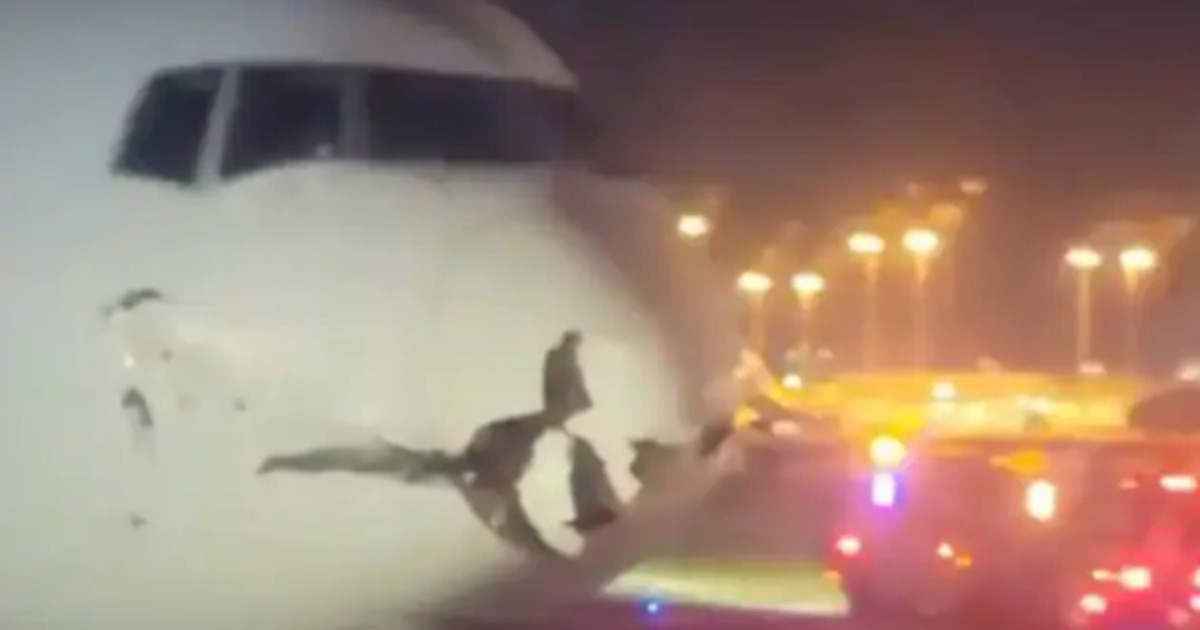
Newly released emergency calls have revealed the frightening scenes that unfolded after a private jet crashed into a residential area of Florida, killing all nine people on board.
The Learjet 60 came down in Greenacres, Palm Beach County, on Sunday, November 1, 2026, after experiencing serious difficulties during a flight from Texas to the Bahamas.
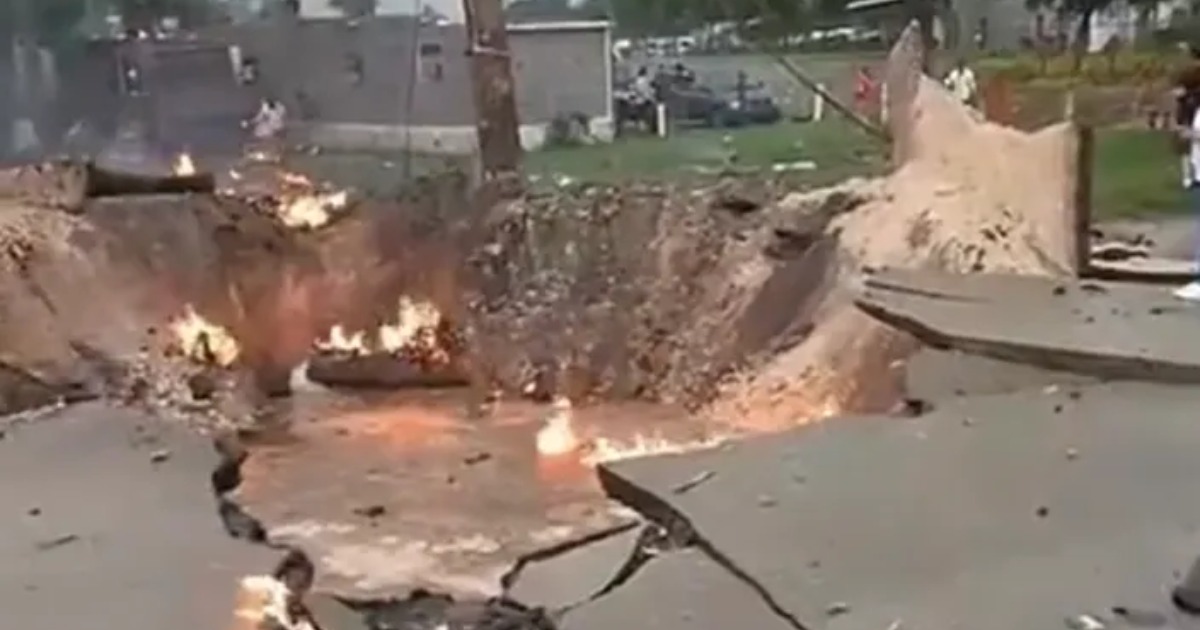
The aircraft struck a roadway near homes, leaving a large crater and sending thick smoke into the sky.
Now, recordings obtained by NBC6 have revealed what nearby residents told emergency dispatchers as they desperately tried to understand what had happened.
Federal investigators have also released further information about the aircraft's final moments, including the crew's communications with air traffic control.
What did the newly released 911 audio reveal?
The emergency recordings, released by authorities and obtained by NBC6 on Friday, November 6, capture the confusion experienced by residents immediately after the aircraft crashed.
One caller told the dispatcher: "I think an airplane, a rocket, something fell from the sky."
The caller explained that the impact had been powerful enough to shake their home.
"We felt our house shake, and then we heard an explosion when we ran outside," they continued.
Although the resident had not seen the aircraft itself falling, they described seeing sparks and smoke outside.
Another caller reported an explosion near a community of mobile homes.
"It is a really big explosion," the person told emergency services.
The recordings provide a glimpse of the fear and uncertainty in the neighborhood as residents contacted authorities for help.
Some initially struggled to identify what had caused the explosion, while emergency crews rushed to the scene.
What happened to the Learjet before it crashed?
According to information released by the National Transportation Safety Board (NTSB), the Learjet 60 departed Austin-Bergstrom International Airport in Texas at approximately 10:37 a.m. Eastern Time.
The aircraft was travelling to North Eleuthera Airport in the Bahamas, carrying seven passengers and two crew members.
At approximately 12:47 p.m., while flying at 35,000 feet, the crew reported light clear icing and moderate turbulence.
The aircraft was experiencing altitude fluctuations of approximately 700 feet.
Investigators said the outside temperature was approximately minus 47 degrees Celsius, equivalent to minus 53 degrees Fahrenheit.
The pilots subsequently reported precipitation and requested permission to climb to 37,000 feet.
Air traffic control approved the request.
However, less than 30 seconds later, the aircraft began descending rapidly.
What followed was a desperate emergency transmission from the cockpit.
What did the co-pilot say in the final emergency call?
Twenty-year-old co-pilot Nathalia Gadelha Filgueiras was heard communicating with air traffic control during the aircraft's final moments.
As the situation deteriorated, she declared an emergency.
"Declare an emergency 722-Bravo-Delta. We are in an overspeed condition descending 20,000 feet per minute!" she radioed.
The transmission indicated that the aircraft was descending at an extraordinary rate while exceeding its intended operating speed.
Earlier communications had included reports of icing and turbulence, although investigators have not determined whether those conditions caused the crash.
The Learjet subsequently lost radar and radio contact before striking the ground at approximately 12:50 p.m.
All nine people aboard were killed.
Who were the nine victims of the Florida plane crash?
The victims included the aircraft's two crew members, pilot Jeff Gregory, 55, and co-pilot Nathalia Gadelha Filgueiras, 20.
Filgueiras had developed a passion for aviation at a young age and had reportedly obtained her pilot's licence before her driving licence.
Her father, Allan Filgueiras, has since spoken publicly about his daughter's dedication to flying and the devastating impact of losing her.
Among the passengers were technology entrepreneur Adam Robinson, his wife Helen Sharp and their two young children.
The remaining passengers included friends of the family and the children's nanny.
The group had been travelling to the Bahamas when the tragedy occurred.
Family members and friends have since paid tribute to those who died, describing the profound loss left by the crash.
How badly was the surrounding neighborhood affected?
Although the crash killed everyone aboard the aircraft, the consequences extended well beyond those travelling on the plane.
The Learjet struck a roadway close to residential properties, leaving a substantial crater and scattering wreckage across the surrounding area.
Emergency responders reported significant damage near the impact site, while thick black smoke rose above nearby homes.
Approximately 600 residents were displaced, with people from almost 80 mobile homes requiring temporary accommodation.
A shelter was established to assist affected residents.
One person on the ground reportedly sustained a leg injury while leaving the area in a vehicle.
Florida Governor Ron DeSantis described the crash as "cataclysmic" and compared the aircraft's descent to a missile.
The disaster also prompted road closures and an extensive emergency response.
What new evidence have investigators discovered?
The NTSB is continuing to examine the wreckage as investigators attempt to reconstruct the aircraft's final minutes.
One significant development involves evidence that portions of the aircraft may have separated before it struck the ground.
Investigators have recovered pieces of the Learjet's left elevator, a flight-control surface located on the tail, at locations several miles from the main impact site.
The discovery indicates that some aircraft components separated during flight.
However, investigators have not established why the separation occurred or whether it caused the aircraft to lose control.
The NTSB has also been examining the aircraft's maintenance records and attempting to establish the status of its cockpit voice recorder.
Recovery efforts have been complicated by the depth of the impact crater and water accumulating inside it.
In an update issued on November 5, the NTSB confirmed that excavation work had begun and that investigators had recovered part of one engine.
Debris has also been discovered on the roofs of nearby homes and buildings.
Officials have urged residents not to disturb any aircraft wreckage they discover, explaining that even small fragments could provide important evidence.
What caused the Florida Learjet crash?
The official cause of the crash has not yet been determined.
Although the pilots reported icing, turbulence and precipitation before the aircraft entered its rapid descent, those observations do not establish what caused the accident.
The NTSB is examining multiple areas, including weather conditions, aircraft systems, maintenance history and the possibility of an in-flight structural failure.
Investigators have emphasised that it would be premature to draw conclusions while evidence is still being recovered and analysed.
The agency's preliminary report is expected approximately 30 days after the accident.
That report will outline established factual information but is not expected to identify a final probable cause.
A more detailed investigation will follow, with findings dependent on the available physical evidence and recorded information.
What happens next in the investigation?
Federal investigators will continue collecting and examining aircraft components recovered from the crash site and surrounding area.
They will also analyse available flight data, air traffic control communications, maintenance documentation and weather information.
For the families of the nine victims, the investigation represents an important step towards understanding what happened during the aircraft's final minutes.
Meanwhile, residents of Greenacres are continuing to deal with the aftermath of a disaster that unfolded just yards from their homes.
The newly released 911 recordings provide a disturbing account of the moments immediately following the impact, while the NTSB's latest findings underline how much remains to be established.
For now, the cause remains under investigation.
Sources: NBC6 South Florida, November 6–8, 2026; CBS Miami, November 6, 2026; National Transportation Safety Board, investigation ERA27MA026, November 5 update; Associated Press; UNILAD, November 8, 2026.