President Donald Trump has opened up about his religious beliefs and what he thinks might happen after his death, admitting there is something about himself that could complicate his hopes of reaching heaven.
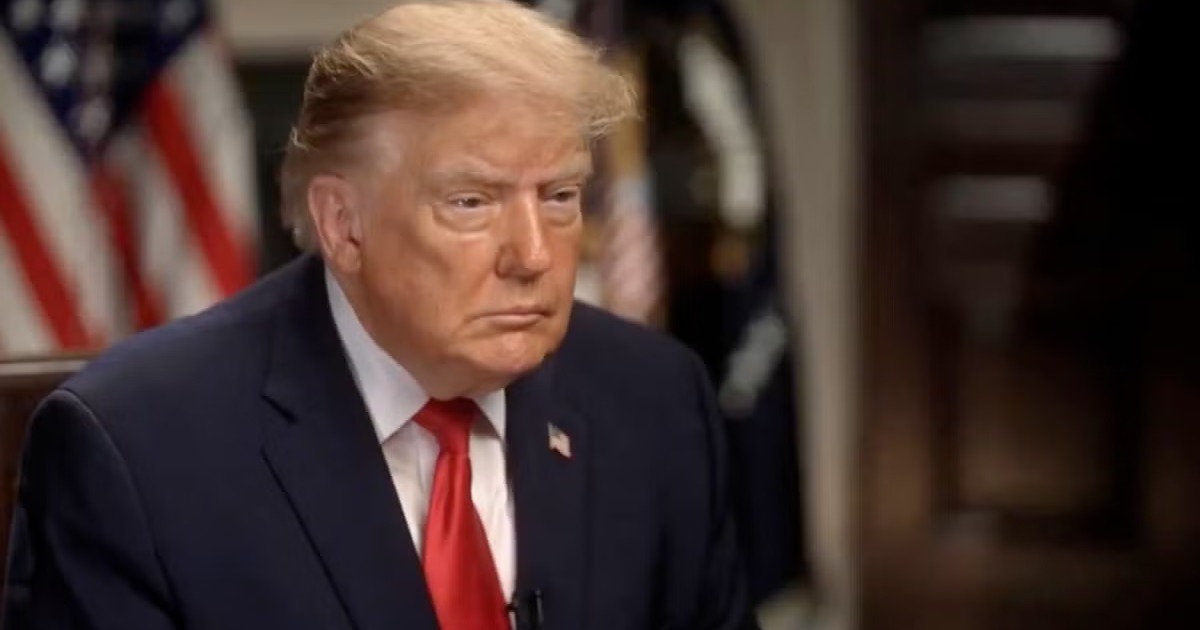
The 80-year-old president made the comments during an interview with CBS News' 60 Minutes, broadcast on Sunday, November 8.
Speaking to correspondent Ross Douthat at the White House, Trump discussed several major issues facing his administration, including the Republican Party's recent midterm election losses, immigration and international conflicts.
However, towards the end of their conversation, Douthat shifted the discussion away from politics and asked the president to reflect on his own mortality.
The exchange became particularly personal when Trump was asked whether he could overcome a longstanding grievance if doing so were necessary to enter heaven.
Why does Donald Trump think he might not get into heaven?
During the interview, Trump acknowledged that he finds it difficult to forgive some of his political opponents, even when considering the religious importance of forgiveness.
Douthat asked the president to imagine arriving in the afterlife and being told that he needed to forgive people he had previously criticised.
The interviewer specifically mentioned former FBI director James Comey and former House Speaker Nancy Pelosi.
Trump was asked whether he could find it within himself to forgive those individuals if doing so were necessary to enter paradise.
The president admitted that he did not believe he could genuinely forgive certain political adversaries, explaining that his feelings towards them remained deeply negative.
Rather than offering an answer he thought would sound more acceptable, Trump insisted that he wanted to be truthful about his feelings.
He said some of his political opponents had treated him unfairly and argued that his personal grievances were difficult to put aside.
His remarks were particularly striking because the question explicitly connected forgiveness with his hopes for eternal life.
What exactly did Trump say about heaven and forgiveness?
The conversation initially began when Douthat asked Trump what he believed would happen after his death.
Trump first responded by expressing hope that people would remember him after he was gone.
When the interviewer clarified that he was asking about the afterlife rather than the president's legacy, Trump explained that his religious beliefs gave him hope of reaching heaven.
He also acknowledged that he did not want to end up in hell.
Douthat then raised the Christian teaching about forgiving one's enemies and asked whether Trump could extend that forgiveness to political figures he strongly disliked.
The president responded that pretending to forgive people he still resented would be dishonest.
When the interviewer pressed him for a direct answer, Trump replied: "The answer is no. I want to be honest, no."
He went on to explain that he believed some of his opponents had behaved badly towards him and the country.
Despite being challenged again, the president maintained that he could not simply change his feelings for the sake of providing a more reassuring response.
He ultimately acknowledged that his resentment towards certain people might remain with him permanently.
Why did the interviewer ask Trump about forgiving his enemies?
Douthat's question was partly inspired by remarks Trump made at the memorial service for conservative activist Charlie Kirk in September 2025.
During that event, Kirk's widow, Erika Kirk, spoke about the importance of forgiveness following her husband's death.
Trump subsequently made contrasting remarks about how he viewed his own political opponents.
During the 60 Minutes interview, Douthat revisited that moment and asked whether the president's position had changed.
He also raised the religious significance of forgiveness, particularly within Christian teachings about salvation and reconciliation.
The interviewer suggested that Trump had enjoyed an extraordinary life and questioned whether he could find a way to forgive those he considered enemies.
Trump maintained that his response reflected his genuine feelings rather than an attempt to offer a politically convenient answer.
It is important to note that the exchange involved a hypothetical religious scenario posed by the interviewer, not a formal theological assessment of whether Trump would enter heaven.
What does Christianity teach about forgiveness?
Forgiveness is a central theme in Christian teaching, appearing throughout the New Testament.
Jesus instructed his followers to love their enemies and pray for those who persecute them, while the Lord's Prayer connects divine forgiveness with the forgiveness people extend to others.
However, Christian traditions differ in how they understand salvation, repentance, grace and the relationship between faith and personal conduct.
Some denominations place particular emphasis on the importance of forgiving others, while also teaching that salvation ultimately depends on God's grace.
Consequently, Trump's comments cannot establish whether he would or would not enter heaven according to any particular religious tradition.
Instead, the interview highlighted a personal tension between the president's stated religious beliefs and his feelings towards certain political opponents.
What else did Trump discuss during the 60 Minutes interview?
The conversation took place just days after the November 3 midterm elections, in which Democrats secured control of both the House of Representatives and the Senate.
Trump was asked about the Republican Party's losses and whether his administration's policies had contributed to the result.
The president suggested that turnout and dissatisfaction with individual Republican candidates had played a role.
He also discussed the ongoing conflict involving Iran, economic concerns and the administration's approach to immigration enforcement.
During the immigration discussion, Trump acknowledged that aspects of the government's deportation efforts had been too harsh.
The president also addressed questions about his political future and the remaining years of his second term.
However, it was the final discussion about mortality, religion and forgiveness that produced one of the interview's most personal exchanges.
Has Donald Trump spoken about going to heaven before?
Trump has previously made comments about heaven, salvation and the possibility of receiving a place in the afterlife.
During public appearances, he has sometimes discussed the subject with humour, while also referring to his religious beliefs.
His comments have attracted attention because they offer a different perspective from his usual discussions about political opponents, elections and government policy.
The November 8 interview was notable because Douthat repeatedly asked the president to consider how his personal feelings might relate to Christian teachings.
Rather than avoiding the question, Trump acknowledged that there were people he still struggled to forgive.
His response also suggested that he was unwilling to promise a change of heart simply because it might be viewed favourably.
What did Trump's comments reveal?
The interview offered an unusually direct discussion of how the president views forgiveness and his own mortality.
Trump expressed hope that his religious beliefs would lead him to heaven, but acknowledged that his feelings towards certain political opponents remained unresolved.
He did not claim to know with certainty what would happen after his death, nor did he suggest that his eternal fate had already been decided.
Instead, he responded to a hypothetical question about whether he could forgive his enemies if that were required to enter paradise.
The exchange illustrated the difference between expressing a religious belief and confronting the personal challenges that belief might present.
Ultimately, Trump's remarks were an admission about his own feelings, rather than a definitive statement about his spiritual future.
Source: CBS News, 60 Minutes interview with President Donald Trump, broadcast November 8, 2026.