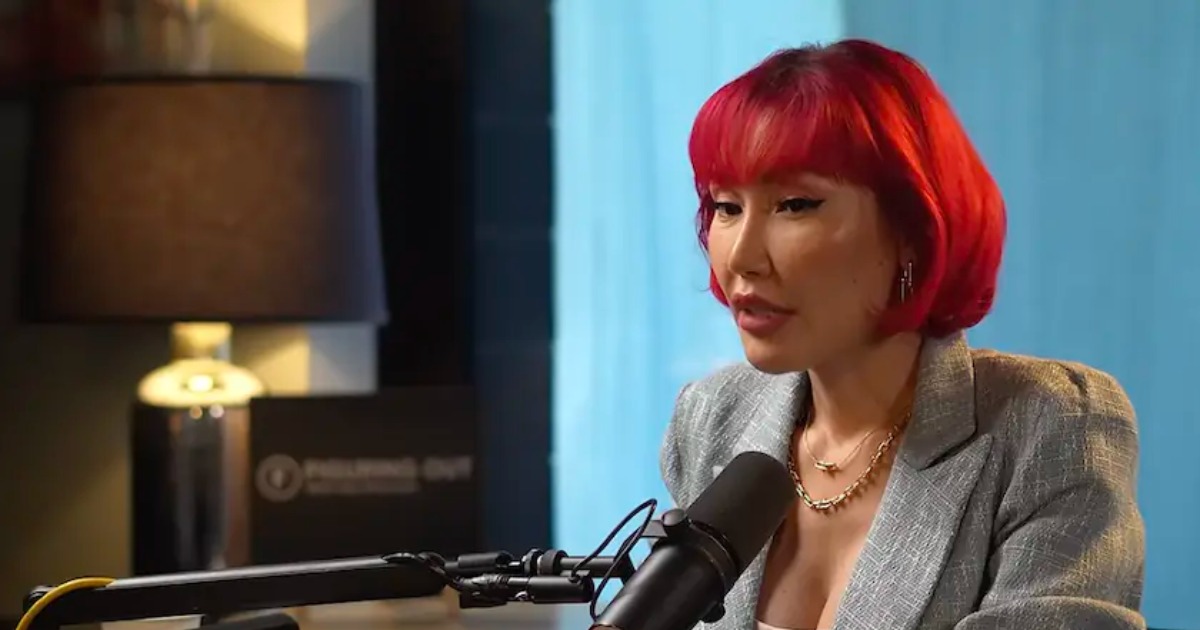
A woman has opened up about losing a friendship after revealing that she identifies as abrosexual, a sexuality that many people may be unfamiliar with.
Emma Flint said she had hoped to receive support when she shared her identity with someone she trusted, but the conversation took an unexpected turn.
Her experience has drawn attention to what the term actually means, how it differs from other sexual orientations and why some people use it to describe themselves.
What happened when Emma Flint came out?
Speaking to Metro, Emma recalled telling a friend that she was abrosexual, only to receive a response that questioned whether the identity was legitimate.
The friend reportedly asked when Emma had decided to identify that way and expressed doubt about the label.
Although the message included an assurance of support, Emma said its overall tone felt dismissive.
She explained that sharing something deeply personal with someone she trusted, only to have it questioned, was upsetting enough to bring the friendship to an end.
Emma has since spoken about how unfamiliarity with a sexuality does not necessarily have to become a source of conflict.
She said she understands that people may have questions, but believes those conversations should begin with respect.
What does abrosexual mean?
Abrosexuality describes a sexual orientation in which a person's experience of sexual attraction or orientation changes over time.
Someone who identifies as abrosexual might experience attraction to different genders at different points in their life, or notice changes in whether they experience sexual attraction at all.
For example, a person might identify with bisexuality during one period and asexuality during another.
These changes do not necessarily follow a predictable schedule. For some people, their experience may shift relatively frequently, while for others it may change over much longer periods.
Importantly, being abrosexual does not mean someone is deliberately choosing their sexuality or changing their identity to suit a particular situation.
It is a term some people find useful for describing how their attraction naturally varies.
Where did the term abrosexual come from?
The identity gained visibility through online LGBTQ+ communities, particularly Tumblr, around the middle of the 2010s.
The term is often associated with the Greek word habros, meaning delicate or graceful.
Abrosexuality also has its own pride flag, featuring horizontal stripes in shades of green, white and pink.
Although the term may be relatively unfamiliar to some people, it has become a way for individuals to communicate experiences that they feel are not fully captured by other labels.
How is abrosexuality different from bisexuality?
Bisexuality generally refers to the potential to experience attraction to more than one gender.
Abrosexuality, meanwhile, specifically emphasises that a person's experience of sexual attraction or orientation can fluctuate over time.
The two identities are not necessarily mutually exclusive, and individuals may use different labels depending on what best describes their experiences.
There is also no single way to experience abrosexuality. Some people may notice changes in the genders they are attracted to, while others may experience periods of little or no sexual attraction.
Does being abrosexual affect relationships?
It can influence how someone experiences attraction, but it does not automatically determine whether they can maintain a committed relationship.
Sexual attraction and romantic feelings are related but distinct experiences.
A person may experience changes in sexual attraction while continuing to feel romantic affection, emotional closeness and commitment towards a partner.
As with any relationship, communication and mutual understanding can be important.
Experiences vary considerably, meaning it would be inaccurate to assume that everyone identifying as abrosexual experiences relationships in the same way.
What advice is there for someone coming out as abrosexual?
Emma said she frequently encounters people who are unfamiliar with the identity and ask her to explain it.
She stressed that respectful questions are welcome, even when someone has never encountered the term before.
Clinical psychologist Douglas Haldeman has similarly advised that people discussing their sexuality with friends or family can explain their identity in straightforward language.
Rather than assuming others already understand a particular label, someone coming out may find it helpful to describe what the identity means to them personally.
However, nobody is obliged to disclose their sexuality or provide detailed explanations before they feel comfortable doing so.
Why has Emma's story attracted attention?
Emma's experience highlights how unfamiliar LGBTQ+ terminology can sometimes lead to misunderstandings, particularly when someone shares an identity that others have not previously encountered.
Her account also illustrates the difference between asking someone to explain a term and suggesting their identity is not legitimate simply because it is unfamiliar.
For Emma, the most important part of the conversation was not whether her friend already understood abrosexuality, but whether they were willing to listen.
And while the friendship ultimately ended, her story has helped bring wider attention to an identity that remains relatively unknown outside certain communities.
Source: UNILAD, December 17, 2025; Emma Flint's account originally reported by Metro.