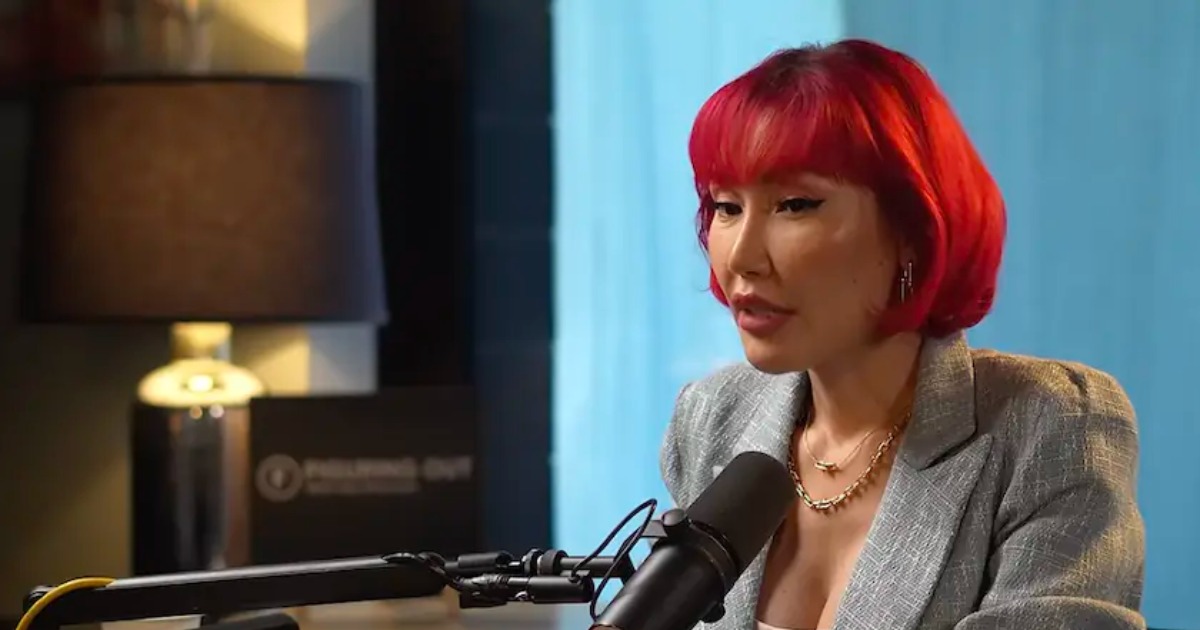
A woman who claims to have worked as a Russian secret agent has revealed an unusual psychological technique she says was used to make men develop intense emotional attachments to particular women.
Aliia Roza, who now works as a women's empowerment coach and fashion influencer, has spoken publicly about the methods she claims to have learned during her intelligence training.
According to Roza, some operatives were taught to use attraction, emotional vulnerability and carefully timed interactions to influence their targets.
One method, which she calls the 'anchor technique', was allegedly intended to make a man associate feelings of intimacy and confidence with one particular person.
Speaking on the Figuring Out With Raj Shamani podcast, Roza explained how she claims the method was used and why its timing was considered so important.
However, her account of intelligence training has not been independently verified, and there is no reliable scientific evidence that the technique produces the effects she describes.
What is the 'anchor technique' described by Aliia Roza?
According to Roza, the technique involved attempting to create an association between a positive emotional experience and a specific physical gesture or phrase.
She claimed operatives were taught to use the period immediately after sexual intimacy, when a target might feel particularly relaxed.
Roza described the moments after a man reached orgasm as an especially important part of the alleged method.
She claimed that during this period, the target would be more receptive to emotional suggestions.
The operative would allegedly offer praise, such as telling the man that he was an exceptional partner, while touching a particular area of his body.
Roza said the chosen area might be the neck, shoulders or ear, rather than a commonly touched area such as the hands.
According to her explanation, the combination of praise and physical contact would be repeated on different occasions.
The intention was supposedly to establish an association between the gesture, the words and the positive feelings experienced during intimacy.
Roza claimed that repeating the same gesture and phrases later could trigger those feelings again.
She described this as a powerful way of encouraging emotional and sexual dependence, although those claims are not supported by established scientific evidence.
What did the alleged former spy say agents would tell their targets?
Roza claimed that some operatives used language designed to convince their targets that they were uniquely important to their happiness and success.
Speaking about alleged 'honey trap' operations, she described phrases intended to reinforce the idea that the operative was an irreplaceable partner.
One example she gave was: "Only I can help you."
She also described agents presenting themselves and their targets as an unusually powerful couple.
The aim, according to Roza, was to make the target believe that emotional fulfilment, confidence and success depended on maintaining the relationship.
She claimed that such methods could create a level of attachment that made other relationships less appealing.
However, there is no credible evidence that repeating particular phrases or touching a specific body part can reliably make someone sexually dependent on another person.
Who is Aliia Roza?
Aliia Roza is a fashion influencer and women's empowerment coach who describes herself as a former Russian intelligence operative.
She claims she was raised in an elite military family in the former Soviet Union and received specialist training before carrying out undercover assignments.
According to her account, her work involved infiltrating organised criminal groups connected with drug trafficking and human trafficking.
Roza says she eventually fled Russia after her identity was exposed.
She has since spoken publicly about the psychological methods she claims were used during undercover operations.
Her intelligence background and the specific training methods she describes have not been independently established.
What other methods did Roza claim intelligence agents used?
The alleged 'anchor technique' is not the only method Roza has discussed.
In a separate interview with the New York Post, she described an approach involving repeated appearances in a target's everyday surroundings before initiating contact.
She claimed agents might arrange to appear at locations such as coffee shops or gyms, or interact with someone through social media, so that their presence gradually became familiar.
Roza suggested that this familiarity could make a later introduction seem more natural.
She also described the use of 'love bombing', in which a person receives excessive attention, compliments and affection early in a relationship.
Another alleged method involved pretending to be vulnerable or in need of help, encouraging a target to feel protective.
Roza has also discussed what she calls the 'milk technique', which she described as inventing mutual connections to make a stranger or online profile appear more trustworthy.
These accounts are her descriptions of alleged intelligence tactics, not independently verified evidence that particular agencies use them.
Which men did Roza claim were most vulnerable?
Roza has also suggested that intelligence operatives may target people working in technology and other industries where confidential information has substantial value.
She claimed that single professionals who spend considerable time working could be particularly attractive targets for relationship-based manipulation.
Her explanation focused on the possibility that some individuals might welcome unexpected romantic attention without questioning the other person's motives.
However, these are Roza's generalisations and should not be treated as established psychological findings about single men or technology workers.
Does the 'anchor technique' actually work?
There is no reliable scientific evidence that Roza's specific technique can make someone incapable of experiencing sexual attraction or arousal with another partner.
Psychology does recognise that people can develop associations between experiences, emotions and environmental cues through learning.
However, that does not establish that a particular combination of touch and praise can reliably control another person's romantic or sexual preferences.
Human attraction and relationships are influenced by numerous psychological, social and biological factors.
Claims that someone can be made permanently dependent on one partner through a simple repeated gesture go considerably beyond what established research supports.
Using emotional vulnerability to create dependence or control can also be a form of unhealthy relationship behaviour.
Why has the former spy shared these alleged methods?
Roza says she now wants to help people recognise potential emotional manipulation.
Her public appearances have focused on the tactics she claims operatives used to develop trust, establish relationships and obtain sensitive information.
She has encouraged people to be cautious when a new romantic connection involves unusually intense attention, fabricated personal stories or attempts to obtain confidential information.
While her account of the 'anchor technique' has attracted attention, its effectiveness remains unproven.
Her story nevertheless raises broader questions about emotional manipulation, trust and the importance of recognising controlling behaviour in relationships.
Source: Tyla, November 12, 2026, citing Aliia Roza's appearance on Figuring Out With Raj Shamani and an interview with the New York Post. Roza's intelligence background and the effectiveness of her alleged techniques have not been independently verified.