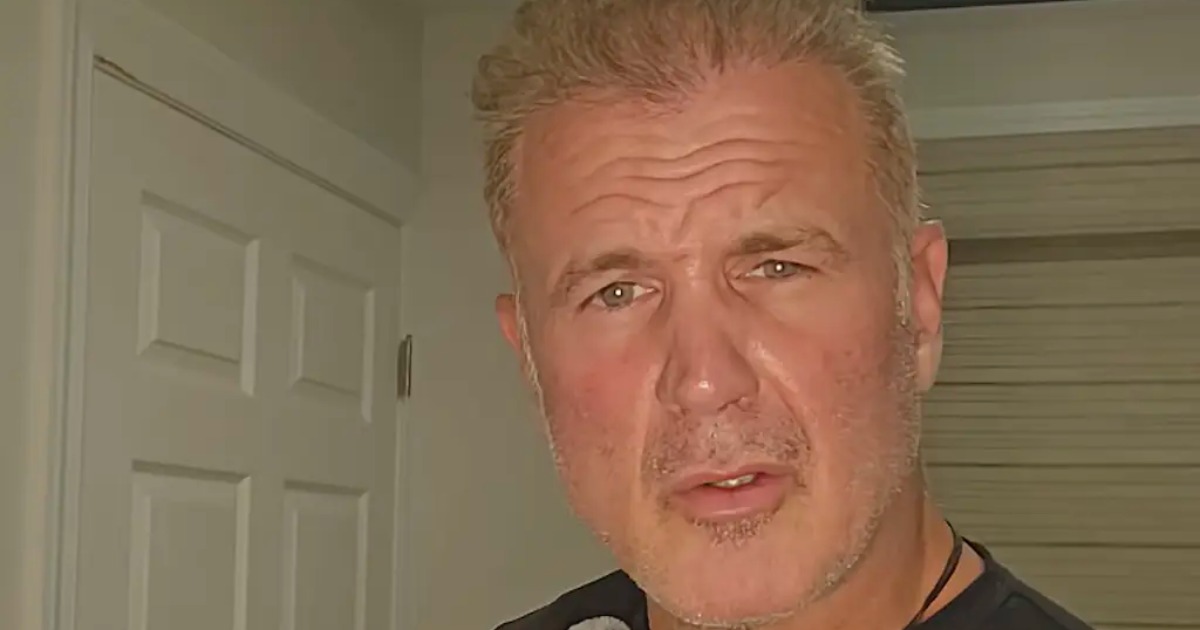
Checking into a hotel is usually the beginning of a relaxing break, but a former US Navy SEAL has revealed why he approaches the experience very differently from most travellers.
Joel Lambert, a former member of the US Navy's elite special operations forces who also appeared in the Discovery television series Manhunt, has shared the security precautions he follows whenever he stays in a hotel.
Rather than immediately unpacking his belongings or relaxing on the bed, Lambert says he completes a four-part routine designed to help him prepare for unexpected situations.
His advice covers everything from personal security to emergency evacuation, including one precaution that has attracted particularly strong reactions online.
Although some viewers have praised his attention to safety, others have questioned whether parts of his routine could create problems of their own.
Why does Joel Lambert have a hotel safety checklist?
Lambert shared his routine in a video explaining how his military background influences the way he approaches unfamiliar environments.
Having served as a Navy SEAL, he has experience with situations in which awareness of surroundings and advance preparation can be important.
That approach has carried over into his everyday life, including something as ordinary as staying overnight in a hotel.
In the video, Lambert asks viewers to think about what they usually do when they first enter a hotel room.
For many people, the answer would involve putting down their luggage, turning on the television or taking a moment to relax after travelling.
Lambert, however, says he has a different priority.
"Most people grab the remote and lay on the bed - not me," he explains.
He then reveals that he checks four things before sitting down.
His routine is intended to address potential security concerns and ensure he knows what to do if an emergency occurs during his stay.
1. He secures the hotel room door
The first step in Lambert's checklist involves securing the entrance to his room.
He demonstrates placing a rubber door stopper underneath the door from the inside.
According to Lambert, the idea is to provide an additional physical barrier against someone attempting to enter the room.
He suggests that the stopper could make it harder for someone to gain access, even if they possessed a working hotel keycard.
However, the effectiveness of this precaution depends on the type of door, flooring and stopper being used.
It is also important to consider emergency access.
Hotel staff and emergency responders may need to enter a room quickly in certain circumstances, and additional barriers could complicate that process.
Travellers should therefore follow hotel safety guidance and avoid using devices that could interfere with emergency access or evacuation.
2. He identifies the nearest emergency exit
Lambert's second precaution involves leaving the room to familiarise himself with the surrounding corridor.
Rather than simply looking for the nearest exit sign, he walks towards the emergency exit and counts the doors along the way.
His reasoning is that visibility could be severely reduced during an emergency, particularly if smoke filled the hallway.
By remembering how many doors separate his room from an exit, he believes he would have an additional way to navigate if he could not see clearly.
He explains that counting doors could allow him to follow the wall and identify the exit even in darkness or smoke.
The broader principle of identifying emergency exits is consistent with common fire safety advice.
Hotel guests are generally encouraged to locate escape routes and familiarise themselves with evacuation procedures after checking in.
However, fire safety authorities also warn that smoke-filled corridors can be extremely dangerous.
If a hallway is filled with smoke or an escape route is unsafe, guests should follow the building's emergency instructions rather than automatically attempt to reach an exit.
In some circumstances, remaining inside a room, closing doors and contacting emergency services may be safer than entering a smoke-filled corridor.
3. He keeps essential belongings beside his bed
The third step involves preparing for the possibility of having to leave the room quickly during the night.
Lambert says he places his keys, shoes and phone beside his bed before going to sleep.
The purpose is to avoid searching for important belongings if an alarm sounds unexpectedly.
He argues that having everything in one place allows him to react immediately rather than waste valuable time looking around the room.
In his video, Lambert suggests that this preparation could allow him to leave within approximately 10 seconds.
While that is his personal estimate rather than a universal evacuation time, keeping essential items accessible can be a practical precaution.
Guests should nevertheless prioritise their safety over retrieving belongings during an emergency.
If an evacuation is required, following official instructions and leaving promptly is more important than collecting personal possessions.
4. He refuses to accept a room if the number is announced publicly
Lambert's final rule concerns something that can happen before a guest has even reached their hotel room.
He says that if a receptionist announces his room number aloud in a busy lobby, he asks to be moved to another room.
His concern is that strangers nearby could overhear the information and learn exactly where he will be sleeping.
"Nobody needs to know where I'm sleeping," he explains.
The precaution reflects a wider concern about privacy and personal security when travelling.
Hotel staff can help protect guests' privacy by communicating room numbers discreetly rather than announcing them within earshot of other visitors.
For travellers who feel uncomfortable about their room number being overheard, requesting a different room may be an option, depending on availability.
However, an overheard room number does not automatically mean a guest is in danger.
Why have people criticised the Navy SEAL's advice?
Although Lambert's checklist is intended to improve safety, the video has attracted a mixed response from viewers.
One of the biggest points of debate concerns the rubber door stopper.
Some commenters questioned the logic of securing the door immediately before leaving the room to inspect the nearest emergency exit.
Others raised concerns that the stopper could be forgotten during an emergency, potentially delaying someone's escape.
One viewer questioned whether the additional barrier could become an obstacle if the building needed to be evacuated quickly.
Another wondered why a guest would need to retrieve their room keycard if the hotel was on fire.
These reactions highlight the difference between preparing for a possible security threat and ensuring that emergency evacuation remains straightforward.
Safety precautions can have unintended consequences if they are not appropriate for the environment in which they are used.
While some people appreciated Lambert's focus on preparedness, others felt that his approach was excessive for an ordinary hotel stay.
What do hotel safety experts recommend?
Although Lambert's routine reflects his personal military experience, there are several general precautions that travellers can consider when staying in unfamiliar accommodation.
One of the most important is locating emergency exits and reviewing the evacuation information provided by the hotel.
Guests should also familiarise themselves with the room's locking mechanisms and ensure that doors and windows are secured appropriately.
Keeping a charged phone nearby can make it easier to contact hotel staff or emergency services if assistance is required.
It can also be useful to know the hotel's address and emergency contact information, particularly when travelling abroad.
However, travellers should avoid adding security devices that could prevent them from leaving quickly or obstruct emergency personnel.
In the event of a fire, guests should follow the hotel's evacuation procedures and any instructions from emergency responders.
It is also important to remember that no single checklist can account for every building layout or emergency scenario.
Why does Lambert's advice resonate with travellers?
Hotel rooms are temporary environments, and guests may be unfamiliar with the building's layout, security arrangements and emergency procedures.
For most people, this is not a significant concern during an ordinary stay.
However, Lambert's video encourages viewers to consider how they might respond if something unexpected happened.
His approach is influenced by a career in which planning ahead and recognising potential risks formed part of his professional training.
That does not necessarily mean every precaution is suitable for every traveller.
Instead, the discussion surrounding his video demonstrates how different people balance personal security, convenience and practical safety.
Some may find his routine reassuring, while others may prefer a simpler approach focused on established hotel emergency procedures.
Should you follow the former Navy SEAL's hotel checklist?
Lambert's four-part routine provides an interesting insight into how a former special operations serviceman approaches everyday situations.
His advice includes securing the room, checking escape routes, preparing essential belongings and protecting the privacy of his room number.
Some elements, such as identifying exits and keeping a phone accessible, are broadly consistent with sensible travel preparation.
Other elements, particularly the use of a door stopper, require greater caution because of their potential effect on emergency access and evacuation.
Ultimately, hotel guests should follow the property's safety instructions and consider the specific circumstances of their accommodation.
Lambert's video may have divided opinion, but it has prompted a wider conversation about how much attention travellers should pay to their surroundings.
And while most holidaymakers are unlikely to adopt the complete routine of a former Navy SEAL, familiarising themselves with basic hotel safety information could still prove valuable.