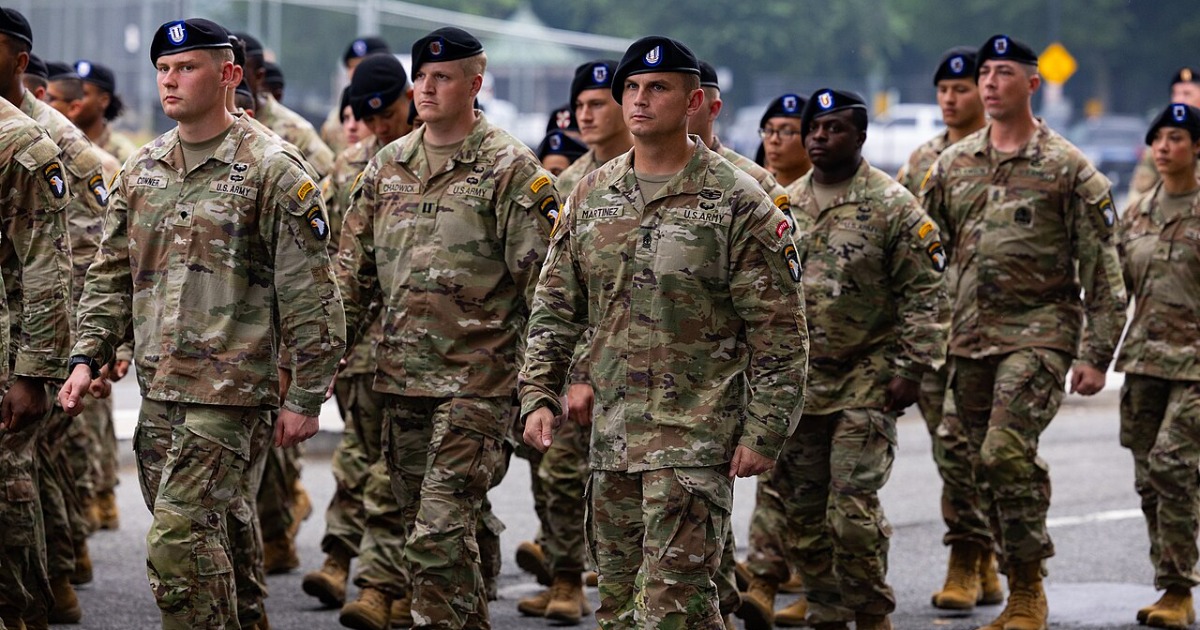

An emergency preparedness guide has identified seven categories of food that Americans could consider storing in case a major conflict or national emergency disrupts access to everyday supplies.
With international tensions continuing to raise questions about national security, some households have begun considering how they would cope if supermarkets, electricity supplies or transport networks were affected by a prolonged crisis.
However, an AI-generated preparedness adviser has suggested that many people may be spending money on the wrong products.
The guide, attributed to an AI persona called Hank Ridley, draws on government and academic food-storage recommendations to compare different options according to cost, shelf life, nutritional value and practicality.
Its conclusions suggest that effective emergency preparation does not necessarily require expensive specialist equipment.
What foods should Americans stockpile in an emergency?
The AI-generated guide ranked seven types of emergency food, with the highest positions going to inexpensive ingredients that can be purchased from ordinary supermarkets.
Although the recommendations were presented in the context of preparing for war, they could also be relevant during natural disasters, extended power outages and other emergencies.
1. White rice and dried beans
Taking the top position in the guide were white rice and dried beans, which were identified as a potentially economical foundation for longer-term food storage.
White rice provides carbohydrates and calories, while dried beans contribute protein, fibre and other nutrients.
Both products can be stored for extended periods when properly packaged and kept in suitable conditions.
However, their practical usefulness depends on having access to clean water and a safe method of cooking.
Dried beans generally require soaking and thorough cooking, while rice also needs water and heat.
For households preparing for a possible power or fuel outage, relying exclusively on uncooked staples could create problems.
2. Calorie-dense pantry staples
The second recommendation included peanut butter, rolled oats, honey and powdered milk.
These products can provide a useful combination of calories, fats, carbohydrates and protein.
Peanut butter was highlighted because it can be eaten directly without requiring cooking or additional water.
Rolled oats are versatile, while powdered milk can provide an alternative to fresh dairy when refrigeration is unavailable.
However, individual shelf lives vary considerably, and households should follow product-specific storage instructions.
3. Canned foods
Canned foods ranked third because of their convenience and practicality.
Products such as canned vegetables, beans, fish, fruit and ready-to-eat meals can provide nutritional variety without relying heavily on refrigeration.
Many canned foods can also be eaten without heating, although some taste better when warmed.
Households should keep a manual can opener available and regularly inspect cans for damage, swelling or leakage.
Food from damaged or bulging cans should not be consumed.
4. Freeze-dried emergency meals
Freeze-dried food buckets are frequently marketed as essential survival products, with some manufacturers advertising shelf lives extending over several decades.
The guide placed them fourth, noting that they can be lightweight, compact and convenient when properly stored.
However, they can also be expensive compared with ordinary supermarket staples.
Many freeze-dried meals require water for preparation, making them less useful if safe drinking water is limited.
The guide suggested treating these products as supplementary emergency supplies rather than relying on them as the sole source of food.
5. Military-style meals ready to eat
Military-style Meals Ready to Eat, commonly known as MREs, offer another option for emergency situations.
These packaged meals are designed to be portable and convenient, with many containing enough calories to provide substantial energy.
Some include flameless heaters, allowing the contents to be warmed without a conventional stove.
However, MREs are often relatively expensive and their shelf lives depend heavily on storage temperature.
They can be particularly useful in situations where cooking facilities are unavailable.
6. Frozen foods
Frozen foods can be useful during shorter disruptions, especially when households already have well-stocked freezers.
However, their reliability depends on electricity remaining available.
According to the US Department of Agriculture, a full freezer can generally maintain a safe temperature for approximately 48 hours during a power outage if the door remains closed.
A half-full freezer typically provides around 24 hours of protection.
Food safety depends on the actual temperature and condition of the food, so households should not assume frozen products remain safe indefinitely without power.
7. Emergency ration bars
At the bottom of the ranking were compact emergency ration bars.
These products are commonly included in survival kits because they require no preparation and can be stored in small spaces.
Some have advertised shelf lives of approximately five years and are designed to withstand relatively demanding storage conditions.
However, the guide argued that they can be expensive relative to the calories they provide and may offer limited nutritional variety.
They may therefore be better suited to emergency evacuation bags or vehicles than as the foundation of a household food supply.
What is the biggest mistake people make when stockpiling food?
According to the guide, one of the most common mistakes is buying emergency supplies without considering how they will be stored.
Food kept in excessively hot environments, such as poorly insulated garages or attics, can deteriorate much faster than expected.
Even products marketed as long-lasting may have significantly shorter shelf lives when exposed to unsuitable temperatures.
The second major mistake involves failing to protect food from moisture and pests.
Dry goods can become unusable if their packaging allows water, insects or rodents to enter.
Suitable food-grade containers, sealed packaging and dry storage areas can help protect supplies.
The third mistake is failing to rotate stored food.
Rather than buying large quantities and leaving them untouched for years, preparedness guidance generally recommends using older supplies first and replacing them with newer purchases.
This approach can reduce waste while helping households maintain a supply of food they already know how to prepare.
How much emergency food and water should households store?
US emergency preparedness guidance generally recommends keeping at least several days' worth of non-perishable food available for each household member.
Ready.gov advises maintaining a supply of food that does not require refrigeration, cooking or large quantities of water.
Water is equally important.
Federal guidance recommends storing at least one gallon of water per person per day for drinking and sanitation, with a minimum three-day supply for emergencies.
Households should consider storing more when possible, particularly in hot climates or where people have additional medical needs.
Families should also account for babies, pets, allergies, medications and any specialist dietary requirements.
Does stockpiling mean a war is about to happen?
No. Preparing emergency supplies does not mean that a military conflict is imminent.
Government agencies have long encouraged households to maintain basic emergency provisions for situations including storms, floods, earthquakes and power outages.
The AI-generated ranking is not an official government assessment of the likelihood of war, nor should it be treated as an expert prediction of future events.
Its central message is that practical preparation involves more than purchasing expensive survival products.
Affordable food, safe water, appropriate storage and regular rotation can all play an important role in helping households cope with unexpected disruptions.