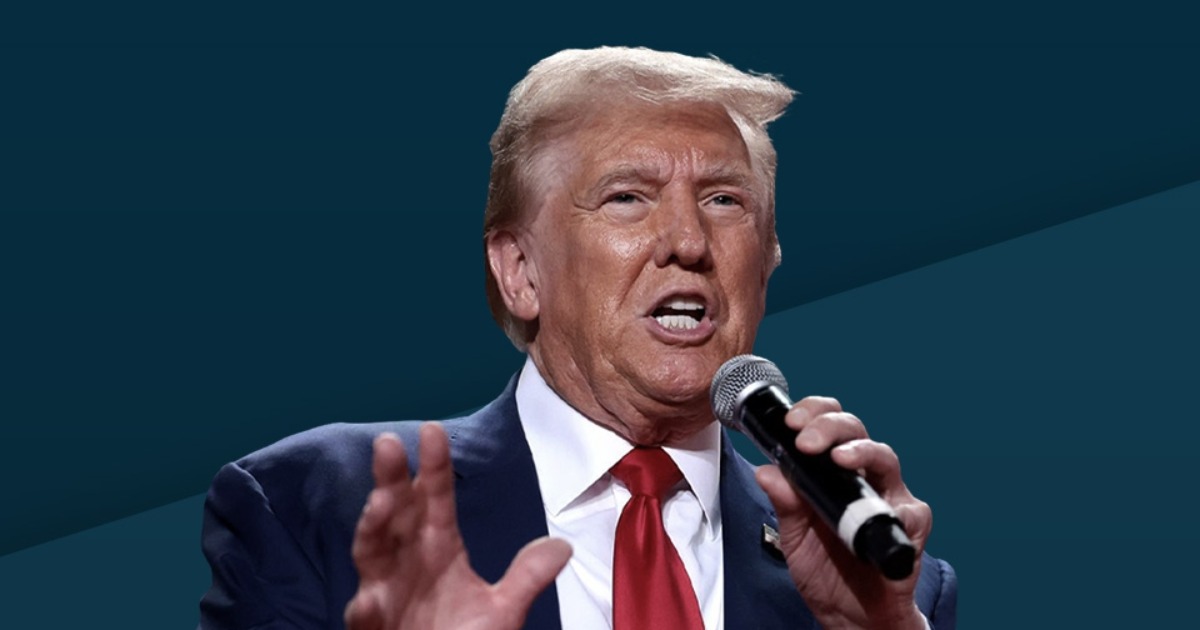

Vice President JD Vance has defended Donald Trump's proposal to send $5,000 checks to American adults after being challenged by a Fox News presenter over the potential cost of the payments.
The president first announced the proposed $5,000 dividend during the Republican Party's midterm convention in Dallas in September, promising the money if Republicans retain control of both chambers of Congress in November.
However, the proposal has prompted questions about government spending, inflation and whether the payments could actually be delivered.
During an interview with Fox News anchor Bret Baier, Vance was confronted with some of those concerns and explained why the administration believes Americans should benefit from its economic policies.
What did JD Vance say about Trump's $5,000 checks?
Vance defended the proposed payments, describing them as a dividend intended to benefit American workers.
Speaking to Baier, the vice president argued that the administration's tariff policies were generating substantial revenue and that Americans should receive a share of the economic benefits.
He said the government was collecting additional revenue because of Trump's approach to foreign companies and countries.
Vance suggested that continuing the administration's policies would allow Americans to share in what he described as the wealth being created.
"I don't think it's a controversial idea," the vice president concluded.
His response indicated that the White House remained committed to defending the proposal, although he did not announce a payment date or provide a detailed funding plan.
Why did Fox News presenter Bret Baier challenge Vance?
During the September 9 interview, Baier questioned the vice president about the financial implications of distributing $5,000 to millions of Americans.
He estimated that the programme could cost approximately $1.3 trillion and raised the criticism that tying payments to a Republican election victory could be interpreted as an attempt to influence voters.
The presenter also questioned whether the additional spending could increase the federal deficit and contribute to inflation.
Rather than withdrawing support for the proposal, Vance defended it as a way of returning some of the benefits of the administration's economic policies to Americans.
The exchange highlighted the central disagreement surrounding the checks: whether they represent a realistic financial benefit or an expensive promise without sufficient funding.
Who would be eligible for the $5,000 payments?
Trump's original proposal stated that every adult United States citizen would receive a $5,000 payment if Republicans retained control of both the House of Representatives and Senate.
However, Vance's description of the programme as a dividend for American workers has raised questions about whether eligibility could eventually be more restrictive.
The vice president has also suggested that wealthier Americans could potentially be excluded from the scheme.
At present, no final income thresholds, age verification procedures or other detailed eligibility requirements have been approved.
Trump has also said that the money should be spent within the United States, although he has not explained how such a requirement would be enforced.
How would the government pay for the $5,000 checks?
The administration has repeatedly pointed to tariff revenue as a potential funding source.
Tariffs are taxes imposed on imported goods and collected from importers by the federal government.
Trump and Vance have argued that their trade policies are producing revenue that could be shared with American households.
However, the estimated cost of distributing $5,000 to approximately 240 million adult citizens would be around $1.2 trillion.
According to reporting by Reuters and The Associated Press, tariff collections fall substantially short of the amount required to finance payments on that scale.
Economists have also warned that financing the programme through additional borrowing could increase the federal deficit and potentially contribute to inflation.
Supporters of the proposal argue that direct payments would provide financial relief to households, while critics question whether the economic benefits would outweigh the costs.
Could the payments be considered buying votes?
One of the central criticisms raised during the Fox News interview concerned Trump's decision to make the payments conditional on Republicans retaining control of Congress.
Baier asked Vance how the administration would respond to people who characterised the pledge as an attempt to influence voters through financial incentives.
Vance rejected that criticism and defended the proposal as an economic dividend.
Legal experts have noted that politicians routinely make promises involving government spending, tax reductions and financial benefits during election campaigns.
The fact that a proposal could financially benefit voters does not automatically make it unlawful vote buying.
However, the political and financial implications of the pledge remain subjects of debate.
Would Congress need to approve the checks?
Yes. Even if Republicans retain control of both chambers of Congress, the proposed payments would still require appropriate legislative authorisation.
The president cannot independently create and distribute a programme costing more than $1 trillion without the necessary legal authority and funding.
Republican Senator Bernie Moreno has indicated support for pursuing legislation to establish the payments.
However, lawmakers would still need to agree on the programme's eligibility rules, funding and distribution arrangements.
Congressional approval is therefore a separate hurdle from the outcome of the midterm elections.
When would Americans receive the $5,000 checks?
There is currently no confirmed date for the proposed payments.
Trump has tied his pledge to the November 3 midterm elections, but the government has not approved a distribution schedule or established an application process.
The administration previously discussed other payment proposals, including a $2,000 tariff dividend, which did not become an authorised nationwide programme.
For now, Vance's comments provide further insight into how the White House is defending the $5,000 proposal, rather than confirmation that the checks will be issued.
Americans hoping to receive the money will need to wait for further details about congressional approval, funding and eligibility before any payments can be considered guaranteed.