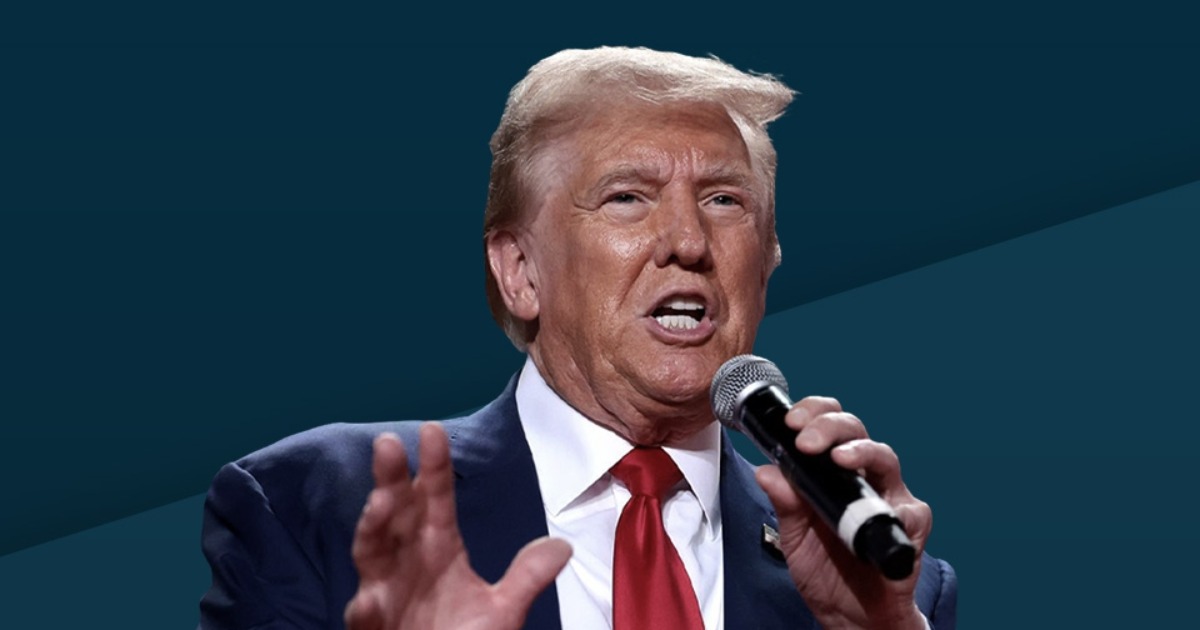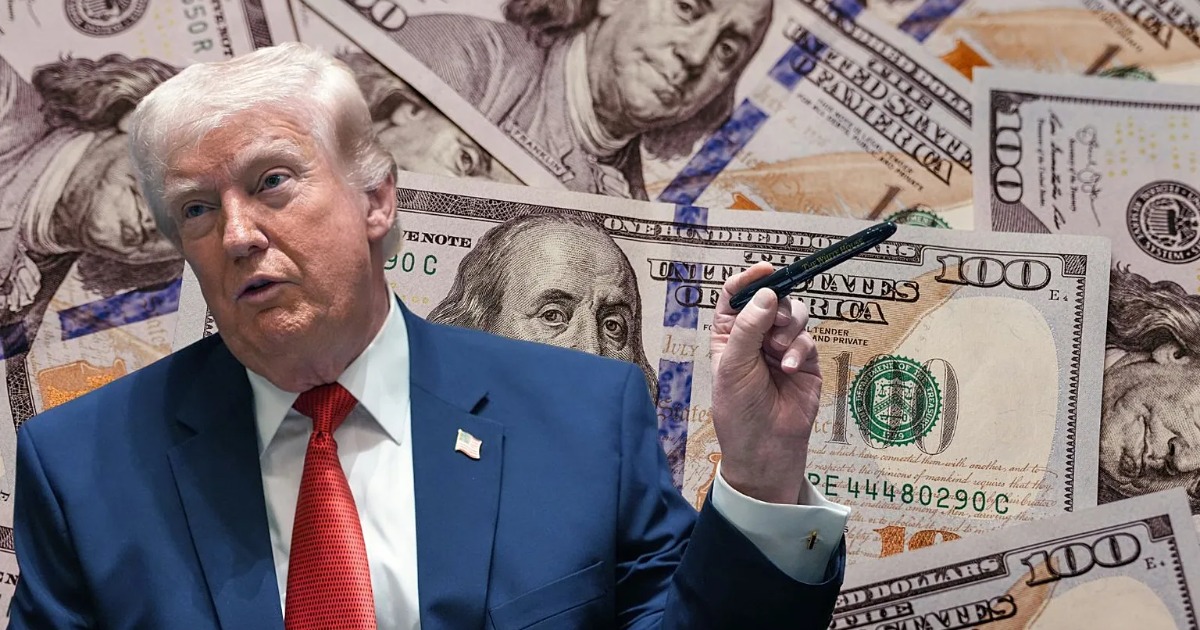

Donald Trump's promise to send Americans $5,000 checks is facing fresh uncertainty just one day before the November 3 midterm elections, with several national polls showing a significant shift in voter preferences.
The president has repeatedly promoted the proposed payments during campaign appearances, describing them as a way to share the benefits of his administration's economic policies.
However, with control of Congress at stake, questions are growing about whether the proposal will ever become reality.
New polling figures have intensified those concerns, while lawmakers and economic experts continue to question how the payments would be funded.
Who would qualify for Trump's $5,000 checks?
Under the proposal announced by Trump at the Republican midterm convention in September, every adult United States citizen would be eligible for a $5,000 payment.
The president has described the money as a dividend that would be distributed if Republicans retain control of both the House of Representatives and Senate following the November 3 elections.
Based on Trump's original announcement, the proposal would cover adult US citizens rather than simply registered voters or people who voted Republican.
However, no final eligibility rules have been approved.
Vice President JD Vance has suggested that wealthier Americans could potentially be excluded, raising questions about whether income limits might eventually apply.
There are currently no confirmed income thresholds, application procedures or payment dates.
Trump has also suggested that recipients would be required to spend the money within the United States, although no official mechanism for enforcing that condition has been established.
Why could Trump's $5,000 checks be in jeopardy?
The immediate uncertainty surrounds the November 3 midterm elections.
Trump has explicitly tied his promise to Republicans maintaining their majorities in both chambers of Congress.
However, several national polls released in the final days of the campaign show Democrats leading Republicans on the generic congressional ballot.
An Emerson College survey released on October 30 found that 52 percent of likely voters supported Democratic congressional candidates, compared with 42 percent supporting Republicans.
That represented a 10-percentage-point Democratic advantage.
A Reuters/Ipsos survey also found Democrats ahead, with 53 percent of likely voters supporting or leaning towards Democratic candidates, compared with 44 percent for Republicans.
Meanwhile, a Harvard CAPS/Harris survey showed Democrats leading by four percentage points, 52 percent to 48 percent.
These polls measure national voting preferences rather than the outcome of individual congressional races. They cannot establish which party will ultimately control either chamber.
Nevertheless, they highlight the uncertainty surrounding the electoral condition Trump has attached to his payment pledge.
What has Trump said about the proposed payments?
Trump first announced the $5,000 proposal during the Republican Party's midterm convention in September.
He has since repeated the pledge at campaign rallies across the country, telling supporters that the payments would become possible if Republicans retained control of Congress.
During a recent appearance in Corpus Christi, Texas, Trump reiterated his intention to deliver the money following a Republican victory.
He has also insisted that his administration can finance the payments through tariff revenue and economic investments.
However, no legislation establishing the programme has been enacted.
How much would the $5,000 checks cost?
Providing $5,000 to every adult American citizen would require an enormous amount of federal funding.
Estimates suggest that the programme could cost approximately $1.2 trillion to $1.3 trillion, depending on the final number of eligible recipients.
Trump has argued that revenue from tariffs and other economic policies could help finance the payments.
However, economists have questioned whether those revenue sources would be sufficient.
Annual federal tariff collections are substantially below the amount required for a universal $5,000 payment.
Critics have also warned that borrowing to finance the programme could increase the federal deficit and potentially add to inflationary pressures.
Supporters argue that direct payments could provide financial relief to households struggling with the cost of living.
Would Congress need to approve the checks?
Yes. Establishing a programme of this scale would generally require congressional authorisation and funding.
Even if Republicans retain control of both chambers, the president cannot simply guarantee that Congress will approve the payments.
Some Republican lawmakers have expressed support for the idea, while others have raised concerns about its cost and feasibility.
Ohio Republican Senator Bernie Moreno has indicated that he intends to pursue legislation supporting the proposal.
Meanwhile, Republican congressional leaders have acknowledged that important details would need to be resolved before any payments could be authorised.
This means that even a Republican victory would not automatically trigger $5,000 deposits or checks.
What do Americans think about the payments?
Polling suggests many Americans remain sceptical about whether the promised money will actually arrive.
An NBC News survey reported in October found that only 14 percent of adults believed they would definitely or probably receive the payment.
By comparison, 71 percent said they probably or definitely would not.
An Economist/YouGov poll conducted in September also found that 61 percent of likely voters believed Trump would not deliver the checks, while 22 percent thought he would.
Those findings reflect public expectations rather than a definitive assessment of whether the proposal could eventually be implemented.
When would Americans receive the $5,000 checks?
There is currently no confirmed payment date.
Trump has linked the proposal to the outcome of the November 3 midterm elections, but the federal government has not announced an approved distribution schedule.
No official application portal has been established, and Americans do not currently need to register to receive the proposed payments.
Previous proposals involving tariff rebates and government savings dividends have not resulted in the payments originally discussed.
For now, the future of Trump's $5,000 checks depends on several unresolved questions, including the election outcome, congressional approval, eligibility rules and funding.
With Americans heading to the polls on November 3, the proposal remains a political promise rather than an authorised federal benefit.