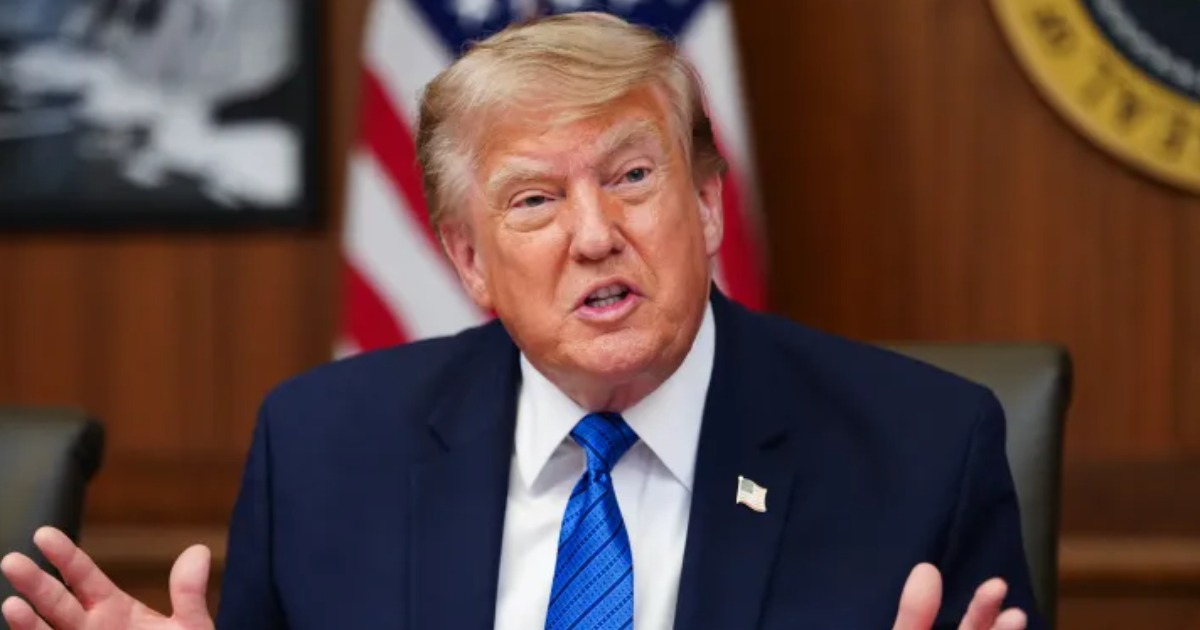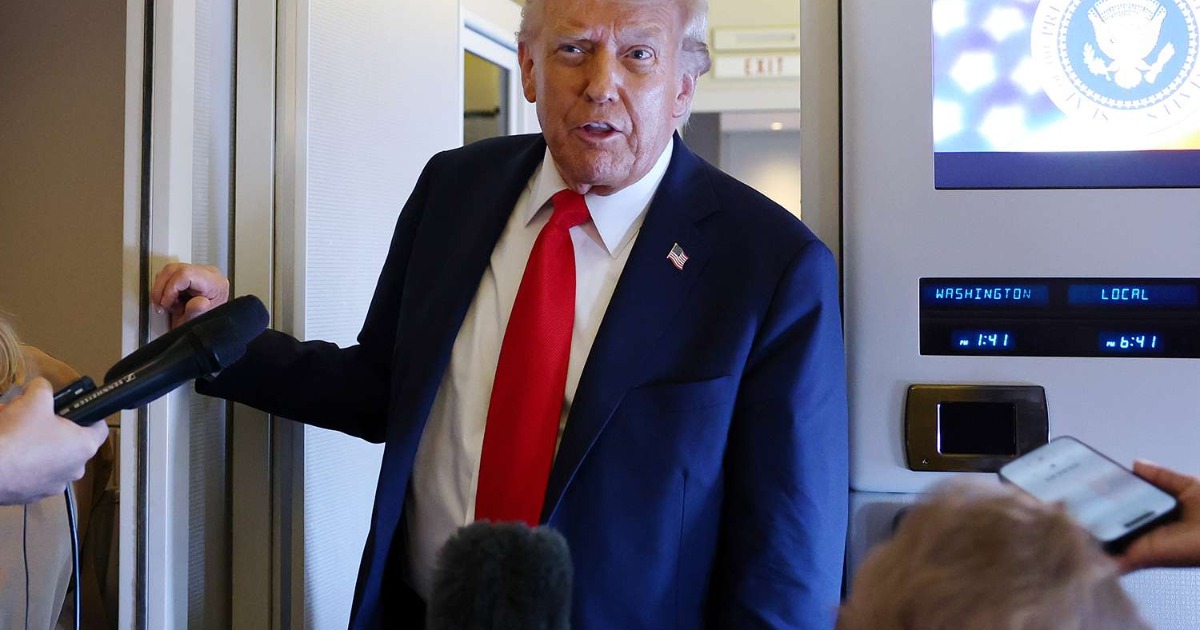

President Trump has floated two separate payment pledges to Americans in the run-up to November's midterm elections: a $5,000 "Trump dividend" contingent on a Republican win, and a smaller, more concrete $500 Obamacare refund set to begin going out next month.
The $5,000 "Trump dividend"
Speaking at the GOP's midterm convention in Dallas on 9 September, Trump said: "If the Republicans win, you win with us, and you get $5,000. It will be called the 'Trump dividend.'" He said the payment would need to be spent within the US, and attributed its feasibility to the strength of the economy, though he gave no detail on funding or total cost. A White House press release the following day pointed to new private investment and reduced government waste as the source, though experts estimate the plan would cost around $1.2 trillion and would require congressional approval.
Senator Bernie Moreno said he would draft legislation to support the dividend, though Senate Majority Leader John Thune acknowledged uncertainty over whether it would have enough votes to pass. The proposal has drawn criticism from both parties: Democratic Representative Jamie Raskin called it a "political bribe," while Republican Senator Susan Collins raised concern that tax and spending decisions shouldn't appear tied to election outcomes, and Florida Governor Ron DeSantis warned it could worsen debt and inflation.
How to check if you'd be eligible for the $5,000 dividend
As it stands, there's no way to check eligibility for this payment, because it doesn't yet exist as a real, funded programme. It remains contingent on Republicans retaining control of both the House and Senate in the 3 November elections, requires congressional approval that hasn't been secured, and has no confirmed funding mechanism. Nothing can be applied for or claimed at this stage.
The $500 Obamacare refund
Announced the day after the dividend pledge, this payment is a more concrete, already-funded programme. The White House says it stems from excess user fees collected by insurers through Healthcare.gov under the Biden administration, fees the administration says were passed on to consumers through higher premiums beyond what was needed to operate the exchange. Trump said the excess totals $500 million.
How to check if you're eligible for the $500 refund
You may qualify if you purchased health insurance through the federal marketplace (Healthcare.gov) rather than a state-run exchange, and did not receive premium assistance or subsidies under the Affordable Care Act, meaning you paid the full, unsubsidised premium cost. Eligibility is limited to residents of the 30 states that use the federal exchange rather than running their own state marketplace. If you live in a state with its own exchange, such as California, New York, or Massachusetts, you will not qualify. No application is currently required; the checks are expected to be sent automatically to qualifying enrollees starting in October.
Critics, including Protect Our Care president Brad Woodhouse, have called the refund insufficient, pointing out that Senate Republicans rejected extending pandemic-era ACA subsidies in December 2025, a decision that raised costs for around 22 million Americans.
Trump's track record on past payment pledges
Some previous payments have materialised. In December 2025, military personnel received $1,776 "Warrior Dividend" bonuses, funded through congressionally appropriated military housing funds rather than tariff revenue as originally suggested. More recently, "Trump Accounts" launched, depositing $1,000 into savings accounts for children born between 2025 and 2028, with around 6 million accounts opened as of July.
Other pledges have not come through. A proposed $2,000 tariff dividend, floated in 2025, has not materialised, with Treasury Secretary Scott Bessent saying legislation would likely be required and tariff revenue falling well short of the estimated $600 billion needed. A separate proposal for $5,000 dividend checks funded by savings from the now-defunct Department of Government Efficiency also never came to pass.
Economist concerns
Garrett Watson, vice president of federal tax policy at the nonpartisan Tax Foundation, said the $5,000 dividend plan carries real risks of increased inflation and higher interest rates, telling USA Today the president is "promising something that almost certainly can't be done, from a policy and political perspective."