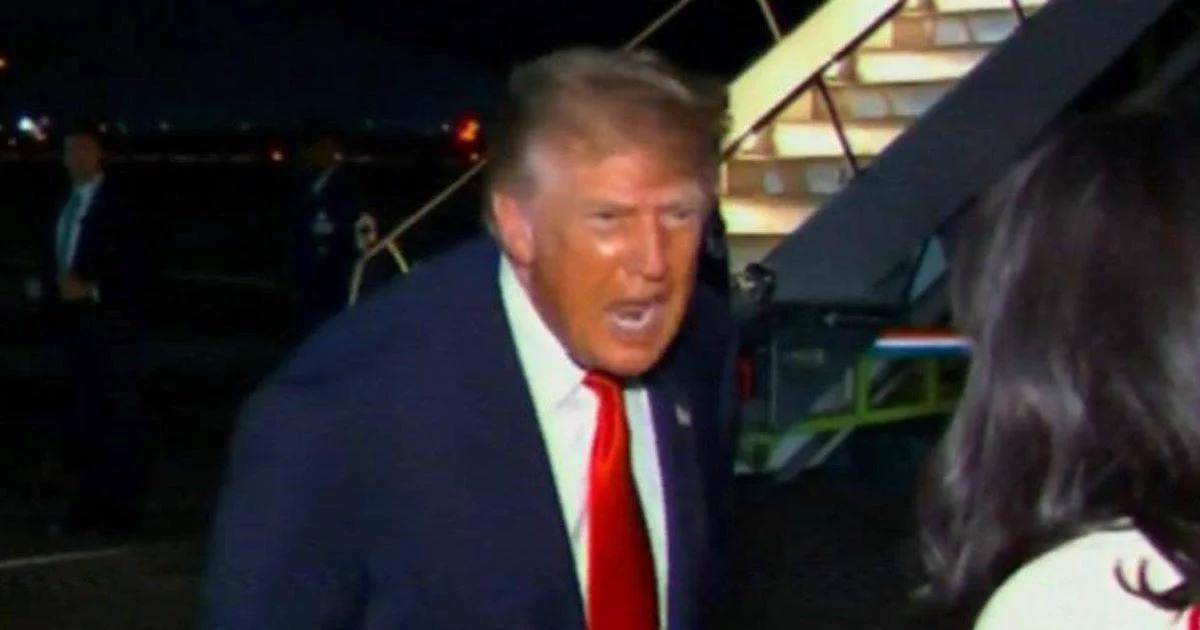

President Trump has offered every adult American $5,000 if Republicans win control of Congress in November's midterm elections, though it remains unclear how such a plan would be funded or whether it's legal.
Who would be eligible
According to Trump's announcement, the payment would go to every adult American citizen, roughly 270 million people, regardless of how they voted, contingent entirely on Republicans winning both chambers of Congress. Vice President JD Vance has suggested the cheques would not go to wealthy Americans, though no further detail has been given on how eligibility would actually be defined or means-tested. Trump also said the money would need to be spent within the US, though it's unclear how that requirement would be monitored or enforced.
Is the offer legal?
Under US federal law, it's illegal to offer payments intended to influence how someone votes. However, legal experts say the pledge could be interpreted as a broader campaign promise, similar to pledging tax cuts, rather than a direct bribe, since the money would go to everyone regardless of their vote. Dr Joan Mahoney, a law lecturer at the University of Southampton, told the BBC she believes the offer would likely be legal, comparing it to standard campaign pledges every party makes, though she noted politicians don't usually phrase such promises this explicitly. Laurel Rapp, director of the US and North America programme at Chatham House, described it instead as a notably more transactional arrangement than typical campaign promises.
How much would it cost, and how would it be funded?
With around 270 million adult Americans, a $5,000 payout would cost approximately $1.3 trillion. Trump has not provided details on funding, and it remains unclear whether he intends to seek congressional approval, which would typically be required for spending of this scale. Erica York, a senior economist at the Tax Foundation, said she would be "extremely surprised" if Congress approved such a proposal, describing it as one of the worst possible uses of that sum given the country's already unsustainable deficit trajectory.
Vance has suggested the payments could be funded through tariff revenue, though according to the Bipartisan Policy Center, total tariff and excise tax revenue since the start of 2025 stands at around $475 billion, with more than $100 billion of that already refunded after the Supreme Court struck down a number of tariffs earlier this year.
Why Trump made the offer
Political analysts have linked the pledge directly to the upcoming midterms. Former Republican strategist Robert Moran said the promise should be understood firmly within the context of election season, while Rapp suggested Trump is thinking short-term to try to hold onto Congress amid difficult polling for both him and his party.
Has anything similar happened before?
Trump previously proposed $2,000 cheques funded by tariff revenue, which never materialised. Former President Joe Biden faced similar accusations of vote-buying after promising $2,000 Covid stimulus cheques ahead of Georgia's 2021 Senate elections, and Elon Musk drew comparable controversy in 2024 after offering cash incentives to registered voters in swing states who signed a specific petition.