
Two women who survived a devastating accident on what was once the world's tallest waterslide have spoken about the tragedy that claimed the life of a 10-year-old boy.
Hannah Barnes and Matraca Baetz were riding alongside Caleb Schwab when an accident occurred on the Verrückt waterslide at Schlitterbahn Water Park in Kansas City, Kansas, on August 7, 2016.
Caleb suffered a fatal neck injury during the ride, while both women survived and required emergency medical attention.
The accident shocked the United States and prompted widespread scrutiny of the attraction's design, testing and safety procedures.
In the aftermath, the surviving passengers released a statement through their lawyer, addressing the tragedy and the impact it had on them.
What injuries did the two women suffer?
According to reporting published by VT, both Hannah Barnes and Matraca Baetz suffered severe facial injuries during the accident.
The women were taken to a nearby hospital for emergency medical treatment after the raft completed its descent.
Although both survived, their injuries were serious enough to require immediate attention from medical professionals.
The report does not provide a detailed medical breakdown of each woman's injuries or specify the treatment they received.
It is therefore unclear from the available account whether they required surgery or experienced any lasting physical complications.
Beyond their physical injuries, the women also faced the emotional consequences of witnessing a fatal accident involving a child seated in the same raft.
What happened to Caleb Schwab on the waterslide?
Caleb was visiting Schlitterbahn Water Park with his family when he boarded the Verrückt waterslide.
The attraction, whose name translates from German as 'crazy', was approximately 168 feet tall and had been promoted as the world's tallest waterslide.
Unlike conventional waterslides, Verrückt carried passengers in multi-person rafts.
Its design featured an enormous initial drop, followed by a second hill and another descent towards the bottom.
Caleb was seated in a raft alongside Barnes and Baetz when the accident occurred.
During the ride, the raft became airborne near the second hill, and Caleb struck part of the overhead safety structure.
He suffered a catastrophic neck injury and died at the scene.
Emergency responders arrived at the water park, but the 10-year-old could not be saved.
The two women were transported to hospital following the incident.
What did the surviving women say afterwards?
Following the accident, Barnes and Baetz released a joint statement through their legal representative.
Both women were mothers themselves and expressed their sympathy for Caleb's grieving family.
They also indicated that they wanted to help prevent another family from experiencing a similar tragedy.
In the statement reported by ABC News, they said:
"Being mothers ourselves, we can only hope that Caleb's family can find some comfort in knowing we are doing everything we know how to do to stop something so tragic from occurring again to any other family."
The statement reflected their determination to see the circumstances of the accident examined and improvements made to amusement ride safety.
Although their own injuries were significant, their public message focused heavily on the loss suffered by Caleb's parents.
Who was Caleb Schwab?
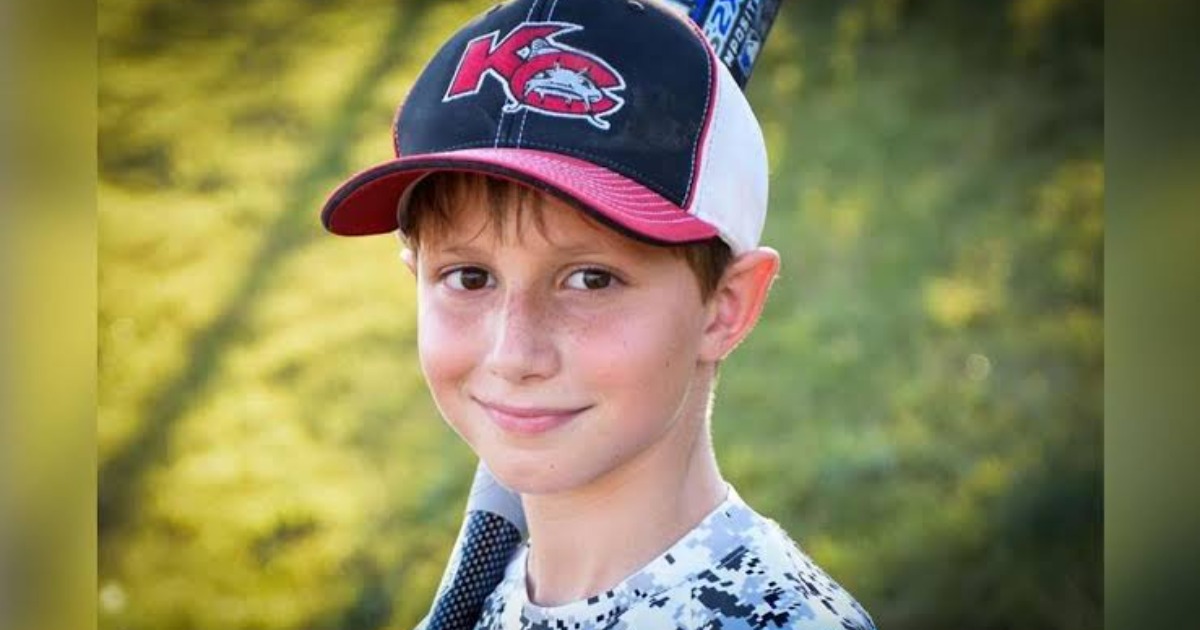
Caleb was the 10-year-old son of Scott and Michele Schwab.
At the time of the accident, Scott Schwab was serving as a member of the Kansas House of Representatives.
The family had been attending an event at the water park organised for elected officials and their relatives.
What was supposed to be an enjoyable family outing ended in an unimaginable tragedy.
Following Caleb's death, his parents asked for privacy as they mourned their son.
They also expressed appreciation for the support they received from their community.
The case attracted national attention, with questions raised about how an attraction of such extreme height had been approved for public use.
How dangerous was the Verrückt waterslide?
Verrückt opened to the public in 2014 after a development process that involved several technical challenges.
The attraction stood approximately 17 storeys high and was designed to deliver an unusually intense experience.
Riders descended the initial steep slope before travelling up and over a second hill.
Its rafts were intended to carry multiple passengers, with the park enforcing combined weight requirements.
At the time of the accident, the stated combined weight range was approximately 400 to 550 pounds.
However, concerns had emerged during the attraction's development and testing.
Early test runs reportedly showed weighted rafts becoming airborne, raising questions about the forces acting on passengers during the ride.
The attraction experienced delays before opening to the public.
Following Caleb's death, its design and operating procedures came under intense examination.
Why did the raft become airborne?
Investigations into the accident focused on the waterslide's design and the behaviour of the raft as it travelled over the second hill.
The combination of speed, weight distribution and the shape of the slide could affect how a raft moved along the attraction.
The incident raised concerns about whether sufficient engineering analysis and testing had been carried out before the ride opened.
Investigators also examined the adequacy of the protective netting and support structures surrounding the slide.
Those structures were intended to keep passengers within the ride's path, but they became part of the fatal accident when the raft left the slide surface.
The tragedy highlighted the potential consequences of design failures on attractions operating at extreme speeds and heights.
What happened to the waterslide after the accident?
Schlitterbahn closed the Verrückt attraction immediately following Caleb's death.
The Kansas City water park was also temporarily closed while authorities investigated what had happened.
The waterslide never reopened to the public.
Plans were subsequently announced to dismantle the structure, and it was demolished in 2018.
The accident also contributed to wider discussions about the regulation and inspection of amusement park attractions in Kansas.
Lawmakers and safety advocates examined whether existing oversight arrangements provided sufficient protection for visitors.
The case became an important example of the risks associated with attractions that push the boundaries of conventional amusement ride design.
Were criminal charges brought over the accident?
The accident led to criminal proceedings involving people connected with the waterslide's design and operation.
In 2018, criminal charges were brought against individuals associated with the attraction and its development.
However, the charges were dismissed in 2019 after a judge identified serious problems with the evidence presented to the grand jury.
The dismissal meant those criminal prosecutions did not result in convictions.
The legal proceedings were separate from the broader questions surrounding the safety of the ride and the civil claims that followed the tragedy.
Caleb's family and the surviving passengers also pursued legal action arising from the accident.
Why does the tragedy continue to attract attention?
More than a decade after the accident, Caleb's death remains one of the most widely discussed amusement park tragedies in recent American history.
The extraordinary height of the Verrückt slide, the circumstances of the accident and the young age of the victim all contributed to the intense public reaction.
For many people, the case also raised difficult questions about how amusement attractions are designed, tested and regulated.
The experiences of Barnes and Baetz provide another perspective on the tragedy.
Both women survived but suffered significant injuries and witnessed the death of a child who had been sharing their raft.
Their subsequent statement emphasised the importance of preventing another family from experiencing a similar loss.
While the waterslide itself has long since been removed, the consequences of the accident continue to be remembered by those affected.
Sources: VT, October 6, 2026; ABC News reporting on the survivors' statement; historical reporting on the Verrückt accident and subsequent legal proceedings.