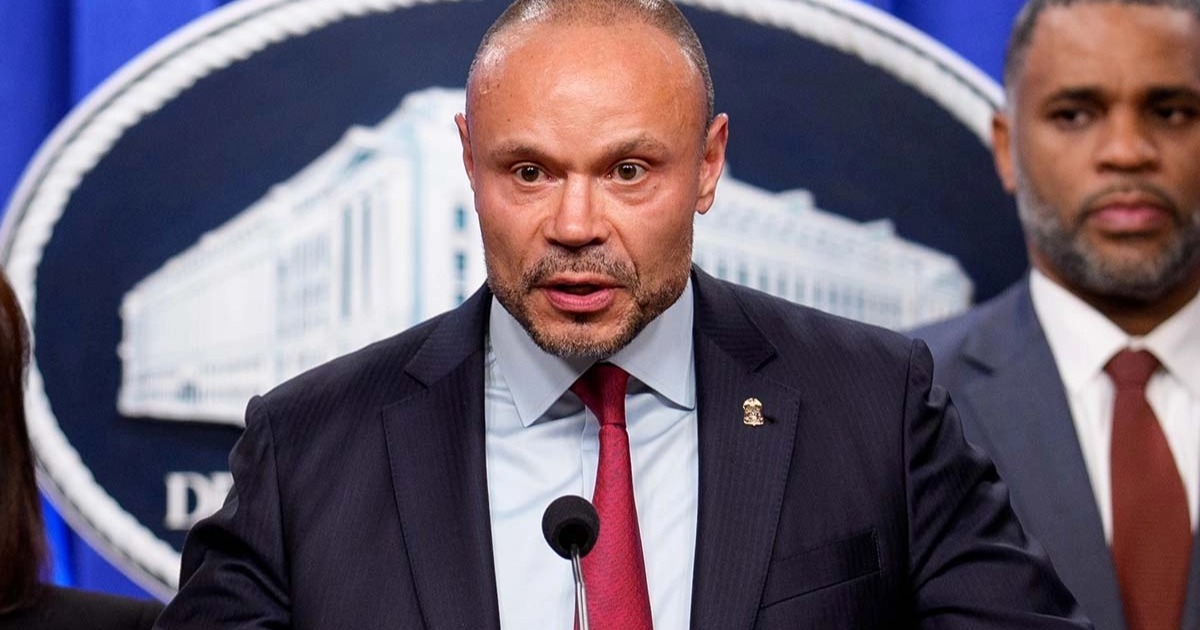

Former FBI Deputy Director Dan Bongino has urged American households to take emergency preparedness seriously as governments around the world encourage people to plan for unexpected disruptions.
The warning comes amid growing attention surrounding extreme weather, cyberattacks, power outages and the Pentagon's efforts to strengthen the resilience of US military infrastructure.
During a recent episode of The Dan Bongino Show, the former FBI official encouraged families to obtain essential emergency supplies before they are needed.
One particular item has attracted attention, with a former US Air Force emergency manager explaining why it could be important and what people should check before purchasing one.
What specific item is Dan Bongino urging Americans to stockpile?
Dan Bongino has urged Americans to keep an emergency radio at home, alongside spare batteries, emergency food, water filtration equipment and other basic preparedness supplies.
An emergency radio is designed to help people receive important information during disasters, particularly when mobile networks, internet services or electricity supplies are disrupted.
Unlike relying entirely on a smartphone, a suitable emergency radio can operate using batteries or alternative power sources.
In the United States, many models can receive broadcasts from the National Oceanic and Atmospheric Administration's weather radio network, commonly known as NOAA Weather Radio.
These broadcasts can provide warnings about severe weather and other emergencies, helping people understand whether they need to evacuate, remain indoors or take other protective measures.
Bongino's recommendation is part of broader household preparedness advice rather than a warning about one specific imminent disaster.
Why could an emergency radio be important during a disaster?
Sean Gold, a former emergency manager in the US Air Force and owner of the preparedness website TruePrepper, explained the importance of emergency radios in an interview with UNILAD.
He said the devices allow people to receive critical information when an emergency occurs.
NOAA Weather Radio provides dedicated weather and hazard broadcasts, while conventional AM and FM stations can also carry messages through the Emergency Alert System.
During severe storms, flooding or other emergencies, reliable information can be essential for making decisions about personal safety.
For example, authorities may issue evacuation instructions, shelter-in-place advice or warnings about approaching hazards.
If mobile networks become overloaded or household internet connections fail, an independent radio may provide another way to receive those updates.
However, reception depends on location, the radio's capabilities and the availability of functioning broadcast transmitters.
What should people look for when buying an emergency radio?
According to Gold, the most important consideration is whether the radio can reliably receive the broadcasts people are likely to need during an emergency.
For American households, he recommends choosing a model that can easily receive NOAA weather bands.
He also suggests looking for a dedicated weather-band switch, which can make the radio simpler to operate and test.
Other useful considerations include:
Gold recommends prioritising reception and dependable power over additional features such as Bluetooth connectivity or elaborate lighting systems.
Although those extras may be convenient, they are not the main purpose of an emergency radio.
What is the biggest mistake people make with emergency radios?
Gold says one of the most common mistakes is purchasing an emergency radio and putting it into storage without learning how it works.
Someone might assume they are prepared simply because they own the device, only to discover during an emergency that it has no power or cannot receive the expected broadcasts.
He recommends testing the radio shortly after buying it.
That includes inserting batteries or charging the device, extending its antenna and checking which weather-band channels are available locally.
It is also worth learning how to switch between broadcast modes and adjust the controls before a stressful situation arises.
Some rechargeable devices can lose power while sitting unused, so checking their charge periodically is important.
A few minutes of preparation can help ensure the equipment is usable when needed.
What else did Dan Bongino tell families to stockpile?
During his podcast, Bongino also recommended several other emergency essentials.
These included batteries, food supplies, equipment for collecting and filtering water, and water purification tablets.
His wider message was that families should consider how they would manage if everyday services became temporarily unavailable.
He warned that waiting until an emergency begins could leave households competing for supplies when shops and services are already under pressure.
However, preparing for emergencies does not necessarily require spending large amounts of money.
Basic household planning and gradually building a modest supply of essential items can be a practical starting point.
What does the US government recommend?
The Federal Emergency Management Agency, through Ready.gov, recommends that households maintain a basic emergency supplies kit.
Guidance includes enough drinking water and non-perishable food for several days, alongside first-aid supplies, necessary medication, lighting and communication equipment.
The agency generally recommends at least one gallon of water per person per day for drinking and sanitation.
It also advises keeping a battery-powered or hand-crank radio capable of receiving relevant emergency information.
Households may need additional supplies depending on medical requirements, pets, children and local disaster risks.
Why are governments encouraging people to prepare now?
Emergency preparedness has attracted increasing attention as governments consider how communities would cope with widespread disruption.
Severe weather can damage electricity networks and transport routes, while cyberattacks or technical failures can interrupt communications and other essential services.
Authorities in the UK, France, Germany, Japan and other countries have encouraged residents to maintain emergency supplies.
Many recommend preparing for at least 72 hours, although some advise keeping enough essentials for longer.
The three-day timeframe is commonly used because emergency responders may initially need to prioritise people facing immediate danger while working to restore essential infrastructure.
Household preparedness can help reduce pressure on emergency services during that initial period.
How does the Pentagon's FORTRESS initiative relate to the warning?
Bongino's comments also followed reporting about a Pentagon initiative known as FORTRESS.
The programme is intended to help military installations remain operational during prolonged disruptions to civilian infrastructure.
Reported proposals include independent power systems, energy storage and reserves of essential military supplies.
The initiative has been described as aiming to support military operations for at least 90 days under difficult circumstances.
However, military contingency planning and civilian emergency preparedness are separate activities, and neither establishes that a particular disaster or conflict is imminent.
Do households really need an emergency radio?
An emergency radio can be a useful addition to a household preparedness kit, especially in areas vulnerable to severe weather or prolonged electricity outages.
For US residents, a model capable of receiving local NOAA weather broadcasts may offer information that ordinary household devices cannot access as reliably during certain disruptions.
People outside the United States should check which emergency broadcast systems operate in their country rather than assuming a NOAA-specific model will be suitable.
Gold's main advice is to choose a dependable device, understand its features and test it before it is needed.
For Bongino, the wider message is about planning ahead rather than waiting for a crisis to begin.
While nobody can predict exactly when an emergency might occur, having access to reliable information and basic supplies can help families respond more effectively if everyday services are interrupted.
Sources: UNILAD, Kiesha Dosanjh, October 29, 2026; UNILAD's interview with Sean Gold of TruePrepper; The Dan Bongino Show; FEMA Ready.gov; and NOAA Weather Radio guidance.