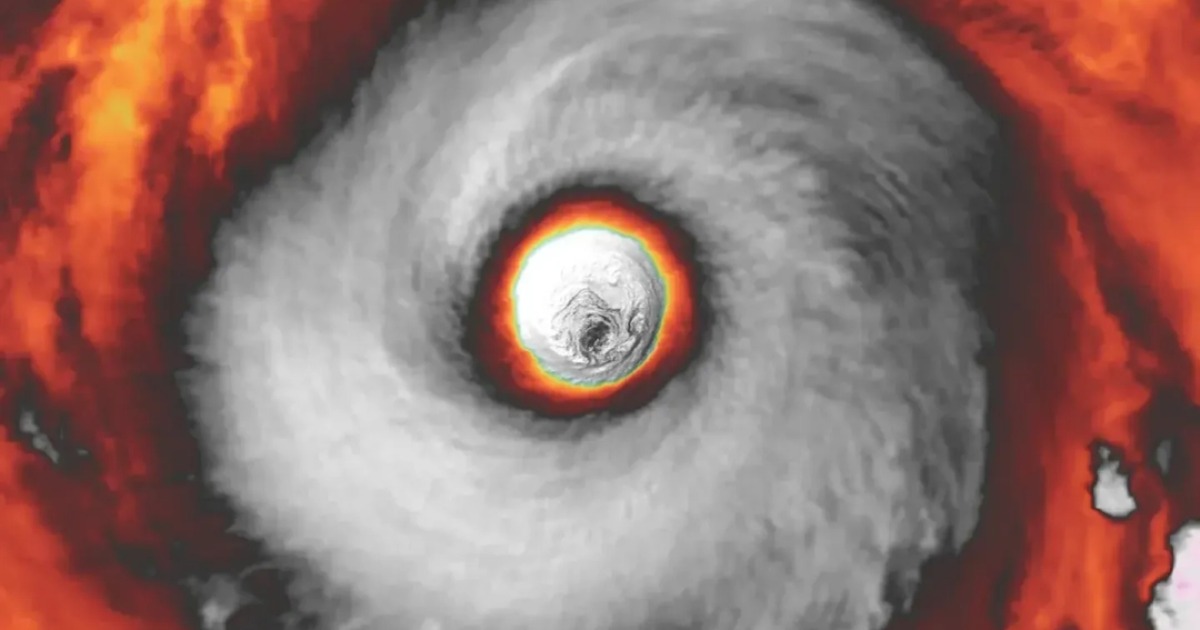

Taiwan has been brought to a near standstill as Typhoon Champi, one of the most powerful tropical cyclones of 2026, approaches the island with destructive winds and torrential rain.
Authorities cancelled 979 flights on Friday, October 23, including 262 domestic and 717 international services, while schools, offices and financial markets closed across much of the country.
The storm, which previously reached the equivalent of Category 5 intensity, has weakened considerably but remains capable of causing dangerous flooding, power outages and coastal damage.
Officials have confirmed at least one death, with updated reports placing the number of injured at 171 and more than 2,600 people evacuated from vulnerable areas.
How powerful is Typhoon Champi?
Typhoon Champi reached peak winds of approximately 296 km/h (184 mph), according to UNILAD's October 23 report, making it the strongest tropical cyclone recorded worldwide in 2026.
At that intensity, the storm was comparable to a Category 5 hurricane, the highest classification on the Saffir-Simpson Hurricane Wind Scale.
Champi has since weakened, but Taiwan's Central Weather Administration reported gusts of around 191 km/h (119 mph) near its centre as it approached the island.
One of the greatest concerns is the storm's enormous size.
Forecasters estimate its radius at approximately 320 kilometres (200 miles), meaning its effects could extend across most of Taiwan even if the centre remains offshore.
Weather experts have warned that dangerous conditions could persist for nearly two days, particularly if the typhoon slows down.
Why has Taiwan shut down?
With powerful winds, heavy rainfall and possible flooding forecast, Taiwanese authorities introduced widespread precautionary closures.
Schools and government offices suspended operations across most of the island, while financial markets also closed for Friday.
The transport ministry confirmed the cancellation of all 262 domestic flights and 717 international flights, bringing the total to 979.
However, not every transport service stopped operating.
Taiwan's high-speed rail continued running, while Taipei's subway and other public transport services remained operational, although some were operating on reduced schedules.
The Kinmen islands, located close to the Chinese coast, were among the few areas where schools and offices remained open.
How many people have been injured?
The severe weather has already caused casualties and widespread disruption.
According to updated October 23 reporting, one person has died and 171 people have been injured in Taiwan.
Authorities also evacuated 2,639 residents from mountainous areas considered particularly vulnerable to landslides and flooding.
More than 77,000 homes experienced power outages, although electricity had reportedly been restored to most affected properties.
Emergency teams have been placed on alert across northern and northeastern Taiwan as the storm continues its approach.
Which areas are most at risk?
Northeastern Taiwan is expected to experience some of the most severe conditions as Champi passes close to the coast.
In Yilan County, authorities distributed sandbags and prepared inflatable rescue boats and amphibious vehicles for possible evacuations.
The port town of Suao has also been preparing for flooding, with local officials indicating that military assistance could be requested if necessary.
Meanwhile, coastal communities received emergency alerts warning of winds exceeding 150 km/h (93 mph).
Forecasters warned that mountainous areas in northern Taiwan could receive almost a metre of rainfall, creating additional risks of flash flooding and landslides.
In the northern port city of Keelung, residents and boat owners worked to secure their property ahead of the storm.
Will Typhoon Champi make landfall?
As of October 23, forecasters expected Champi to pass close to northeastern Taiwan, although the possibility of a direct landfall had not been entirely ruled out.
Central Weather Administration forecaster Liu Pei-teng explained that changes in the storm's movement could alter the threat.
If Champi slows down, loops or shifts sideways, its centre could move closer to the island than originally forecast.
Even without a direct landfall, its broad wind field means Taiwan can experience dangerous weather.
Authorities have therefore urged residents to remain alert and avoid exposed coastal areas.
Where is Typhoon Champi heading next?
Forecasts indicate that the storm will move north after passing Taiwan, tracking towards the Chinese coast before continuing into southern Japan.
Japan's southwestern islands, particularly Yonaguni in Okinawa Prefecture, are among the areas expected to experience its effects.
The typhoon has already disrupted flights and other activities in parts of Japan.
Its wider circulation has also affected the Philippines, where authorities introduced maritime restrictions, suspended some classes and evacuated residents from vulnerable areas.
Champi is expected to encounter less favourable atmospheric conditions as it continues moving north, which could cause further weakening.
However, weakening tropical cyclones can still produce damaging winds, dangerous seas and significant rainfall.
Why did Typhoon Champi become so powerful?
Several environmental conditions helped Champi intensify over the western Pacific Ocean.
Sea surface temperatures in the region were approximately 30°C (86°F), providing a substantial source of heat and moisture.
Warm ocean water helps fuel tropical cyclones by supplying energy through evaporation and condensation.
Champi also developed in an environment with abundant atmospheric moisture and relatively low wind shear.
Low wind shear allows a storm's structure to remain organised, making it easier for the system to intensify.
These conditions helped Champi reach exceptional strength before less favourable weather patterns began weakening it.
Could Typhoon Champi affect countries outside Asia?
Although the storm's most immediate dangers are concentrated in East Asia, its effects on large-scale atmospheric circulation may extend further.
UNILAD reported that meteorologists were monitoring potential downstream changes to the jet stream, which could contribute to unsettled weather in parts of Canada next week.
However, that would be an indirect atmospheric influence rather than Typhoon Champi itself travelling to Canada as a tropical cyclone.
Any effects on North American weather would depend on how the storm interacts with broader weather systems over the Pacific.
What happens next?
Emergency authorities in Taiwan will continue monitoring rainfall, coastal conditions and the storm's movement as it passes the island.
Residents have been advised to follow official warnings, particularly in areas vulnerable to flooding, landslides and strong winds.
Transport disruption could continue even after the storm moves away, depending on airport conditions and the time required for airlines to restore their schedules.
Meanwhile, authorities in southern Japan are preparing for the next stage of Champi's journey.
Although the typhoon is no longer at its peak intensity, its enormous size and continued strength mean it remains a significant regional threat.
Sources: UNILAD, October 23, 2026; Reuters, October 23, 2026; Associated Press, October 23, 2026; and Taiwan's Central Weather Administration, as reported by international news agencies.