Legal experts have identified several parties who could potentially face legal action following the devastating Florida Learjet crash that killed nine people, including two young children.
The Learjet 60 was travelling from Austin, Texas, to the Bahamas on November 1, 2026, when it suffered a catastrophic emergency over South Florida.
The aircraft plunged from approximately 35,000 feet before crashing near Greenacres, killing everyone on board.
As investigators continue searching for answers, two aviation attorneys have explained how responsibility for the disaster could extend beyond the aircraft's pilots.
They have also outlined what the victims' families can do to pursue compensation, even before investigators determine the cause.
Who could be held responsible for the Florida Learjet crash?
The aircraft's owner, operator, maintenance providers and potentially other companies involved in the flight could face scrutiny, depending on what investigators uncover.
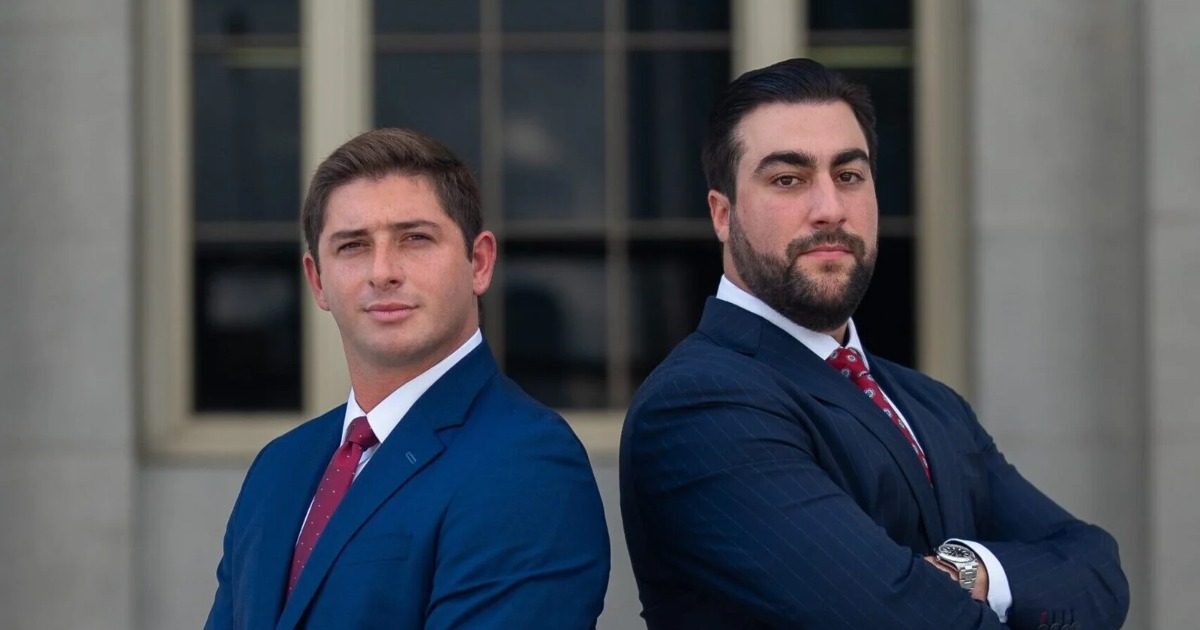
Speaking to VT, aviation attorneys Mark Lopez-Trigo and Joshua Padron, of the Florida law firm Padron & Lopez-Trigo, explained that responsibility in aviation accidents can be shared between multiple parties.
The lawyers identified the aircraft's registered owner as LR60271 LLC and its operator as Aurora Aviation, doing business as Upper Jet.
They explained that private aviation operations often involve different businesses handling ownership, maintenance, crew arrangements and day-to-day operations.
Consequently, investigators may need to examine the responsibilities and decisions of several organisations.
Potential areas of scrutiny include pilot training, crew selection, aircraft maintenance procedures, operational oversight and decisions made during the flight.
However, the lawyers emphasised that determining responsibility will depend on the evidence.
Neither the aircraft's owner nor its operator has been found legally responsible for the crash.
There is currently no official finding assigning blame to any individual or organisation.
Could the victims' families receive compensation?
According to Lopez-Trigo and Padron, eligible surviving relatives and the estates of those killed may be able to pursue wrongful death claims.
Such claims can seek compensation for financial losses resulting from a person's death.
Depending on which laws apply, compensation may also be available for lost companionship, emotional suffering and other legally recognised damages.
However, the attorneys warned that this particular accident presents complicated legal questions.
The flight departed from Texas, was travelling internationally to the Bahamas and crashed in Florida.
Businesses connected with the aircraft may also be based in different states.
These factors could influence which jurisdiction's laws apply and who is entitled to bring a claim.
Why could the deaths of an entire family complicate legal proceedings?
Among the victims were technology entrepreneur Adam Robinson, 44, his wife Helen Sharp and their two children, four-year-old Emma and two-year-old Charlie.
The deaths of all four immediate family members could create additional complications concerning inheritance and the administration of their estates.
The lawyers explained that courts may need to determine who qualifies as a surviving beneficiary and how each deceased person's estate should be handled.
These questions could affect who has the legal authority to pursue compensation.
The families of the two pilots may face different legal considerations.
Depending on their employment arrangements, workers' compensation rules could restrict certain claims against an employer, although claims against other parties might remain possible.
What did the pilots say before the crash?
The aircraft was being flown by 55-year-old captain Jeffrey Gregory and 20-year-old co-pilot Nathalia Gadelha Filgueiras.
According to reports of air traffic control recordings, the crew encountered serious difficulties during the flight.
Filgueiras reportedly warned controllers about ice accumulation before declaring an emergency as the aircraft began losing altitude rapidly.
During the descent, the crew described increasingly severe conditions, including an overspeed warning and a reported descent rate of approximately 20,000 feet per minute.
The final communications indicated that the pilots were struggling to regain control.
However, the recordings alone cannot establish why the aircraft entered its catastrophic descent.
What important evidence have investigators discovered?
The National Transportation Safety Board has revealed that components of the Learjet were recovered considerable distances from the main crash site.
Investigators found most of the aircraft's left elevator in three separate pieces, between approximately 1.3 and 3.8 miles from the impact location.
The elevator is a control surface on the aircraft's tail that helps pilots control its pitch, including raising or lowering the nose.
NTSB member Tom Chapman explained that the discovery could provide important clues about the sequence of events.
However, investigators have not determined whether the component separated before the aircraft lost control or broke away because of the extreme forces experienced during the descent.
That distinction could prove crucial to understanding the accident.
The NTSB is also examining weather conditions and other potential contributing factors.
How long do families have to take legal action?
Florida wrongful death claims generally have a two-year filing deadline, although different deadlines may apply depending on the circumstances and governing law.
The attorneys warned that families should not necessarily wait until the NTSB completes its investigation before considering their legal options.
A preliminary investigation report may be released within approximately a month of the crash, while a final determination could take one to two years or longer.
Legal filing deadlines can continue running throughout that period.
Families may therefore wish to obtain independent legal advice, preserve relevant evidence and establish which claims are available.
Can the NTSB investigation be used in a lawsuit?
The NTSB investigation and any civil legal proceedings have different purposes.
The federal agency investigates aviation accidents to establish probable causes and recommend safety improvements.
A wrongful death lawsuit, by contrast, seeks to determine whether legally responsible parties owe compensation.
Federal law generally restricts the use of the NTSB's accident reports as evidence in civil damages proceedings.
However, independently obtained evidence, witness testimony and expert analysis may still be used to establish liability.
This makes the early preservation of records and other relevant information particularly important.
Who were the nine victims?
The passengers included Adam Robinson, his wife Helen Sharp, their children Emma and Charlie, family friends Rachael Reed and Charmi Fehr, and nanny Anita Maria Cetina.
Captain Jeffrey Gregory and co-pilot Nathalia Gadelha Filgueiras also died.
The tragedy has prompted widespread grief and renewed discussion about aviation safety, particularly following reports of the aircraft's final communications and the discovery of wreckage away from the main impact site.
What happens next?
Federal investigators will continue examining the wreckage, weather conditions, aircraft records and circumstances surrounding the flight.
The findings could help determine whether the crash involved a mechanical failure, structural damage, weather-related difficulties, operational decisions or a combination of factors.
Meanwhile, the victims' families may begin exploring their legal options independently of the federal investigation.
Although attorneys have identified several parties whose roles could be examined, no company or individual has been officially found responsible.
For now, the investigation remains ongoing, with families awaiting answers about what caused the tragedy and whether it could have been prevented.
Source: VT, November 6, 2026, including interviews with aviation attorneys Mark Lopez-Trigo and Joshua Padron and statements attributed to the National Transportation Safety Board.