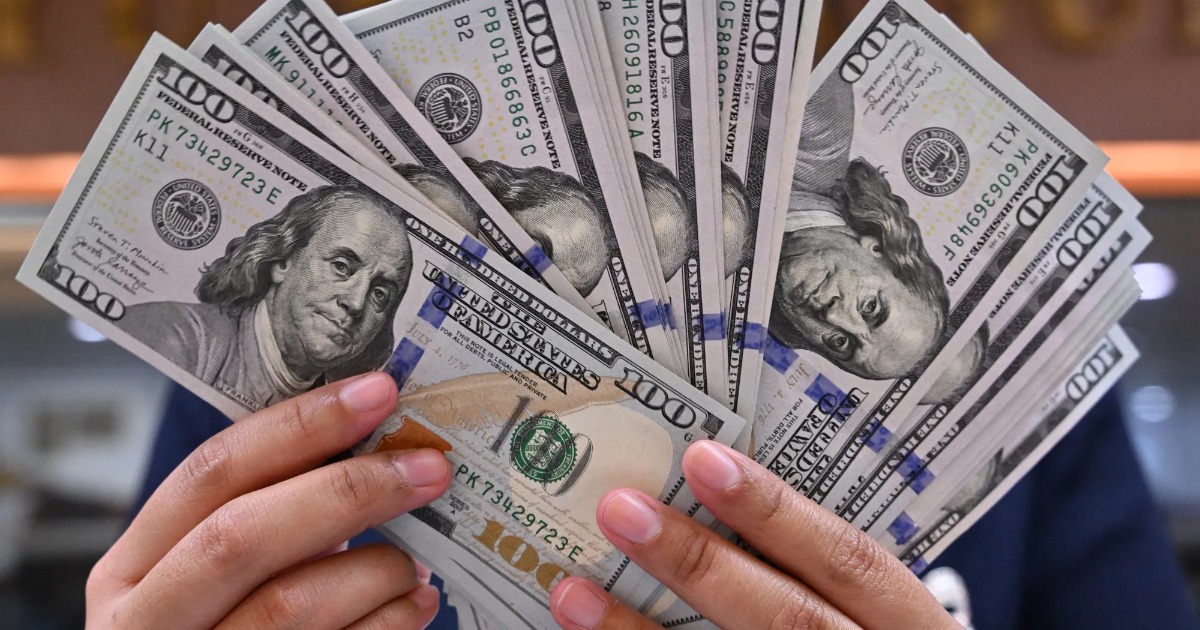
Millions of Americans have been included in a federal government payment programme worth approximately $1.9 billion, with eligible recipients receiving money automatically.
The Trump administration announced the initiative in October 2026, identifying approximately 20.8 million people who would qualify for a one-time payment.
While most payments were scheduled to arrive during October, some Americans may still be wondering whether they were included or how to check if their money was issued.
However, the programme comes with specific eligibility requirements, meaning millions of people who participate in the wider federal benefits system will not receive anything.
What is the $1.9 billion government payout for?
The payments are part of a one-time $90 Medicare Part B premium rebate announced by President Donald Trump on October 2, 2026.
The money is intended to help qualifying Medicare beneficiaries offset some of the costs associated with their medical insurance premiums.
Medicare Part B generally covers outpatient healthcare services, including doctors' appointments, certain medical tests, preventive care and other medically necessary services.
In 2026, the standard monthly Part B premium is $202.90, meaning the rebate covers approximately 44 percent of one month's standard premium.
The administration said the payments would be funded through the Medicare Improvement Fund, a federal account established by Congress in 2008.
With approximately 20.8 million people eligible for $90 each, the total planned distribution amounts to $1.872 billion, commonly rounded to $1.9 billion.
Who is eligible for the $90 Medicare payment?
According to the Centers for Medicare & Medicaid Services (CMS), approximately 20.8 million Americans qualify for the rebate.
To be eligible, individuals must meet all of the following requirements:
The programme primarily benefits people enrolled in traditional Medicare who pay the standard Part B premium themselves.
However, simply being enrolled in Medicare does not automatically mean someone qualifies.
Who will not receive the payment?
One of the most significant exclusions concerns Americans enrolled in Medicare Advantage.
People with Medicare Advantage plans are not eligible for the one-time $90 rebate.
According to healthcare policy research organisation KFF, approximately 35.2 million people were enrolled in Medicare Advantage in 2026.
Other excluded groups include individuals whose Medicare premiums are paid through Medicaid assistance and those who pay higher premiums because of their income.
These exclusions mean that fewer than one-third of Medicare beneficiaries qualify for the payment, according to reporting by the Associated Press.
When are the $90 Medicare payments being sent?
The government scheduled the majority of payments for October 2026.
CMS said most eligible beneficiaries would receive their money through direct deposit on or around October 8.
Individuals who did not have direct deposit arrangements were expected to receive paper checks from the US Department of the Treasury later in October.
As of November 7, the announced payment window has largely passed, although individuals who believe they qualify can still check whether their payment was issued.
The government has not announced a second round of payments under this initiative.
How do Americans claim their share of the $1.9 billion?
Eligible Americans do not need to submit an application or complete a claim form to receive the payment.
CMS arranged for qualifying recipients to receive the rebate automatically through the existing federal payment system.
Those who normally receive federal payments by direct deposit were expected to receive the rebate electronically.
Other qualifying beneficiaries were due to receive a paper check at the address on file.
Anyone claiming that recipients must pay an administrative fee or provide sensitive financial information through an unfamiliar website to release the rebate should be treated with suspicion.
How to check if your Medicare payment has been issued
Americans who believe they qualify but have not received their money can contact the relevant federal agencies.
For questions about eligibility, CMS directs beneficiaries to Medicare:
CMS indicated that payment-status enquiries could be made through Social Security beginning October 15, 2026.
Recipients can also review their bank statements for an unexpected federal deposit or check their mail for correspondence from the Treasury Department.
However, the absence of a payment does not necessarily indicate an administrative error, as many Medicare beneficiaries are excluded under the programme's rules.
Where did the $1.9 billion come from?
The payments are being funded through the Medicare Improvement Fund, established by Congress in 2008.
The White House said the fund was allocated approximately $2 billion to support improvements to the traditional Medicare programme.
The administration presented the rebate as a way of returning healthcare-related funds directly to eligible beneficiaries.
However, the decision has attracted criticism from some lawmakers and healthcare policy experts, who argue that a one-time $90 payment will do relatively little to address the broader costs facing Medicare recipients.
Others have questioned the timing of the announcement, which came shortly before the November 2026 midterm elections.
Regardless of the political debate, the rebate was announced as an automatic payment rather than a new benefit requiring an application.
Will Americans receive another Medicare rebate?
At present, the $90 rebate is described as a one-time payment.
There has been no confirmed announcement of a recurring monthly payment or a second $1.9 billion distribution under the same initiative.
Americans should therefore avoid assuming that receiving the October rebate means they will receive further payments in November or December.
For eligible beneficiaries who have not received their money, the most useful next step is to contact Medicare about eligibility or Social Security about payment status.
Further information about Medicare coverage and official payment guidance is available through Medicare.gov and the Centers for Medicare & Medicaid Services.