Political analyst Nate Silver has made another striking prediction about Donald Trump's future following the Democrats' sweeping victory in the 2026 midterm elections.
Silver, who founded the election forecasting website FiveThirtyEight, had warned that Republicans were heading towards a potential 'Blue Tsunami' ahead of the November 3 vote.
His forecast was followed by significant Democratic gains, with the party securing control of both chambers of Congress and winning several closely watched races.
Now, just days after the election, Silver has suggested that the political consequences could extend well beyond the loss of Republican control in Washington.
Speaking on his Still Counting podcast, the analyst outlined an unexpected scenario involving Trump and the remainder of his presidency.
What has 'Election Nostradamus' predicted about Donald Trump?
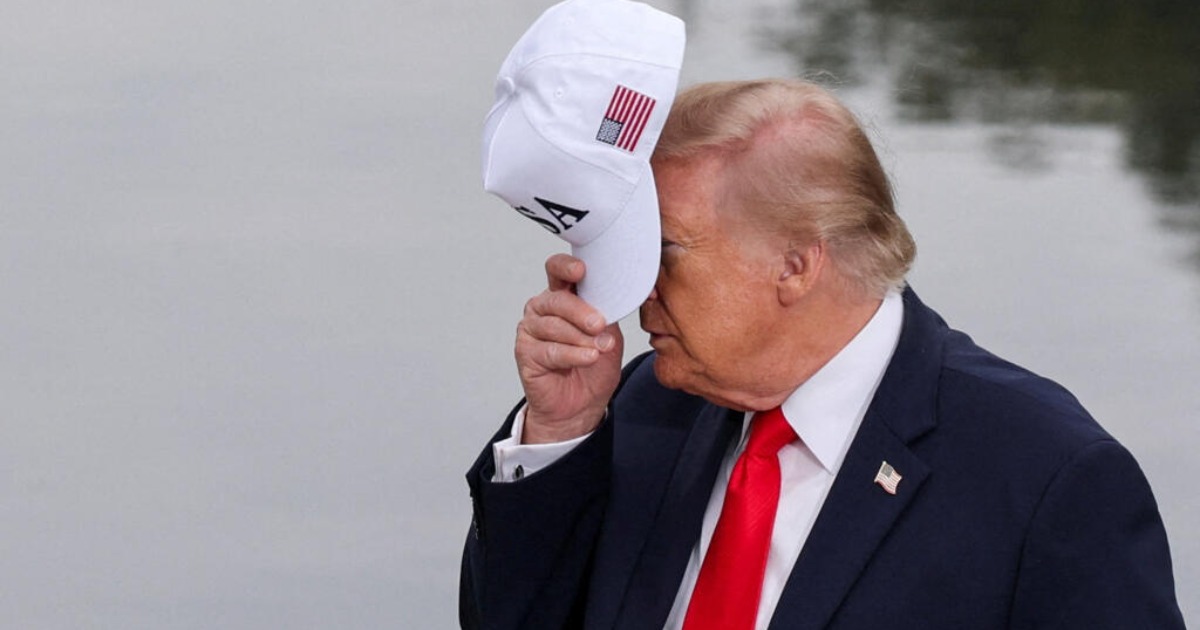
Silver has suggested that Donald Trump could potentially resign from the presidency before his second term ends in January 2029.
Discussing the aftermath of the midterms, Silver said he had an unusual feeling that Trump might eventually seek a reason to leave the White House early.
"I had just a weird intuition that maybe Trump will find some pretense to quit," he said.
Silver suggested that the president could become increasingly isolated within his own party following the election losses.
His theory centres on the possibility that Republicans may begin distancing themselves from Trump as they consider their political future ahead of the 2028 presidential election.
However, Silver presented the idea as a personal intuition rather than a statistical forecast or a prediction supported by a specific probability.
There is currently no announcement or indication from Trump that he intends to resign.
Why does Nate Silver believe Trump could leave office early?
Silver argued that Trump's relationship with the Republican Party could change following the midterm results.
He suggested that Republicans had benefited politically from Trump's presidency in the past, particularly through judicial appointments and tax policy.
However, he questioned whether the party could continue receiving those benefits while facing the electoral consequences of remaining closely associated with the president.
Silver also argued that Trump's dominance of Republican politics had limited the opportunities for other figures to establish themselves independently.
With Democrats taking control of Congress, the analyst suggested that Republican politicians might reconsider how closely they align themselves with the White House.
Under the scenario Silver described, Vice President JD Vance could assume the presidency if Trump voluntarily resigned.
But this remains hypothetical. No resignation process has begun, and there is no confirmed plan for Vance to replace Trump before the end of his term.
How accurate was Nate Silver's 'Blue Tsunami' forecast?
Before the November 3 elections, Silver's forecasting model indicated that Democrats had a substantial chance of winning control of both the House of Representatives and the Senate.
His final model gave Democrats a 95 percent probability of winning the House and an 80 percent probability of taking the Senate, according to Axios.
Silver also highlighted polling that suggested Democratic candidates were performing strongly in several competitive states.
The election results subsequently confirmed Democratic victories in both chambers.
As of November 6, Democrats had secured 54 Senate seats, while House results continued to be finalised.
The party also recorded notable Senate victories in states including Texas, Ohio and Kansas.
Although the outcome was consistent with Silver's forecast, other polling organisations and election models had also identified the possibility of a substantial Democratic victory.
His latest comments about Trump are different from his election forecasts because they concern a speculative political scenario rather than a modelled election result.
What has JD Vance said about the Republican midterm defeat?
Vice President JD Vance has also publicly addressed the Republican Party's election losses.
In a lengthy statement posted on X on November 4, Vance argued that the administration's ongoing war with Iran had played a central role in the result.
He said that polling suggested many people who supported Trump and Vance in the 2024 presidential election had voted for Democratic candidates in 2026.
According to Vance, voters had expressed concerns about the Iran war, inflation, the cost of living, the administration's approach to putting America first and the United States' relationship with Israel.
The vice president argued that Republicans needed to acknowledge those concerns when assessing the election outcome.
Trump subsequently described Vance's analysis as largely accurate, while defending his decision-making over the Iran conflict.
The president also acknowledged that the war had contributed to higher gasoline prices in the short term.
Could JD Vance become president before 2028?
If Trump were to resign before completing his term, Vice President JD Vance would succeed him under the United States Constitution.
The 25th Amendment provides for the vice president to become president when the sitting president resigns, dies or is removed from office.
That means a voluntary resignation by Trump would not automatically trigger a new presidential election.
Instead, Vance would assume the presidency for the remainder of the term.
Silver's suggestion has therefore drawn attention to Vance's political future, although there is no evidence that such a transition is being planned.
Vance has also been discussed as a potential candidate in the 2028 presidential election, but he has not formally announced a campaign.
What has Trump said about Vance running in 2028?
Trump was questioned about Vance's political ambitions during an exchange with reporters on November 4.
Asked whether he had discussed a possible 2028 presidential campaign with his vice president, Trump declined to give a definitive answer.
"I speak to him about a lot of things, but I mean, we'll see what happens," the president said.
Trump added that it remained unclear who would ultimately decide to enter the next presidential race.
His remarks did not amount to an endorsement of Vance, nor did they suggest that Trump was preparing to leave office.
Nevertheless, the exchange has added to discussion about the Republican Party's leadership following its congressional losses.
What happens next for Donald Trump?
Trump remains president, with his second term scheduled to end on January 20, 2029.
Following the midterm elections, his administration will face a Congress controlled by Democrats, potentially complicating efforts to pass legislation and advance major policy priorities.
Congressional committees may also pursue increased oversight of the administration.
Republicans, meanwhile, will need to consider their political direction ahead of the 2028 presidential election.
Silver's latest prediction has attracted attention because of his successful midterm forecasting, but it is important to distinguish his speculative comments from an evidence-based prediction that Trump will actually resign.
For now, the possibility of Trump leaving the White House early remains a theory raised by the political analyst, not an announced development within the administration.
Sources: VT, November 6, 2026; Nate Silver's Still Counting podcast; Axios election forecasting coverage.