
A disaster analyst who examined footage of the Florida private jet crash that killed nine people has offered a theory about what may have caused the aircraft to suddenly plunge towards the ground.
The Learjet 60 was travelling from Austin, Texas, to the Bahamas when it crashed near a residential neighbourhood in Palm Beach County on Sunday, November 1.
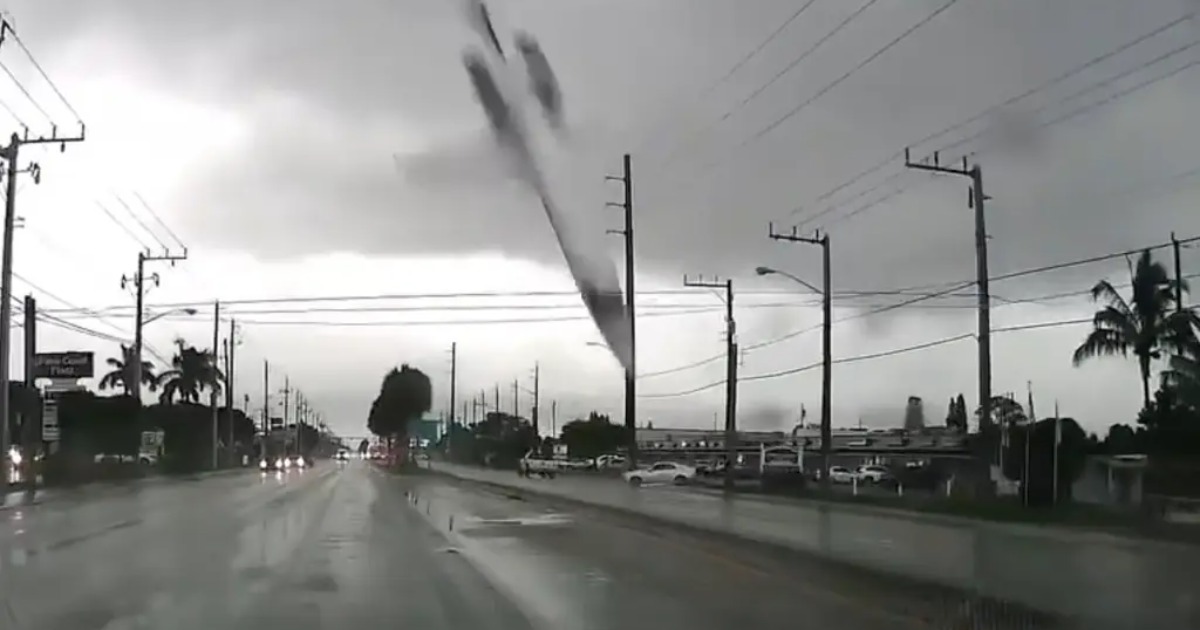
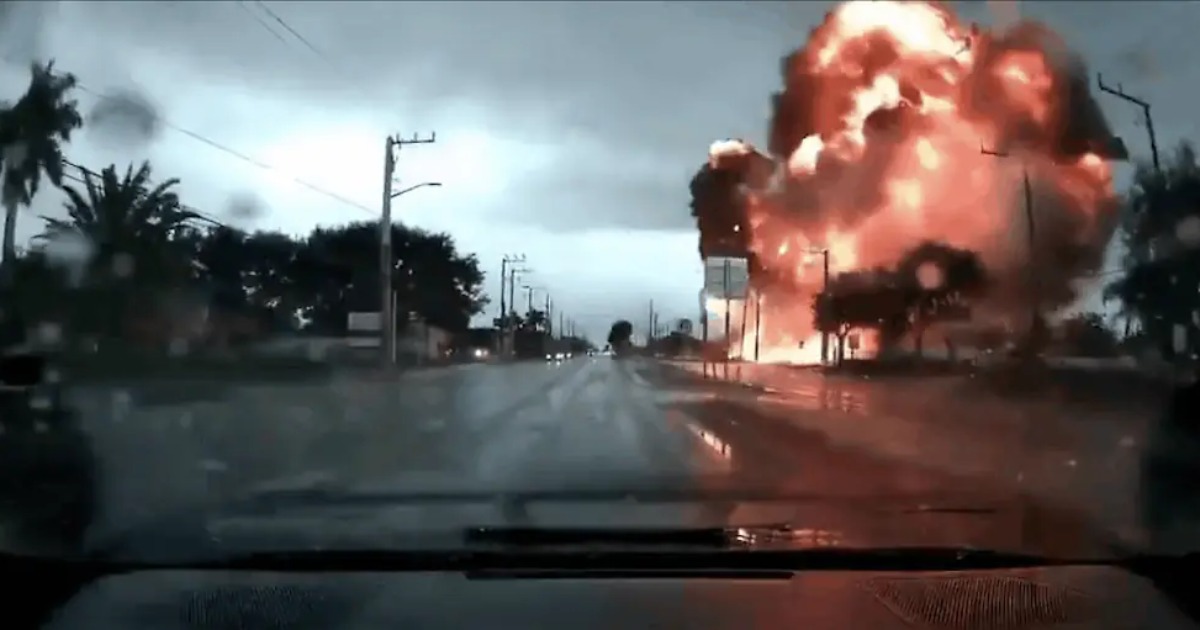
The aircraft came down at approximately 12:50pm local time, erupting into flames and leaving a large crater near a roadway.
US Transportation Secretary Sean Duffy confirmed that all nine people onboard were killed, describing the incident as a horrific tragedy.
Now, disaster analyst Jeff Ostroff has reviewed footage of the crash and air traffic control recordings, identifying a possible explanation for the aircraft's sudden loss of control.
However, his assessment remains a theory rather than an official finding from investigators.
What does the disaster expert believe caused the Florida jet crash?
According to Ostroff, ice accumulation on the aircraft's wings may have disrupted airflow and reduced the amount of lift they could generate.
He suggested this could have caused an aerodynamic stall, potentially resulting in the aircraft losing control and entering a steep descent.
"Once you have ice on your wings, you lose lift," Ostroff explained during his analysis.
He stressed that an aerodynamic stall is different from an engine failure. An aircraft can experience a stall even when its engines are operating normally.
A stall occurs when airflow over a wing is disrupted because its critical angle of attack has been exceeded, causing a substantial reduction in lift.
Ice accumulation can alter the shape and aerodynamic characteristics of a wing, potentially increasing the risk of a stall.
Ostroff also raised the possibility of asymmetric icing, in which ice accumulates unevenly across an aircraft's surfaces.
Such conditions can affect the aircraft's handling and potentially contribute to unwanted rolling or banking movements.
However, he acknowledged that the available information does not establish how much ice, if any, had accumulated on each wing.
What did the pilots report before the crash?
Air traffic control recordings indicate that the Learjet was flying at approximately 35,000 feet when the crew reported encountering icing and moderate turbulence.
Initially, the pilot described the conditions as manageable.
But the situation changed when the aircraft encountered further precipitation.
The crew subsequently requested permission to climb from 35,000 feet to 37,000 feet.
Shortly afterwards, the aircraft entered an extremely rapid descent.
The pilots declared an emergency as the jet began losing altitude at approximately 10,000 feet per minute.
The reported descent rate then increased to around 20,000 feet per minute, with the crew warning controllers that the aircraft was in an overspeed condition.
In one of the final reported transmissions, a pilot said: "We're going to crash into the ground."
The jet struck the ground shortly afterwards, killing everyone onboard.
Why would the pilots try to climb higher?
One detail Ostroff examined was the crew's request to climb another 2,000 feet despite already experiencing icing conditions.
At first, climbing higher might appear counterintuitive because temperatures generally decrease with altitude in the lower atmosphere.
However, Ostroff suggested the pilots may have been attempting to escape an area containing the moisture needed for ice to accumulate.
Aircraft icing typically requires suitable temperatures and the presence of supercooled liquid water.
By climbing above a particular layer of cloud or precipitation, pilots may sometimes be able to escape certain icing conditions.
Ostroff suggested that this could explain the crew's decision to request a higher altitude.
Nevertheless, whether climbing was appropriate would depend on the aircraft's performance, weather conditions, available airspace and other operational factors.
There is no confirmed evidence that the requested climb caused the subsequent loss of control.
What did the expert notice about the aircraft's final movements?
Ostroff also highlighted a reported communication indicating that the aircraft was banking at an angle of approximately 60 degrees.
A bank angle of that magnitude would be highly unusual during normal cruise flight, particularly when combined with an uncontrolled descent.
The analyst suggested the steep bank could indicate that the crew was struggling to maintain control.
He connected this detail to his theory about icing, explaining that uneven aerodynamic effects could potentially contribute to an aircraft rolling unexpectedly.
However, a steep bank angle alone does not establish that icing caused the event, and the exact flight dynamics remain unconfirmed.
Ostroff suggested that the crew may have been unable to recover the aircraft once the descent became sufficiently severe.
His interpretation was based on the available recordings and videos rather than a full examination of the aircraft's flight data or wreckage.
Where did the Learjet crash?
The aircraft crashed near Greenacres and Cresthaven in Palm Beach County, Florida, close to a residential mobile home community.
Witness footage showed the jet descending steeply before a large explosion occurred at the crash site.
Florida Governor Ron DeSantis described the incident as catastrophic, comparing the aircraft's descent to a missile striking the ground.
Emergency crews responded to the scene, closing nearby roads and evacuating approximately 600 residents from the surrounding area.
Officials initially reported no deaths or injuries among people on the ground.
The crash site was approximately eight miles from President Donald Trump's Mar-a-Lago estate, although there is no evidence connecting the incident to the property.
Has the cause of the Florida Learjet crash been confirmed?
No official cause has been established.
The National Transportation Safety Board is leading the investigation, supported by the Federal Aviation Administration.
Investigators will examine available flight information, weather conditions, aircraft maintenance records, wreckage and communications with air traffic control.
They will also seek to establish whether the aircraft experienced any mechanical failures or aerodynamic problems before the crash.
Although icing and turbulence were reportedly mentioned by the crew, their presence does not establish that either caused the disaster.
Other aviation commentators have offered different possible explanations, including potential damage to the aircraft's tail assembly, but those theories also remain unconfirmed.
For now, Ostroff's analysis offers one possible explanation for the Learjet's rapid descent, while the official investigation continues to determine what happened.