
An experienced airline captain has suggested that a private jet which crashed in Florida, killing all nine people onboard, may have been impossible to recover after encountering a highly unusual set of circumstances.
The Learjet 60 crashed in Palm Beach County on Sunday, November 1, after suddenly descending from cruising altitude while travelling from Texas to the Bahamas.
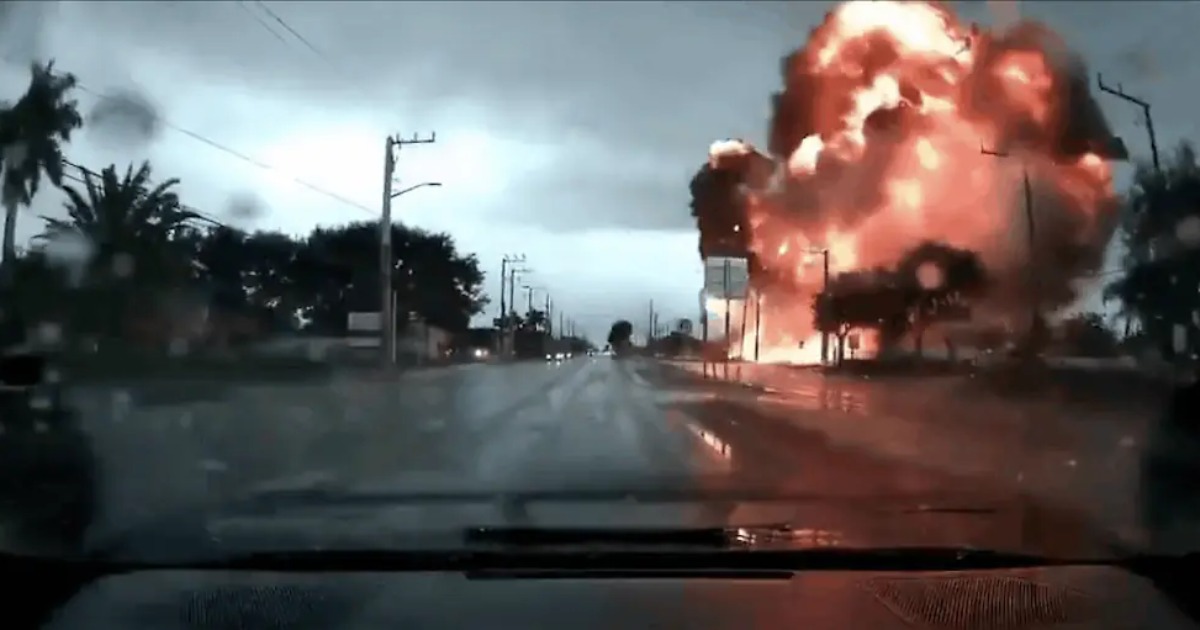
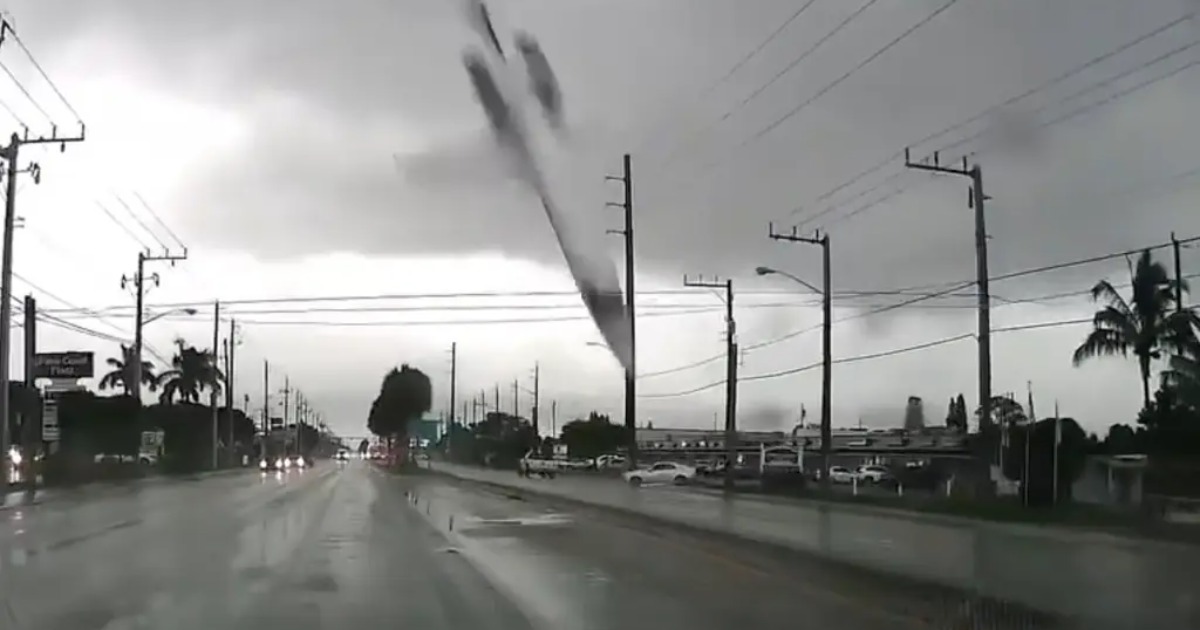
Footage showed the aircraft plunging towards the ground at a steep angle before erupting into flames near a residential community.
Now, aviation expert Denys, a Boeing 737 captain who operates the YouTube channel Pilot Blog, has examined the footage and air traffic control recordings to offer his assessment of what could have happened.
His analysis raises questions about the aircraft's flight conditions and a potentially critical component, although investigators have not confirmed the cause of the crash.
Why does the aviation expert believe the Learjet was 'doomed'?
According to Denys, footage of the aircraft's final descent appeared to show that its horizontal stabilizer, a crucial part of the tail assembly, might have been missing.
The horizontal stabilizer helps maintain an aircraft's pitch stability, allowing it to remain balanced and controllable during flight.
Denys suggested that the structure could have detached under extreme aerodynamic forces as the aircraft descended.
"Without the horizontal stabilizer you cannot fly the airplane," he explained during his analysis.
If the stabilizer had separated from the aircraft, the pilots would likely have faced an extraordinarily difficult, potentially unrecoverable situation.
However, the apparent absence of the component was an observation based on available footage, not a confirmed finding from investigators.
Denys also suggested that an earlier problem could have triggered the loss of control, potentially leading to the extreme forces that caused the structural damage.
Reflecting on the scenario, he said: "They were doomed since it happened."
What unusual conditions did the aircraft encounter?
One of the most significant details identified by Denys involved the conditions reported by the Learjet's pilots before the emergency.
According to air traffic control recordings, the aircraft was flying at approximately 35,000 feet when the crew reported icing and moderate turbulence.
The outside temperature was reportedly around minus 47 degrees Celsius.
Denys described the icing report as particularly unusual because significant aircraft icing is more commonly associated with temperatures closer to freezing, when supercooled liquid water can accumulate on aircraft surfaces.
"This is something really unusual," he said.
At extremely low temperatures, the atmospheric conditions necessary for conventional airframe icing are generally less common, although icing hazards can still occur under particular circumstances.
The captain suggested that ice accumulation could have affected the aircraft's aerodynamic performance or control surfaces.
That could potentially have contributed to a loss of pitch control, although the theory remains unproven.
What did the pilots report before the crash?
The aircraft had departed Austin-Bergstrom International Airport in Texas and was heading towards North Eleuthera Airport in the Bahamas.
While flying eastbound at cruising altitude, the pilots reported turbulence and ice accumulation, initially indicating that the conditions were manageable.
After encountering additional precipitation, the crew requested permission to climb another 2,000 feet.
However, the situation rapidly deteriorated.
The pilots declared an emergency as the aircraft began descending at approximately 10,000 feet per minute.
Within moments, the crew reported a descent rate of around 20,000 feet per minute and warned that the aircraft had entered an overspeed condition.
The jet subsequently struck the ground near a residential community, causing a large explosion.
US Transportation Secretary Sean Duffy confirmed that all nine people onboard were killed.
Could a previous Learjet safety warning explain what happened?
During his analysis, Denys highlighted a Federal Aviation Administration airworthiness directive dating back to 1999.
The directive followed an incident involving a Learjet 55 in which incorrectly connected electrical wiring affected the horizontal stabilizer's anti-icing equipment.
According to the historical findings, the wiring problem caused heating elements to operate in the wrong sequence.
A central heating element that should have remained continuously powered was instead switching on and off, allowing ice to accumulate on the stabilizer.
That created a potential risk to the aircraft's pitch control.
Denys noted that the directive also applied to the Learjet 60 model, raising questions about whether a similar technical issue could have been relevant to the Florida crash.
However, there is no evidence that the aircraft involved in Sunday's disaster had the same wiring problem or that its anti-icing equipment malfunctioned.
The captain also referenced other historical safety notices involving Learjet aircraft and icing-related risks.
Those incidents involved different aircraft or circumstances and do not establish what happened in Florida.
How likely does the expert think icing was responsible?
Denys estimated that icing could have been responsible for the crash with what he described as an 80 to 90 percent likelihood.
However, that figure represents his personal assessment rather than a statistically validated probability or an official investigative conclusion.
His proposed sequence of events involves ice potentially affecting the aircraft's aerodynamic performance, leading to a rapid loss of control.
The resulting descent could then have placed extreme forces on the airframe, possibly causing the horizontal stabilizer to separate.
Such a sequence could explain why the aircraft appeared to descend at an unusually steep angle.
But the available footage and recordings are insufficient to confirm that this is what occurred.
What have investigators said about the Florida crash?
The National Transportation Safety Board is leading the investigation, with assistance from the Federal Aviation Administration.
Investigators will need to examine the wreckage, aircraft maintenance history, weather conditions, flight data and any available cockpit recordings before determining the cause.
The condition of the aircraft's tail assembly and its anti-icing systems could be relevant to understanding the sequence of events.
Officials have not confirmed that icing, structural failure or a malfunction involving the horizontal stabilizer caused the disaster.
The crash also prompted the evacuation of approximately 600 residents from a nearby mobile home community, while emergency crews secured the surrounding area.
For now, Denys' analysis offers a possible explanation for the Learjet's final moments, but the precise circumstances of the tragedy remain under investigation.