
Former US President Barack Obama has warned that modern democracies face a serious challenge that could undermine people's ability to understand one another, during a major appearance in Manchester.
The 65-year-old addressed thousands of people at the city's Co-op Live Arena on Thursday, October 15, as part of a series of events across the United Kingdom and Ireland.
Speaking with broadcaster and author Afua Hirsch, Obama reflected on political divisions, public trust, social media and the importance of shared values.
His remarks also included comments that were interpreted as indirect criticism of his successor, President Donald Trump, although Obama did not explicitly name him during the discussion.
But it was his warning about one of the greatest threats to modern society that attracted particular attention.
What did Barack Obama say was one of the biggest dangers facing the world?
Obama identified the fragmentation of information and the spread of misinformation as major threats to democratic societies.
He argued that online platforms increasingly separate people into different information environments, making it harder for them to agree on even the most basic facts.
During the conversation, Obama explained how social media platforms can encourage engagement by promoting emotionally charged material.
He said: "It turns out that a lot of what keeps you hooked is anger, resentment, fear, along with lust and cat videos."
He suggested that this combination of emotional content and personalised online feeds can reinforce existing opinions and reduce exposure to different perspectives.
According to Obama, the resulting divisions can make it increasingly difficult for people to have constructive disagreements.
His central concern was not simply that Americans hold different political views, but that they may increasingly disagree about what is factually true.
Why does Obama believe misinformation is so dangerous?
Obama argued that democracy depends on people having at least some shared understanding of reality.
Different political opinions are an essential part of democratic debate, he explained, but disagreements become much harder to resolve when people cannot establish common facts.
He referred to scientific issues including vaccination and climate change as examples of subjects where evidence should provide a foundation for discussion.
People can legitimately disagree about which policies should address those issues, he suggested, without rejecting the underlying scientific evidence.
Obama warned that when people no longer accept verifiable information, they may begin viewing political opponents as irrational or fundamentally untrustworthy.
Over time, he argued, this can weaken confidence in institutions and make cooperation increasingly difficult.
The former president suggested that rebuilding trust would require renewed attention to credible information, reliable institutions and the ways people communicate with one another.
Did Barack Obama criticise Donald Trump?
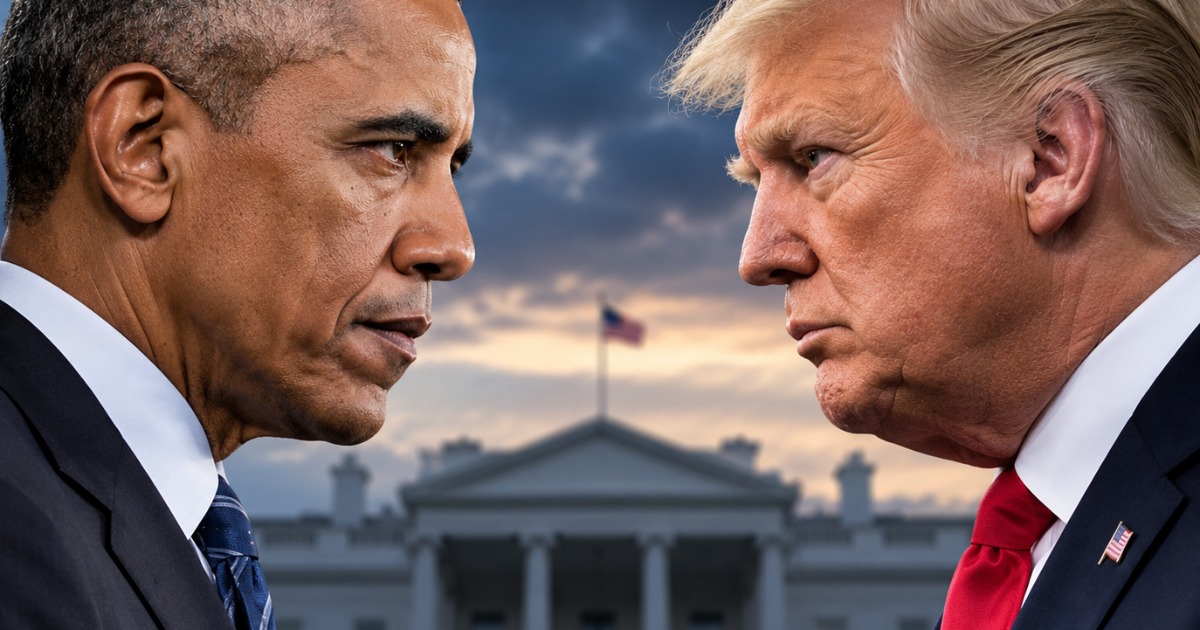
Several remarks during the Manchester appearance were interpreted as indirect criticism of Trump's political style and the wider political climate in the United States.
However, Obama did not explicitly name Trump in the passages reported from the event.
His comments instead focused on broader concerns about political leadership, misinformation and declining public confidence.
Trump and Obama have frequently disagreed over major political issues, including immigration, healthcare, climate policy and the role of government.
Their contrasting approaches to public communication have also attracted significant attention over the years.
Obama's Manchester remarks were consistent with concerns he has raised previously about the effects of misinformation and political polarisation.
Although some coverage described his comments as a swipe at Trump, the reported statements were framed primarily as observations about wider societal challenges rather than direct accusations against the president.
Why doesn't Obama want governments to control the internet?
Despite expressing concern about misinformation, Obama acknowledged that regulating online content presents difficult choices.
He suggested that allowing governments to determine what people can read or publish could introduce serious dangers of its own.
He referred to China's system of internet controls as an example of how attempts to regulate information can become associated with extensive state authority.
His comments highlighted a longstanding tension between reducing harmful misinformation and protecting freedom of expression.
Governments, technology companies and civil society organisations have debated how best to address this issue for years.
Potential responses include improving transparency around recommendation systems, strengthening media literacy and supporting access to reliable information.
However, each approach raises questions about effectiveness, accountability and the risk of restricting legitimate debate.
Obama did not present a simple solution during the discussion, instead acknowledging the difficulty of balancing these competing concerns.
Obama says political leaders need more than policy proposals
Beyond misinformation, Obama spoke about the importance of storytelling in politics.
He argued that political leaders must be able to explain why people should care about one another and work towards shared goals.
Although detailed policy proposals are important, he suggested they are not sufficient on their own to build public confidence or inspire cooperation.
Obama described the value of stories that help people recognise experiences they have in common, even when their backgrounds and traditions are very different.
He suggested that a shared sense of humanity can make communities more resilient during difficult periods.
For political leaders, that means communicating not only what they intend to achieve but also the values and motivations behind their decisions.
Why did Obama praise Manchester's history?
One of the evening's most notable moments came when Obama highlighted the actions of Manchester and Lancashire cotton workers during the American Civil War.
In the 1860s, Britain's cotton industry experienced severe hardship as supplies from the American South were disrupted.
Thousands of workers faced unemployment and poverty because local mills depended heavily on imported cotton.
Despite those difficulties, workers in Manchester publicly expressed support for the abolition of slavery and President Abraham Lincoln's efforts against the Confederacy.
Obama described their actions as an example of people choosing to support a moral cause even when doing so carried significant personal costs.
He used the story to illustrate how ordinary people can influence history through collective decisions and solidarity.
The episode remains an important part of Manchester's historical relationship with the United States.
A statue of Abraham Lincoln in Manchester's Lincoln Square commemorates the connection between the city and the American struggle against slavery.
What did Obama say about hope for the future?
Despite his warnings about political divisions, Obama also expressed optimism about society's capacity to overcome difficult periods.
He pointed to historical movements involving civil rights, women's suffrage and the abolition of slavery as evidence that collective action can bring meaningful change.
The former president suggested that remembering earlier struggles can help people maintain perspective during periods of uncertainty.
He also discussed the Obama Presidential Center in Chicago, which aims to preserve aspects of his presidency while supporting civic engagement and leadership development.
Obama presented the project as part of a wider effort to encourage future generations to participate in public life.
His reflections connected contemporary political challenges with earlier periods when communities faced major disagreements and social upheaval.
Why was Barack Obama in Manchester?
The Manchester appearance formed part of a three-date tour that also included Belfast and Glasgow.
The events were organised around conversations about democracy, leadership and the future of society.
In Manchester, Obama was interviewed by Afua Hirsch, whose work frequently examines identity, politics and social change.
The discussion took place at Co-op Live, one of the UK's largest indoor entertainment venues.
Reports from the event described a full audience, with Obama receiving a warm reception.
The evening concluded with Bruce Springsteen's song Land of Hope and Dreams playing as the former president left the stage.
What was the main message of Obama's warning?
Obama's Manchester appearance brought together several concerns about the direction of modern society.
His central warning was that democracy becomes more difficult to sustain when citizens cannot agree on a common foundation of reliable information.
He also acknowledged that attempts to address misinformation must be balanced against the importance of free expression.
Rather than focusing exclusively on technological solutions, Obama emphasised the role of trust, communication and shared experiences in strengthening communities.
Although his remarks were interpreted by some as criticism of Trump, the discussion extended well beyond any individual political figure.
His broader argument was that rebuilding confidence between people may be just as important as addressing the technology that increasingly shapes their understanding of the world.
Sources: Manchester Evening News, October 16, 2026; VT, October 16, 2026; The Guardian, October 16, 2026; North West Bylines, October 16, 2026.