
Millions of Americans could be eligible for government payments ahead of the November 3 midterm elections, as President Donald Trump renews his promise to send $5,000 checks to US adults.
However, while the proposed $5,000 payments remain conditional on the election outcome and future congressional action, two smaller federal payment programs have already begun distributing money.
The payments are aimed at different groups of Americans, including certain Medicare beneficiaries and people who purchased health insurance through the Affordable Care Act marketplace.
Eligibility depends on factors such as health insurance coverage, premium assistance and where a person lives.
Here's what is being paid, who qualifies and how eligible Americans can check whether money is heading their way.
What smaller payments can Americans receive before the midterm elections?
Two federal payment programs are distributing money in October 2026: a one-time $90 Medicare premium rebate and a $500 Affordable Care Act refund.
The Trump administration announced that approximately 20.8 million eligible Medicare beneficiaries would receive the $90 payment.
Separately, around 950,000 people who purchased qualifying health insurance through HealthCare.gov are expected to receive $500 refund checks.
Both payments are distinct from Trump's much larger $5,000 proposal, which has not been approved or funded.
Importantly, neither smaller payment is available to every American. Each program has specific eligibility requirements.
Who qualifies for the $90 Medicare payment?
The $90 payment is officially known as the Medicare Improvement Fund Premium Rebate.
According to the Centers for Medicare & Medicaid Services (CMS), it is intended to help certain beneficiaries offset their October 2026 Medicare Part B premium.
To qualify, beneficiaries generally must:
People enrolled in Medicare Advantage are excluded, even though those plans are part of the wider Medicare program.
Millions of lower-income beneficiaries receiving Medicaid assistance with their premiums are also excluded.
The administration estimates that approximately 20.8 million people qualify.
How do you check eligibility for the $90 Medicare rebate?
Americans can check their eligibility by calling Medicare directly on 1-800-633-4227.
Those who want to check the status of a payment can contact the Social Security Administration on 1-800-772-1213.
Eligible beneficiaries do not need to submit a separate application for the rebate.
CMS says most eligible recipients were expected to receive their money through direct deposit around October 8, 2026.
Others should receive a paper check from the US Treasury later in October, using the mailing address registered with Medicare.
Eligible recipients may also receive a letter explaining the payment.
Anyone unsure whether they qualify should use official Medicare contact information rather than responding to unsolicited messages offering to arrange a rebate.
Who qualifies for the $500 Obamacare refund?
The second program offers a one-time $500 refund to certain people who purchased health insurance through the federal Affordable Care Act marketplace.
The White House announced the Working Families Obamacare Refund initiative in September 2026.
It said the payments would return surplus marketplace user fees that had been incorporated into insurance premiums.
According to the administration, approximately 950,000 Americans are eligible.
The refund generally applies to people who:
People who received premium subsidies are generally not eligible.
Those who obtained coverage through state-operated marketplaces outside the qualifying states are also excluded.
Health policy researchers at KFF estimate that only around five percent of Affordable Care Act marketplace enrollees will receive the refund.
Which states qualify for the $500 refund?
The White House identified 30 states where eligible HealthCare.gov customers may receive payments.
They are:
Living in one of these states does not automatically qualify someone for the payment.
Eligibility also depends on the person's 2026 marketplace insurance coverage and whether they received premium assistance.
How do you check whether you're eligible for the $500 Obamacare payment?
Americans can review their 2026 marketplace coverage through the official HealthCare.gov website to determine whether they purchased insurance without premium tax credit assistance.
The administration says eligible recipients have already been identified, meaning no separate application is required.
Those who believe they qualify can review their marketplace account and insurance documents to confirm whether they paid full-price premiums.
For questions about federal marketplace coverage, HealthCare.gov can be contacted on 1-800-318-2596.
However, reviewing an account does not guarantee that a person is on the final refund distribution list.
The administration began mailing the $500 checks at the beginning of October 2026.
Eligible recipients should receive a Treasury payment accompanied by an explanatory letter.
The refund is described as a payment per eligible person rather than a single payment per household.
Consequently, a household with multiple qualifying enrollees could potentially receive more than one refund.
What has changed about Trump's proposed $5,000 checks?
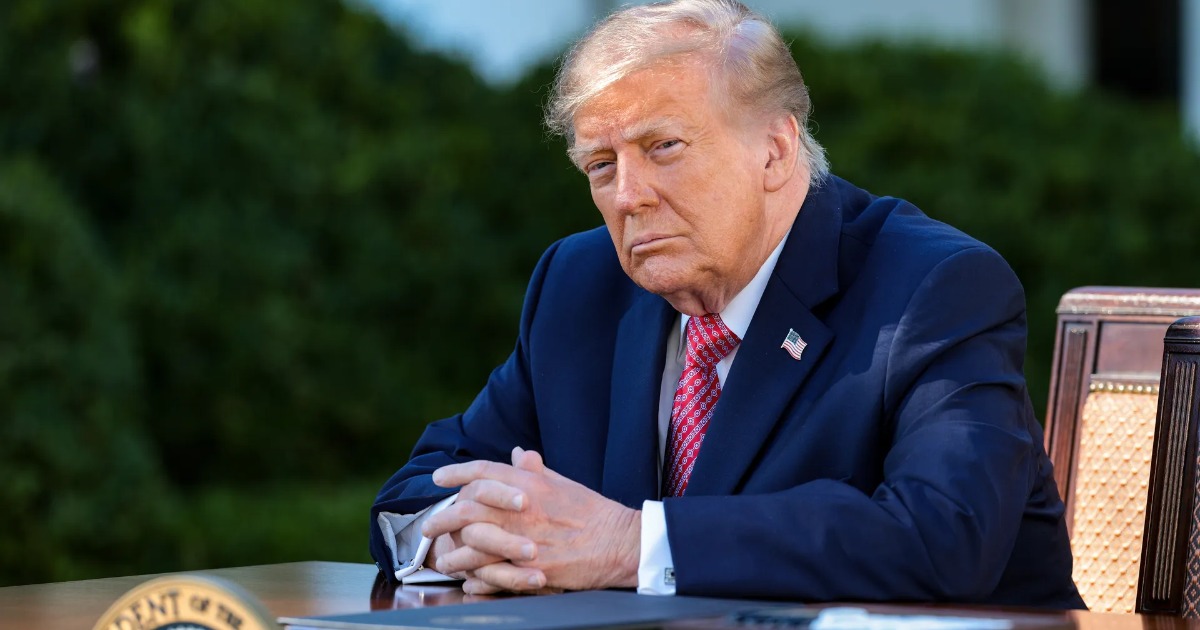
Trump has renewed his promise to send $5,000 to every adult US citizen, but has explicitly linked the proposal to Republicans retaining control of both chambers of Congress in the November 3 midterm elections.
In an October 3 Truth Social video, the president said he intended to provide the payments if Republicans won both the House of Representatives and the Senate.
The proposal follows an earlier pledge made at a Republican National Committee event in Dallas.
However, the announcement does not create an automatic entitlement to a $5,000 payment.
There is currently no approved federal program distributing these checks.
Congress would need to authorise the spending, and the administration has not published a complete funding or distribution plan.
Winning control of Congress would not, by itself, guarantee that the checks would be issued.
How much would the $5,000 checks cost?
According to the CNBC report, distributing $5,000 to every adult American citizen could cost approximately $1.2 trillion.
That would represent a substantial federal spending commitment.
The president has not provided a detailed explanation of how the entire program would be funded.
Some Republican lawmakers have raised concerns about the potential effects on the federal deficit, inflation and interest rates.
Democratic critics have questioned the timing of the proposal and the president's authority to promise such payments without congressional approval.
These disagreements mean the proposed program faces significant political and financial obstacles.
Has Trump promised similar checks before?
Trump has previously proposed several direct-payment programs that did not ultimately result in the promised checks being distributed.
In February 2025, his administration discussed a potential $5,000 payment funded through savings associated with the Department of Government Efficiency.
Those payments did not materialise.
Later in 2025, Trump proposed a separate tariff-funded dividend of at least $2,000 per person.
That proposal also failed to produce payments, with the Supreme Court subsequently striking down the relevant tariffs in February 2026.
During his first presidency, Trump announced plans for $200 prescription-drug discount cards for millions of Medicare beneficiaries shortly before the 2020 election.
Those cards were not distributed as promised.
These examples explain why the latest $5,000 proposal should be treated as a political pledge rather than an approved payment program.
Could Americans receive both smaller payments?
The $90 Medicare rebate and $500 Affordable Care Act refund are separate programs with different eligibility rules.
Most people will not qualify for both because the payments target different forms of health insurance coverage.
However, eligibility should be assessed under each program's own rules rather than assuming that a person qualifies simply because they receive government healthcare benefits.
The important distinction is that the smaller payments are being distributed under announced programs, whereas the $5,000 proposal has not received the necessary approval.
When will Americans receive the money?
The $90 Medicare rebates were scheduled for October 2026, with direct deposits beginning around October 8 and paper checks arriving later in the month.
The $500 Affordable Care Act refund checks also began being mailed in early October.
Delivery dates may vary depending on the recipient and the payment method.
People expecting a payment should check official account information and correspondence rather than relying on social media claims.
Neither program requires people to pay an upfront fee to receive their money.
Meanwhile, no distribution date exists for the proposed $5,000 checks because the program has not been enacted.
What should Americans do now?
Americans who believe they qualify for the Medicare rebate can contact Medicare on 1-800-633-4227 to confirm eligibility or the Social Security Administration on 1-800-772-1213 to ask about payment status.
People who purchased unsubsidised 2026 health insurance through HealthCare.gov can review their marketplace records and watch for official Treasury correspondence concerning the $500 refund.
Both programs are automatic for eligible recipients, and neither requires a new online application.
The proposed $5,000 payment is different: it remains contingent on future political and legislative developments, with no approved application process.
With the November 3 elections approaching, Americans should distinguish between money already being distributed and promises that have yet to become law.
Sources: CNBC, October 5, 2026; White House fact sheets dated September 10 and October 2, 2026; Centers for Medicare & Medicaid Services; Medicare.gov; KFF, October 23, 2026; PolitiFact, October 7, 2026.