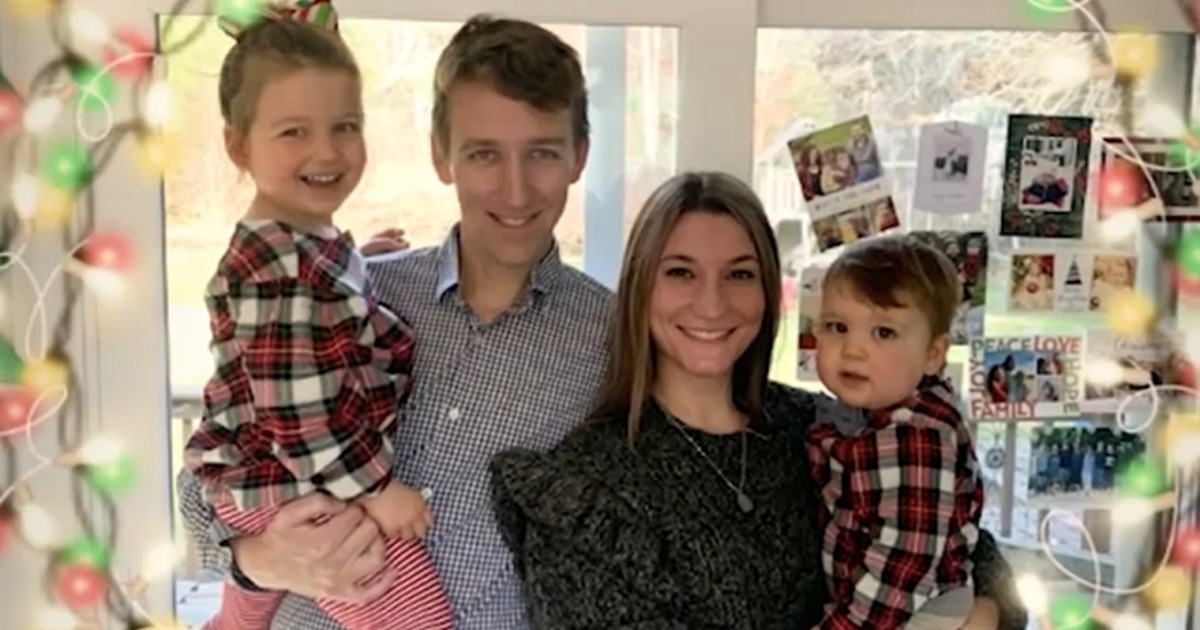

The jury deliberating in the trial of Massachusetts mother Lindsay Clancy has told the court it cannot reach a unanimous verdict, after roughly 18 hours spread across four days of deliberation. Judge William Sullivan has declined to accept a hung jury for now, instead sending the panel back to continue deliberating.
The case against Lindsay Clancy
Clancy, 36, a former labour and delivery nurse, faces three counts of first-degree murder after admitting to strangling her three young children, five-year-old Cora, three-year-old Dawson, and eight-month-old Callan, using exercise bands inside their family home in January 2023. The 12-person jury has five possible verdicts available to them: not guilty, not guilty by reason of insanity, first-degree murder, second-degree murder, or manslaughter.
Clancy's defence team is arguing she was experiencing severe postpartum psychosis at the time and couldn't understand the wrongfulness of her actions, while prosecutors maintain the killings were premeditated and that she wasn't in a psychotic state.
What happens when a jury is deadlocked
If jurors remain unable to reach a decision, Massachusetts judges have the option of issuing what's known as a "dynamite charge," formally called a Tuey-Rodriguez charge. This is a specific legal instruction designed to push a deadlocked jury toward reaching a unanimous verdict before a mistrial is declared.
Boston attorney Peter Elikann has described the charge as functioning almost like a pep talk from the judge, urging jurors to make another serious attempt at reaching agreement. David Rossman, director of the Criminal Law Clinical Program at Boston University, has explained that the instruction specifically asks jurors, particularly those holding out, to reflect on whether their position genuinely reflects their own view, and whether they've been genuinely open to what fellow jurors have argued.
Given how lengthy and resource-intensive the trial has been, with more than 80 witnesses and over 300 exhibits presented, legal experts say a dynamite charge is a likely next step if the jury remains deadlocked. If jurors still can't reach a unanimous decision after that instruction, the judge would then be required to formally declare a mistrial.