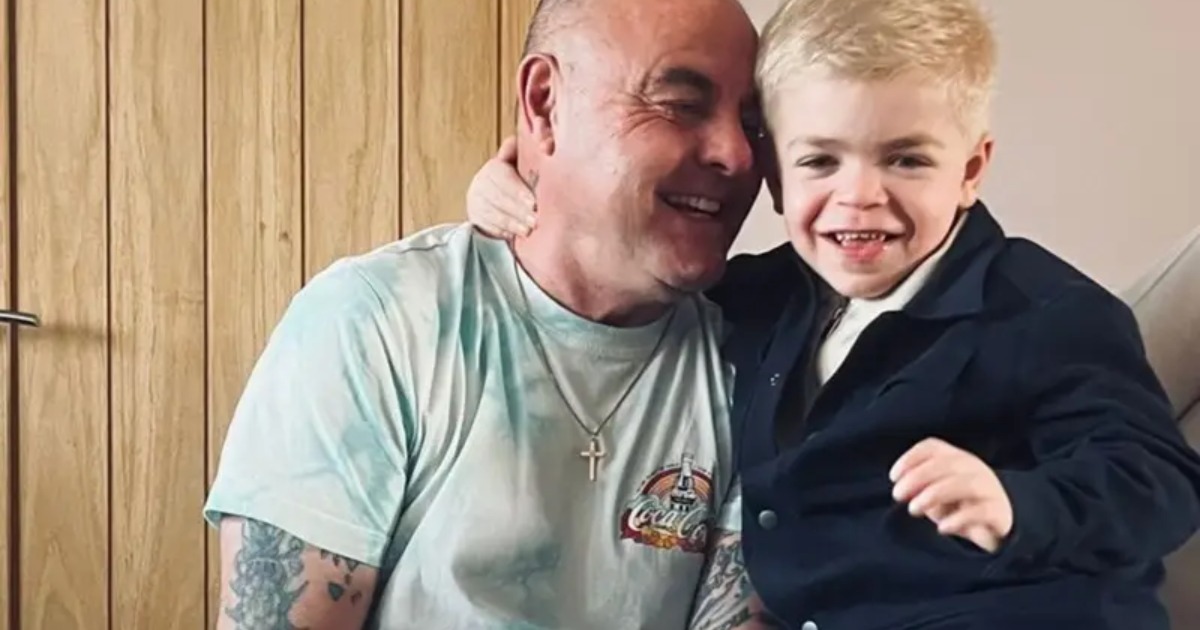

A mother has shared the heartbreaking story of her five-year-old son's diagnosis with a rare genetic disorder sometimes described as childhood dementia, after medical professionals identified signs that something might be wrong.
Sophie Lowe, who works for Blackpool Teaching Hospitals NHS Foundation Trust, is raising awareness of Sanfilippo syndrome after her young son Bobby was diagnosed with the progressive condition.
The disorder affects the brain and nervous system, gradually interfering with a child's development and ability to carry out everyday activities.
For Sophie, the diagnosis has meant coming to terms with an uncertain future while trying to give Bobby as many happy experiences as possible.
She also hopes that sharing her family's experience will help other parents understand the warning signs of a condition that remains unfamiliar to many people.
What symptom led to Bobby's diagnosis?
According to the family's account, concerns first emerged when Bobby's speech and language development was assessed in 2024.
Professionals identified a delay in his speech development, which prompted further investigation into his health.
Sophie also explained that children with Sanfilippo syndrome can have subtle physical characteristics that may be recognised by specialists.
These can include differences in facial appearance, although the published account does not identify which particular facial feature, if any, was observed in Bobby.
Sanfilippo syndrome can sometimes be associated with distinctive facial characteristics, including fuller lips, a broader nose and thicker eyebrows.
However, these features are not present in every affected child and cannot establish a diagnosis on their own.
Speech delay is also extremely common in childhood and has many possible explanations, most of which are unrelated to Sanfilippo syndrome.
Diagnosis of the disorder requires specialist medical assessment and appropriate laboratory or genetic testing.
What is Sanfilippo syndrome?
Sanfilippo syndrome, also known as mucopolysaccharidosis type III or MPS III, is a rare inherited metabolic disorder.
It occurs when the body cannot properly break down a complex sugar molecule called heparan sulphate.
This happens because of a deficiency in one of several enzymes responsible for processing the substance.
As heparan sulphate accumulates inside cells, it gradually damages tissues, particularly within the brain and nervous system.
The resulting neurological deterioration can affect a child's learning, communication, behaviour, movement and independence.
There are four recognised subtypes of Sanfilippo syndrome, classified as types A, B, C and D, depending on the enzyme involved.
Although the progression and severity can vary, all four forms can cause serious neurological complications.
Why is the condition called childhood dementia?
The term childhood dementia describes a group of conditions in which children progressively lose abilities they have already developed.
Unlike adult dementia, which is commonly associated with diseases affecting older people, childhood dementia can result from inherited metabolic or neurological disorders.
Children may initially develop skills such as speaking, walking and interacting with others before experiencing difficulties maintaining those abilities.
As the condition progresses, some children lose previously acquired language, cognitive and motor skills.
Sanfilippo syndrome is one of the disorders that can produce this pattern of developmental regression.
However, childhood dementia is an umbrella term rather than a single diagnosis, and not every condition described in this way follows the same course.
What are the early warning signs of Sanfilippo syndrome?
The earliest signs of Sanfilippo syndrome can be difficult to recognise because they often resemble common childhood developmental concerns.
Potential symptoms include:
Symptoms can emerge at different ages and may initially be mild.
As the disorder progresses, affected children can develop increasing difficulties with communication, mobility and swallowing.
Some may also experience seizures and other neurological complications.
Importantly, none of these symptoms alone means that a child has Sanfilippo syndrome.
Parents concerned about persistent developmental delays or the loss of previously acquired skills should seek advice from an appropriate healthcare professional.
What did Bobby's mum say about missing the signs?
Sophie explained that it can be difficult for parents to recognise unusual developmental characteristics in their own children.
She said families naturally become accustomed to the way their children look, behave and develop.
From her perspective, Bobby was simply her little boy, and the family had no immediate reason to interpret every difference as a possible sign of a serious medical condition.
She has since become determined to improve public awareness so that families and professionals are better equipped to recognise when specialist assessment might be needed.
Sophie also expressed surprise at how unfamiliar the condition can be, even within healthcare settings.
She acknowledged that the professionals involved in Bobby's care had made efforts to understand the disorder and prepare for appointments.
Nevertheless, she believes greater general awareness could help affected families receive support earlier.
How rare is Sanfilippo syndrome?
Sanfilippo syndrome is considered an extremely rare genetic disorder.
The figures cited in the original reporting suggest that approximately 80 to 100 babies may be affected over a ten-year period in the population being discussed.
However, estimates vary between countries and studies, and the exact frequency depends on the population and diagnostic methods used.
Because the condition is uncommon, some healthcare professionals may encounter very few cases during their careers.
This rarity can make diagnosis challenging, particularly when the earliest symptoms resemble more common developmental conditions.
Specialist genetic and metabolic services play an important role in confirming suspected cases.
What is the life expectancy for children with Sanfilippo syndrome?
Sanfilippo syndrome is a life-limiting condition, although its progression varies considerably between individuals and subtypes.
Many affected children develop severe neurological difficulties during childhood and adolescence.
Some die during their teenage years, while others survive into adulthood.
There is no single life expectancy that accurately applies to every child with the disorder.
Factors including the specific genetic subtype, progression of symptoms and complications can influence outcomes.
For Bobby's family, the diagnosis has created an urgent desire to prioritise his comfort, happiness and quality of life.
How is Bobby's family making the most of their time together?
Sophie has spoken about her determination to give Bobby opportunities to enjoy the things he loves.
Animals, tractors and nature are among his favourite interests, and his family hopes to build as many positive memories around those activities as possible.
Rather than allowing the diagnosis to define every aspect of his childhood, Sophie wants Bobby to continue experiencing happiness and excitement wherever possible.
She has also been dealing with another personal loss following the unexpected death of her father, Alan, in March.
According to Sophie, Bobby shared an especially close relationship with his grandfather.
The family has been coping with that bereavement while navigating the challenges of Bobby's condition.
Fundraising campaign launched to support Bobby
A fundraising effort has been organised to help Bobby's family meet the growing costs associated with his care.
Alan's close friend Kass has undertaken a fundraising challenge involving a walk from Brighton to Blackpool.
The campaign aims to raise both financial support and public awareness of Sanfilippo syndrome.
According to the original report, more than £5,000 had been raised through JustGiving at the time of publication.
Sophie explained that the money would help cover specialist care, equipment and experiences designed to improve Bobby's comfort and quality of life.
As the condition progresses, families can face increasingly complex practical, medical and financial demands.
Support may involve mobility equipment, specialist therapies, adaptations to the home and assistance with everyday care.
Is there a cure for Sanfilippo syndrome?
There is currently no widely available cure for Sanfilippo syndrome.
Treatment generally focuses on managing symptoms, addressing complications and supporting the child's quality of life.
Care may involve neurologists, metabolic specialists, physiotherapists, speech and language therapists and other healthcare professionals.
Researchers are investigating potential treatments, including gene therapies and approaches intended to reduce the accumulation of harmful substances inside cells.
However, experimental treatments should not be confused with established cures, and their availability and effectiveness remain subject to ongoing research.
Why does Sophie want more people to know about the condition?
Sophie's decision to share Bobby's story reflects her belief that rare childhood neurological disorders deserve greater public understanding.
She hopes increased awareness will encourage recognition of persistent developmental concerns and improve support for families facing similar diagnoses.
Her message is also about recognising the children behind the medical terminology.
For Bobby, everyday pleasures such as spending time outdoors, seeing animals and enjoying family activities remain enormously important.
While the future is uncertain, his family is focused on helping him experience as much joy and comfort as possible.
And by telling his story, Sophie hopes to ensure that more people understand the impact of a condition that many may never previously have encountered.
Sources: LADbible, October 17, 2026; Sophie Lowe's family fundraising account; general medical information about Sanfilippo syndrome and mucopolysaccharidosis type III.