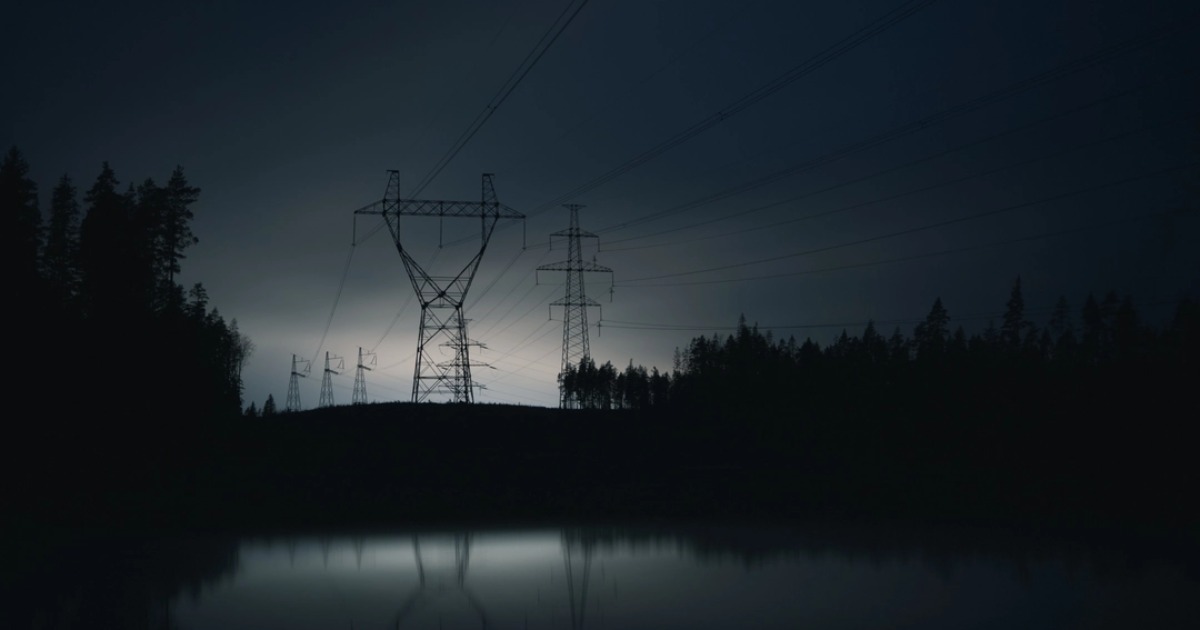
British households are being encouraged to prepare for unexpected emergencies as renewed attention falls on a scenario so serious that it could disrupt multiple essential services across the country.
Known as a 'black sky event', the scenario has prompted discussion about Britain's emergency preparedness plans, including reported arrangements for the BBC to continue broadcasting during a major national crisis.
The contingency measures include specially equipped facilities, backup communications and supplies designed to keep vital information flowing even if normal systems become unavailable.
Meanwhile, the UK government's recently launched Be Ready campaign is encouraging households to take practical precautions to help them cope with unexpected disruption.
Although the preparations may sound alarming, officials have not announced an imminent nationwide emergency.
Instead, the measures are intended to improve resilience against situations that could affect everyday life with little warning.
What is a 'black sky event'?
A black sky event is a term used to describe a severe, widespread and potentially prolonged disruption to critical infrastructure, particularly the electricity network.
Unlike an ordinary local power cut, this type of incident could affect multiple regions simultaneously and have consequences extending far beyond the loss of electricity.
Because modern infrastructure relies heavily on interconnected systems, a major electricity failure could also interfere with water supplies, telecommunications, transport and financial services.
Potential triggers include extreme weather, flooding, significant infrastructure damage, major technical failures or deliberate attacks on critical systems.
Telecommunications expert Andrew White previously described the scenario as a catastrophic, long-duration failure of essential national infrastructure.
He explained that such an incident could potentially last for an extended period, depending on its severity and the damage involved.
However, the term describes a possible emergency scenario rather than a prediction that such an event is about to happen.
What could happen to British households?
One of the most concerning aspects of a black sky event is the possibility that disruption could spread across services people ordinarily take for granted.
Electricity is essential to the operation of numerous systems, meaning a prolonged interruption could have widespread consequences.
Depending on the severity and duration of the incident, potential problems could include:
Not every service would necessarily fail, and many essential facilities have backup power arrangements.
Nevertheless, a sufficiently severe or prolonged emergency could place those backup systems under pressure.
Why could toilets and running water become a problem?
One particularly overlooked consequence of a prolonged infrastructure failure involves water and sanitation.
Although many households assume that running water and flushing toilets will continue working during a power cut, some parts of the water and wastewater network depend on electricity.
Pumping stations, treatment facilities and certain building-level water systems may require electrical power to function.
In a prolonged emergency, the availability of water could depend on local infrastructure, stored supplies and backup generators.
Some properties might retain running water for a period, while others could experience reduced pressure or interruptions.
Wastewater pumping systems could also face problems if electricity supplies were disrupted for an extended period.
However, it would be inaccurate to suggest that every toilet in Britain would immediately stop functioning during a blackout.
The consequences would vary significantly depending on the location, infrastructure and duration of the disruption.
What emergency plans does the BBC reportedly have?
Reports about the BBC's emergency broadcasting arrangements have attracted particular attention.
According to reporting cited by Tyla and Open Magazine, the broadcaster has contingency arrangements intended to help maintain public information services during a major national emergency.
The reported plans include a specially equipped emergency radio facility capable of operating independently of normal internet services for at least 72 hours.
Around 100 staff members could reportedly be involved in supporting the operation.
The facility is said to have access to essential supplies, including food, drinking water and fuel, alongside secure communications equipment.
Emergency announcements could be transmitted through FM radio services using infrastructure supported by backup generators.
This could allow people with battery-powered or wind-up radios to receive official information even if mobile phone networks and internet connections were unavailable.
Reported arrangements also include satellite communications to help maintain contact with regional emergency coordination centres.
The existence of contingency planning does not mean that the BBC expects an emergency to occur imminently.
Emergency broadcasters and other essential organisations routinely develop backup arrangements to help maintain services during major incidents.
What would the emergency broadcasts tell people?
In a serious national emergency, reliable information could become particularly important.
If normal communication networks were unavailable, radio broadcasts could provide updates from authorities and emergency responders.
Depending on the situation, announcements might include:
Radio can be particularly useful in emergency planning because a basic battery-powered receiver does not require a home electricity supply or internet connection.
However, the availability of broadcasts would still depend on the condition of transmission infrastructure and its backup power systems.
Has Britain experienced anything similar before?
Although a nationwide black sky event remains a hypothetical scenario, Britain has previously experienced incidents demonstrating how electricity failures can affect other services.
In December 2015, severe flooding in Lancaster damaged electricity infrastructure and caused a major power outage.
Around 61,000 properties were left without electricity after a substation was affected.
The disruption extended beyond household lighting and appliances.
Mobile communications, internet connections, cash machines, card payments and petrol stations were among the services affected.
Some care homes also experienced difficulties involving heating and hot water.
The incident demonstrated how a single major infrastructure failure could have wider consequences for a local community.
However, the Lancaster outage was a regional emergency, not a nationwide black sky event.
How quickly could electricity be restored after a major blackout?
Restoring power following a severe electricity system failure can be considerably more complicated than simply switching equipment back on.
Large electricity networks require carefully coordinated procedures to restart generating facilities and reconnect parts of the system safely.
Andrew White explained that restarting a completely disrupted grid involves more than restoring the electricity supply itself.
Other services that rely on electricity may also need to be restarted or checked before normal operations can resume.
According to the reporting, Britain's National Energy System Operator has been working towards restoration capabilities intended to recover a substantial proportion of electricity demand within the first 24 hours of a major system failure.
The reported targets include restoring 60 percent of demand in each region within 24 hours and 100 percent of demand across Great Britain within five days.
These are planning and restoration capability targets, not guarantees that every individual property would regain power within those periods.
The actual recovery time would depend on the cause, scale and consequences of the emergency.
What warning has the UK government issued?
The government's Be Ready campaign, launched on October 22, encourages households to make basic preparations for emergencies that could temporarily disrupt essential services.
One of the central recommendations is for households to have enough essential supplies to manage for at least three days.
The advice is not limited to black sky events.
Emergency supplies can also be useful during severe storms, flooding, local power cuts and other incidents that interrupt normal services.
The government is encouraging people to build up supplies gradually rather than panic-buying.
Preparedness measures are intended to help households remain safe and comfortable while emergency services and infrastructure operators respond to a crisis.
What should Brits keep at home in case of an emergency?
According to the preparedness guidance described in the campaign, households should consider keeping a small supply of essential items that can be accessed if normal services are interrupted.
Recommended items include:
For drinking water, the three-litre recommendation means a single person would need nine litres for a three-day period.
A household of four would therefore need approximately 36 litres for the same period.
Additional water may be necessary for people with particular health needs or during hot weather, while hygiene and sanitation can require further supplies.
Should Brits be worried about an imminent nationwide blackout?
Despite the attention surrounding the term 'black sky event', there is currently no announced imminent nationwide blackout.
The government's preparedness campaign and reported BBC contingency arrangements are examples of emergency planning rather than evidence that a specific disaster is expected.
Critical infrastructure operators routinely prepare for scenarios that are unlikely but could have serious consequences if they occurred.
Planning for severe emergencies helps authorities identify vulnerabilities and improve their ability to respond.
For households, the advice is similarly practical.
Keeping a few days' worth of essential supplies, knowing how to access official emergency information and having a basic household emergency plan can be useful during a wide range of unexpected situations.
While the term 'black sky event' may sound dramatic, the underlying message from preparedness authorities is straightforward: being ready for disruption is preferable to having to find essential supplies after an emergency has already begun.