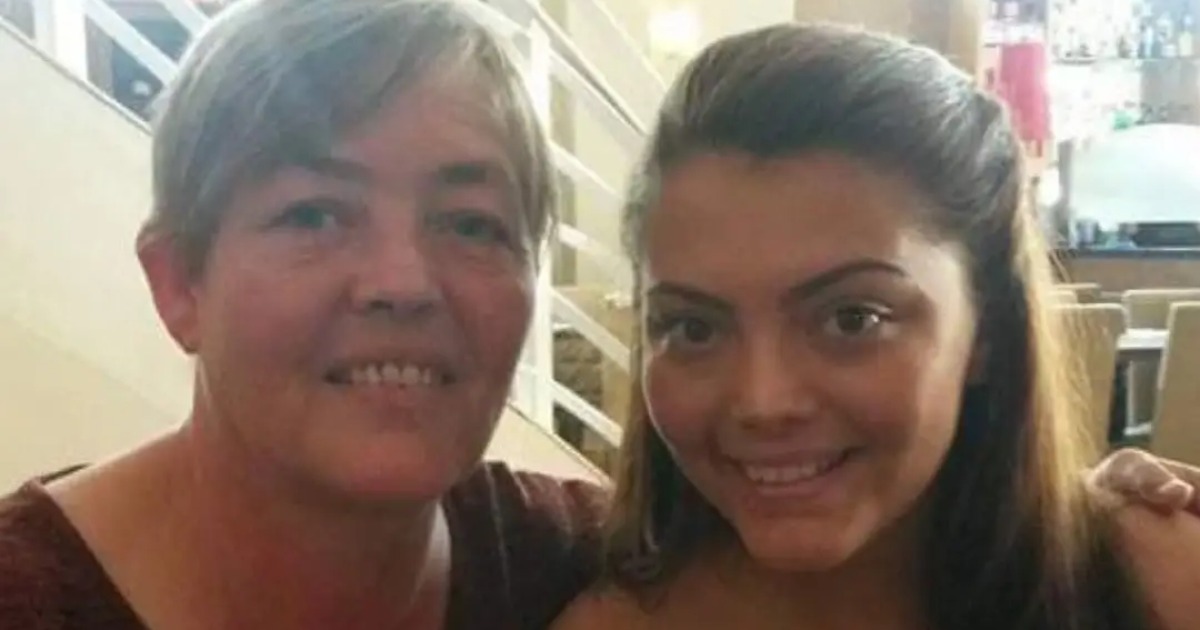
A 26-year-old Australian woman has opened up about her decision to pursue medically assisted dying after spending much of her life battling a devastating and incurable illness.
Annaliese Holland, from Adelaide in South Australia, has experienced serious health problems since childhood, with much of her life spent undergoing treatment in hospital.
While other young adults were celebrating milestones, building careers and starting families, Annaliese was facing an increasingly difficult medical journey.
Now, after years of treatment and repeated life-threatening complications, she has explained why she decided to apply for voluntary assisted dying.
Her decision has been particularly difficult for her parents, who have spent years watching their daughter fight for her life.
Speaking publicly about her experiences in a documentary reported by News.com.au, Annaliese described the physical and emotional toll of her condition, as well as the conversations that eventually helped her family understand her wishes.
Why has Annaliese Holland chosen assisted dying?
Annaliese has been diagnosed with autoimmune autonomic ganglionopathy, a rare neurological condition that affects the body's autonomic nervous system.
This system controls many functions that happen automatically, including digestion, blood pressure, heart rate and bladder function.
For Annaliese, the condition has caused severe complications affecting multiple organs and has left her living with chronic, debilitating pain.
According to her account, doctors informed her at the age of 22 that her illness had become terminal.
She has since experienced multiple episodes of sepsis, serious digestive problems and complications associated with the treatments needed to keep her alive.
Annaliese explained that although she still experiences meaningful moments with loved ones, the demands of managing her condition have become overwhelming.
She described feeling as though her days revolve around trying to manage her symptoms and make it through until the following morning.
Her decision to pursue voluntary assisted dying followed extensive discussions with her healthcare team about her prognosis, suffering and available options.
For Annaliese, the approval represented the ability to make a decision about her end-of-life care if her circumstances became unbearable.
What is autoimmune autonomic ganglionopathy?
Autoimmune autonomic ganglionopathy, often abbreviated to AAG, is a rare disorder in which the immune system interferes with nerve signalling in the autonomic nervous system.
Because the autonomic nervous system regulates several essential bodily functions, symptoms can affect multiple organs and systems.
Depending on the individual, these may include:
The severity and progression of the condition vary between patients.
Some people respond to treatments aimed at modifying the immune system or managing individual symptoms.
However, Annaliese has described an exceptionally severe illness involving multiple organ complications.
Her experience should not be taken as representative of everyone diagnosed with AAG, which is not invariably terminal.
How long did Annaliese wait for a diagnosis?
Annaliese's health problems began during childhood, but doctors initially struggled to identify the underlying cause.
She experienced persistent nausea, vomiting, pain and other symptoms that repeatedly required hospital treatment.
Despite extensive medical attention, her condition remained unexplained for years.
It was not until she turned 18 and transitioned from paediatric care to an adult hospital that she finally received a diagnosis of autoimmune autonomic ganglionopathy.
By then, the illness had already affected a substantial portion of her childhood and teenage years.
Receiving a diagnosis provided an explanation for her symptoms, but it did not mean that doctors could reverse the damage she had experienced.
Her health continued to deteriorate, and she eventually required increasingly intensive medical support.
Why did Annaliese need to be fed through an IV?
One of the most serious consequences of Annaliese's illness involved her digestive system.
She explained that the nerves responsible for controlling normal digestive movement were not functioning properly.
As a result, her bowel could behave as though it was obstructed even when there was no physical blockage.
She experienced severe problems with waste moving through her digestive tract, alongside persistent vomiting.
Doctors initially attempted to support her nutrition through feeding tubes.
However, Annaliese said further investigations revealed that her stomach was not emptying properly.
She was subsequently placed on total parenteral nutrition (TPN), a method of delivering nutrients directly into the bloodstream.
TPN can be essential for people whose digestive systems cannot absorb enough nutrition through conventional feeding.
However, it requires intravenous access and careful monitoring because bloodstream infections can cause serious complications.
For Annaliese, these risks became a major part of her medical experience.
How many times has Annaliese survived sepsis?
According to her account, Annaliese has survived 25 episodes of sepsis.
Sepsis is a life-threatening medical emergency that occurs when the body's response to an infection causes widespread organ dysfunction.
It can develop rapidly and requires urgent treatment.
For patients receiving nutrition through a central intravenous line, infection is a recognised risk because the device provides access to the bloodstream.
Annaliese described the constant uncertainty surrounding these complications and the possibility of becoming critically ill again.
Her repeated hospital admissions placed considerable strain on both her and her family.
Her parents have spoken about the distress of repeatedly seeing their daughter in life-threatening situations, not knowing whether she would recover.
What other complications has she experienced?
Alongside the effects of her underlying neurological illness, Annaliese has experienced serious complications associated with her treatment.
She reported developing osteoporosis, a condition that weakens bones and increases the risk of fractures.
According to her account, she suffered fractures in four places along her spine and a serious injury to her sternum.
She also described developing bone necrosis, a condition involving damage to bone tissue associated with impaired blood supply.
Some of these complications were linked to medications used to manage her symptoms, including steroids.
Annaliese said her dental health had also been affected, with changes to her teeth adding to the physical consequences of her illness.
The combined impact of these problems left her managing several serious medical issues simultaneously.
What did Annaliese say about missing out on her twenties?
Beyond the physical suffering, Annaliese has spoken about the emotional difficulty of watching life continue around her while she remains seriously ill.
She explained that she missed major milestones, including important birthdays, school events and graduations, because she was in hospital.
As she entered adulthood, she watched friends become engaged, marry and have children.
For Annaliese, these developments were reminders of the experiences she had hoped to enjoy herself.
She described feeling as though everyone else's lives were progressing while hers remained dominated by medical treatment.
In the documentary, she said that rather than feeling able to live freely, much of her existence had become focused on surviving each day.
She also compared living with her condition to navigating a field of landmines, reflecting the unpredictability of her symptoms and complications.
Despite those challenges, Annaliese acknowledged that there were still beautiful moments in her life.
However, she explained that those moments existed alongside significant suffering and exhaustion.
What did Annaliese's father say when she told him her decision?
One of the most emotional parts of Annaliese's account concerned the reaction of her father, Patrick.
Having watched his daughter survive numerous medical emergencies, Patrick had become accustomed to seeing her fight through seemingly impossible situations.
When Annaliese first told him she had reached her limit, he struggled to accept what she was saying.
She recalled a conversation in the family kitchen during which she explained that she could no longer continue enduring the same experiences.
Patrick initially interpreted her words as a decision to stop fighting.
For a father who had spent years hoping his daughter would recover, the prospect of accepting her end-of-life wishes was understandably painful.
However, another hospital emergency would eventually change his perspective.
The heartbreaking hospital conversation that changed everything
Annaliese described a particularly distressing moment after she had been resuscitated by doctors.
Seeing the impact of another medical emergency, she spoke directly to her father about what she wanted if a similar situation occurred again.
She pleaded with him to respect her wishes and understand that she did not want to continue undergoing unwanted treatment indefinitely.
Annaliese reassured Patrick that she would not blame him for allowing her wishes to be followed.
She explained that she wanted him to know she would be at peace with that decision.
According to Annaliese, the conversation helped her father understand how much she had endured.
Patrick acknowledged the extraordinary strength she had shown throughout her illness and said he understood why she felt she had reached her limit.
For Annaliese, gaining that understanding from her father was an important emotional moment.
How has her mother responded?
Annaliese's mother, Amanda, has also spoken about the difficulty of coming to terms with her daughter's decision.
She admitted that part of her continues to hope for a medical breakthrough that could change Annaliese's circumstances.
However, she also recognises the reality of the serious health problems her daughter experiences every day.
For both parents, the situation involves balancing their desire for more time with Annaliese against their understanding of her wishes and suffering.
The family has faced years of hospital admissions, medical uncertainty and repeated emergencies.
Annaliese has acknowledged that her decision carries an emotional impact for those who love her, even as she believes it is the right choice for her own circumstances.
Was Annaliese approved for voluntary assisted dying?
Yes. According to the account published in November 2025, Annaliese underwent the assessment process required to access voluntary assisted dying in South Australia.
She described discussions with healthcare professionals, including psychological assessments and consideration of her medical circumstances.
Approximately three weeks later, she learned that her application had been approved.
Annaliese explained that the approval brought her a sense of relief because she knew an end-of-life option was available if and when she chose to use it.
She described that knowledge as a source of reassurance amid the unpredictability of her illness.
However, approval for voluntary assisted dying does not necessarily mean a person has immediately proceeded with it.
The November 2025 report described her decision and approval, but did not establish a subsequent date of death.
How does voluntary assisted dying work in Australia?
Voluntary assisted dying, commonly abbreviated to VAD, is legally available under regulated frameworks in Australia's six states.
Eligibility requirements vary between jurisdictions, but generally involve serious medical conditions, decision-making capacity, voluntary and informed consent, and assessment by appropriately qualified practitioners.
In South Australia, the legal framework includes safeguards intended to ensure that requests are voluntary and that applicants meet the relevant medical criteria.
Both self-administration and practitioner administration may be permitted under specified circumstances, depending on the applicable legislation and clinical requirements.
Voluntary assisted dying is distinct from unassisted suicide and operates within a formal medical and legal framework.
The issue remains the subject of ethical, medical and political debate, including discussions about patient autonomy, palliative care and safeguards for vulnerable people.
For Annaliese, the decision was made in the context of her reported terminal prognosis and prolonged medical suffering.
What has Annaliese said about her decision?
Annaliese has emphasised that she does not see her decision as a reflection of a lack of effort or determination.
She has spent years undergoing treatment, surviving medical emergencies and working with healthcare professionals to manage her condition.
In her account, she explained that she had carefully considered the emotional consequences for her family alongside her own wishes.
She also described feeling reassured by having a legally available option for end-of-life care.
Her story has drawn attention to the experiences of people living with severe, complex illnesses and the difficult conversations families may face when treatment can no longer offer the outcome they had hoped for.
It also highlights the importance of sensitive discussions between patients, their loved ones and medical professionals about prognosis, symptom management and personal wishes.
What is known about Annaliese Holland's current circumstances?
The account published in November 2025 confirmed that Annaliese had received approval for voluntary assisted dying following an extensive medical journey.
However, that report did not establish whether she subsequently proceeded with the process.
Her circumstances should therefore not be presented as a confirmed death without reliable additional reporting.
What her story does document is the impact of a rare neurological condition on a young woman's life, the emotional toll of repeated medical emergencies and the difficult decisions faced by her family.
By speaking publicly, Annaliese offered an insight into the experiences of patients whose illnesses affect nearly every aspect of daily life.
Her account also illustrates the importance of listening carefully to people living with serious conditions while recognising that decisions about treatment and end-of-life care are deeply individual.