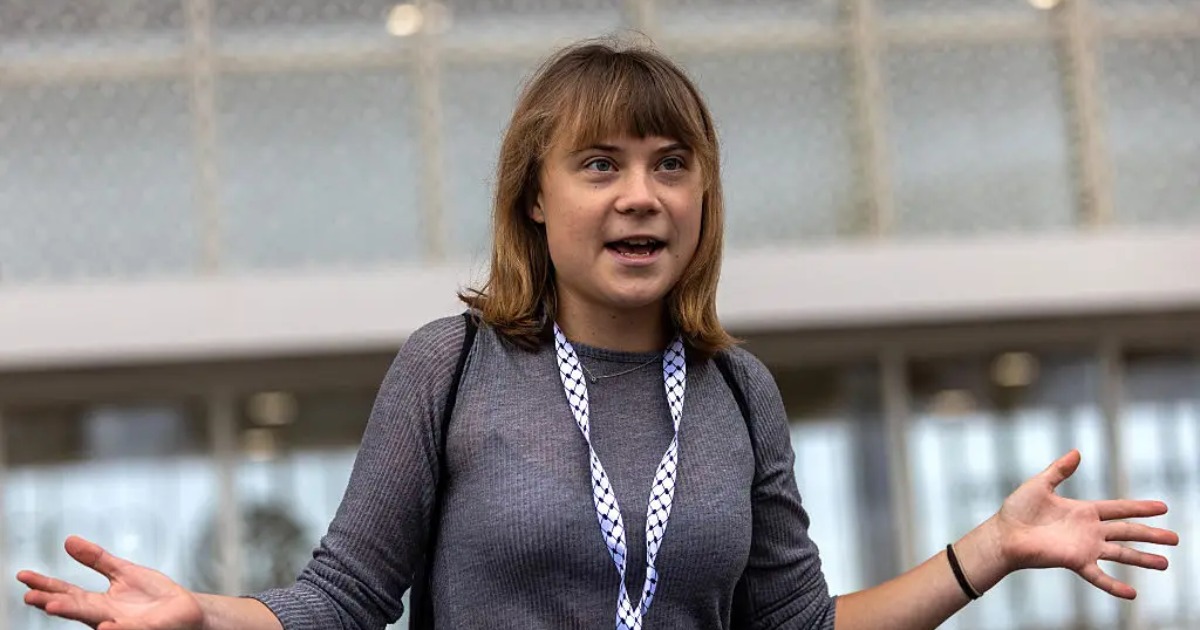
Greta Thunberg has responded to criticism after footage from a newly released documentary appeared to show her laughing at climate protesters belonging to the very movement she helped establish.
The 23-year-old Swedish activist, who became internationally recognised after inspiring a wave of school strikes in 2018, has faced a divided reaction online following the circulation of a short clip filmed in Germany.
In the footage, Thunberg appears surprised to learn that a demonstration organised by Fridays for Future is taking place in Berlin.
Her reaction prompted accusations that she was mocking fellow climate campaigners, although others argued that the clip lacked important context about disagreements within the movement.
Thunberg has now issued a statement explaining why she reacted the way she did, pointing to a longstanding dispute involving the German branch of Fridays for Future and her support for Palestinians.
What happened in the viral Greta Thunberg video?
The footage comes from a German documentary titled On Tanks into the Climate Crisis, which examines the treatment of activists and the challenges facing modern protest movements.
During a conversation with filmmaker Hubertus Koch, Thunberg was informed that a Fridays for Future demonstration was taking place in Berlin.
Koch remarked that he considered the timing symbolic, given that the documentary was being filmed on the same day as a climate protest.
Thunberg appeared surprised by the information.
When Koch mentioned the demonstration, she interrupted to ask: "Is it?"
She then began laughing before asking: "Really? They still do that?"
The activist continued laughing and subsequently asked for the camera to be cut.
The brief exchange was circulated on social media, where it quickly attracted attention from people questioning why one of the world's most recognisable climate campaigners appeared amused by a demonstration organised under the banner she helped popularise.
However, the footage did not explain the wider disagreement between Thunberg and the German organisation, which has developed over several years.
What has Greta Thunberg said about the video?
Following the backlash, Thunberg released a statement addressing the footage and providing her account of the circumstances surrounding the interview.
She began by acknowledging that a video of her laughing after hearing about a German Fridays for Future protest had been widely shared.
According to Thunberg, the interview took place on the same day that she and other activists were protesting against a weapons manufacturer.
She explained that she had just learned a separate, police-permitted climate demonstration was being held elsewhere in Berlin by the German branch of Fridays for Future.
Thunberg argued that the location and nature of that demonstration were significant because of her previous disagreements with the organisation.
In her statement, she described the protest as taking place in a predominantly white, middle-class area and criticised the German climate movement for having distanced itself from her over her support for Palestinians.
She claimed the organisation had rejected her position after she argued that Palestinian rights should be included in wider calls for justice.
Thunberg went on to accuse parts of Germany's political and activist establishment of failing to confront racism, the war in Gaza and environmental destruction.
Her statement included strong allegations concerning Germany's response to the conflict and the relationship between climate activism and other political causes.
Those accusations represent Thunberg's own position and have been the subject of considerable disagreement.
Her explanation suggests that her laughter was directed at the circumstances surrounding the German demonstration and her disagreement with its organisers, rather than at climate activism as a whole.
Why did Greta Thunberg fall out with Fridays for Future in Germany?
To understand the controversy, it is necessary to look at the history of Fridays for Future and the divisions that emerged following the outbreak of the Israel-Gaza war in October 2023.
Thunberg founded the movement in 2018 when she began protesting outside the Swedish parliament, demanding stronger action on climate change.
Her solitary demonstration inspired students around the world to organise school strikes, eventually developing into an international network of youth-led climate campaigns.
Fridays for Future became one of the most recognisable environmental movements of its generation, with demonstrations attracting large crowds across Europe and beyond.
However, the movement does not operate as a single organisation with identical political positions in every country.
National branches and individual campaigners have sometimes disagreed over which issues should be included within climate activism.
Those disagreements became particularly visible after the October 7, 2023 attacks on Israel and the subsequent war in Gaza.
Thunberg publicly expressed solidarity with Palestinians, arguing that climate justice could not be separated from broader questions of human rights.
Her position drew criticism from some campaigners, including figures associated with the German branch of Fridays for Future.
German climate activist Luisa Neubauer, a prominent figure within the country's movement, was among those whose views differed from Thunberg's approach to the conflict.
The disagreement developed into a wider debate over the political direction of Fridays for Future and whether its campaigning should extend beyond environmental issues.
Thunberg has continued to participate in climate protests while increasingly becoming involved in demonstrations concerning Gaza and Palestinian rights.
How have people reacted to the footage?
The documentary clip has generated contrasting reactions online.
Some critics interpreted Thunberg's laughter as evidence that she no longer respected the movement that helped establish her international reputation.
One social media user described Fridays for Future as a movement whose leaders had allegedly come to ridicule their own supporters.
Others argued that such interpretations overlooked the context of Thunberg's disagreement with the German branch.
Supporters suggested that she was reacting to what she regarded as an overly cautious form of activism, rather than dismissing the importance of climate protests.
One commenter argued that Thunberg appeared to consider the demonstration too conventional and disconnected from the more confrontational campaigning she now supports.
Her subsequent statement has added further context, although it has not ended the disagreement over whether her reaction was appropriate.
The controversy also highlights the difficulty of interpreting a brief documentary excerpt without understanding the political and personal disagreements surrounding it.
What has Greta Thunberg been doing recently?
Although Thunberg initially became famous for climate activism, her public campaigning has expanded to include Palestinian rights and opposition to military activity.
In June 2025, she participated in an attempt to reach Gaza by sea as part of an aid mission.
She later joined another flotilla mission in October 2025 and was detained by Israeli forces.
Her involvement in the missions attracted international attention, with supporters praising her willingness to participate in direct action and critics questioning her approach.
In December 2025, Thunberg was also detained in London while attending a demonstration in support of imprisoned Palestine Action members who were on hunger strike.
These activities reflect a broader campaigning focus than the school climate strikes that first brought her international recognition.
Thunberg has repeatedly presented environmental concerns and human rights as interconnected issues, although that approach is not universally shared across the climate movement.
What does the controversy mean for Fridays for Future?
The viral exchange has renewed discussion about the relationship between Thunberg and the movement she helped inspire.
Fridays for Future continues to operate through campaigners and organisations in different countries, even as its founding figure pursues a broader range of political causes.
The disagreement involving the German branch demonstrates that activists who share concerns about climate change do not necessarily agree about protest methods or other international political issues.
For some observers, the footage represents an uncomfortable moment between Thunberg and a movement closely associated with her name.
For others, her explanation shows how significant the divisions within climate activism have become.
What is clear is that Thunberg has not characterised the incident as a rejection of climate campaigning itself.
Instead, she has linked her reaction to her criticism of the German organisation's political positions and the circumstances surrounding its Berlin demonstration.
With the footage continuing to circulate, the episode has placed renewed attention on the changing priorities of one of the world's most recognisable activists and the movement that first brought her to prominence.