
A woman who participated in an unusual scientific experiment involving multiple orgasms has revealed her personal theory about why she is able to experience repeated climaxes.
Jeanette appeared in a 2017 British television documentary exploring the phenomenon sometimes described as the 'super orgasm'.
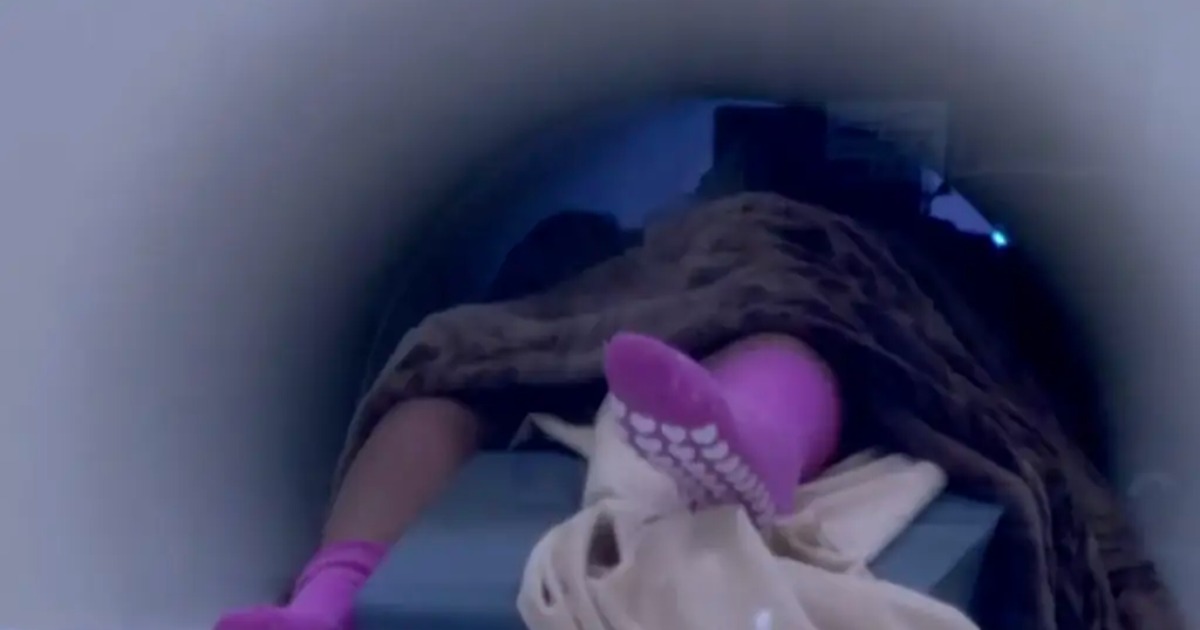
As part of the programme, she travelled to the United States to undergo an MRI scan while experiencing an orgasm, allowing researchers to observe changes in her brain activity.
The experiment presented several challenges, including the unfamiliar clinical setting and restrictions on what she could bring into the scanner.
Despite these obstacles, Jeanette managed to experience two orgasms during the procedure.
Afterwards, she shared an unexpected explanation for her ability, reflecting on her upbringing, religious beliefs and personal relationship with sexuality.
What was Jeanette's theory about her multiple orgasms?
Jeanette believes her ability to experience multiple orgasms is a gift from God.
Speaking about her experience, she explained that she had grown up in a strict Christian household where conversations about sex were largely avoided.
Her parents came from Sierra Leone, and religion played an important role in her childhood.
Although Jeanette described herself as religious, she also acknowledged developing a rebellious side as she grew older.
She said that while she continued to believe in God, she did not feel compelled to follow every religious rule or restriction surrounding sexuality.
Reflecting on the pleasure she experiences, Jeanette described orgasms as an intensely positive feeling.
She ultimately summarised her personal belief with the words: "God gave me that power."
Her explanation was a personal spiritual interpretation rather than a scientific conclusion reached by the researchers.
Why did scientists ask a woman to have an orgasm inside an MRI scanner?
The experiment formed part of a British television documentary released in 2017 that investigated the phenomenon of multiple orgasms.
Sometimes referred to as 'super orgasms', these involve experiencing more than one climax within a relatively short period.
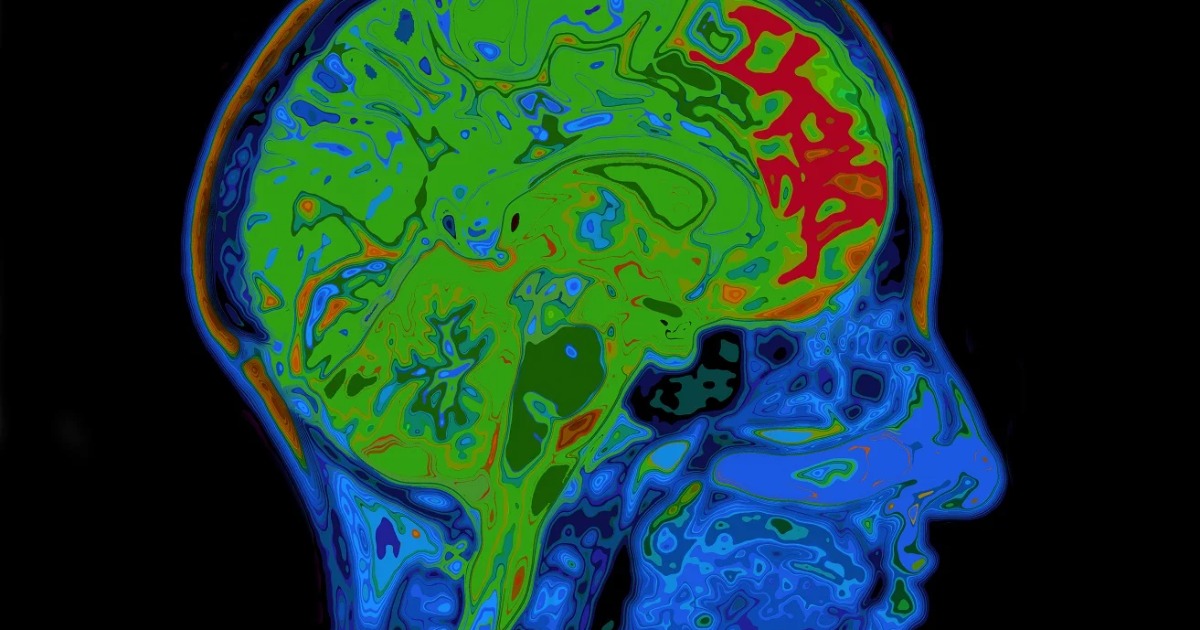
Researchers wanted to observe how the brain responded during these experiences and whether changes in neural activity could be recorded using MRI technology.
MRI scanners use powerful magnetic fields and radio waves to produce detailed images of structures inside the body.
Functional MRI techniques can also detect changes associated with blood flow, which researchers use as an indirect measure of brain activity.
By observing Jeanette during the experiment, the team hoped to gain insight into the neurological processes associated with sexual climax.
Why was the experiment so difficult?
Before the procedure began, Jeanette expressed concerns about whether she would be able to reach an orgasm in such an unfamiliar environment.
Unlike the privacy of her bedroom, the experiment required her to lie inside a medical scanner while researchers monitored the procedure.
She also had to remain sufficiently still for the imaging equipment to collect usable data.
Technicians secured her head using a restraint device designed to reduce movement during the scan.
Another significant obstacle was the prohibition on bringing ordinary metal objects into the MRI room.
Because MRI machines generate extremely powerful magnetic fields, objects and equipment must meet strict safety requirements.
Jeanette was therefore unable to use her usual vibrator.
She explained that the device was normally her preferred method of achieving multiple orgasms, making the experiment considerably more challenging.
Instead, she had to rely on manual stimulation without the familiar aids she would normally use.
What happened during the MRI scan?
Despite her initial anxiety, Jeanette proceeded with the experiment.
Facility director Dr Steve Hanson and his research team began by obtaining detailed baseline images of her brain.
These images provided a reference for examining activity during the later stages of the procedure.
Jeanette then attempted to reach an orgasm while positioned inside the scanner.
Although the clinical environment made the experience difficult, she successfully achieved an initial climax.
Because the experiment focused specifically on multiple orgasms, researchers wanted to observe whether she could experience another shortly afterwards.
Jeanette remained inside the scanner and subsequently reached a second climax.
This allowed the team to record brain activity across two consecutive events.
The documentary presented the experiment as an unusual opportunity to examine the neurological processes associated with repeated sexual climax.
What exactly is a 'super orgasm'?
The term 'super orgasm' is used in popular media to describe particularly intense or repeated orgasms, although it is not a standard medical diagnosis.
Multiple orgasms generally refer to experiencing more than one orgasm during a single period of sexual activity.
Some people experience a noticeable break between climaxes, while others report that the sensations occur relatively close together.
Experiences vary considerably between individuals, and there is no single pattern that applies to everyone.
Researchers studying sexual response have investigated how the brain, nervous system and psychological factors interact during arousal and orgasm.
However, a single participant's experience cannot establish why some people experience multiple orgasms more readily than others.
How did Jeanette's religious upbringing influence her views?
Following the experiment, Jeanette reflected on the role religion had played in shaping her attitudes towards sex.
She explained that she was raised by parents from Sierra Leone in a strict Christian environment.
Conversations about sexuality were not openly encouraged during her upbringing.
Jeanette described growing up with a strong awareness of religion and a belief in God.
However, she also said that her personality developed in a direction that sometimes challenged the expectations placed upon her.
As an adult, she came to distinguish between maintaining her faith and adhering to rigid rules about sexual expression.
Her experience in the documentary reflected that personal understanding of religion and pleasure.
Did the MRI experiment prove Jeanette's theory?
No. The MRI experiment was intended to observe brain activity during orgasm, not to investigate or establish a religious explanation for Jeanette's experiences.
Her belief that her ability was divinely given was a personal interpretation shared after the procedure.
The documentary did not establish that spiritual beliefs determine whether someone can experience multiple orgasms.
Nor does the experience of one participant provide enough evidence to draw broad conclusions about sexual response.
Nevertheless, Jeanette's participation offered an unusual glimpse into how researchers can study intimate physiological experiences using medical imaging.
Her willingness to undergo the procedure, despite her initial discomfort, also highlighted some of the practical difficulties involved in this type of research.
Why has the experiment attracted renewed attention?
The unusual combination of scientific research, an MRI scanner and Jeanette's candid reflections has made the documentary experiment a subject of renewed online interest.
For many viewers, the most striking aspect is the contrast between the highly controlled medical setting and the intensely personal experience being studied.
Jeanette's explanation following the scan added another dimension to the story by connecting her experiences with her faith and upbringing.
While researchers continue to study the neurological and physiological processes involved in sexual response, Jeanette's own interpretation remains rooted in her personal beliefs.
Her experience demonstrates both the complexity of human sexuality and the different ways individuals make sense of their bodies.
Source: VT, October 21, 2026, reporting on a 2017 Channel 4 documentary and its MRI experiment.