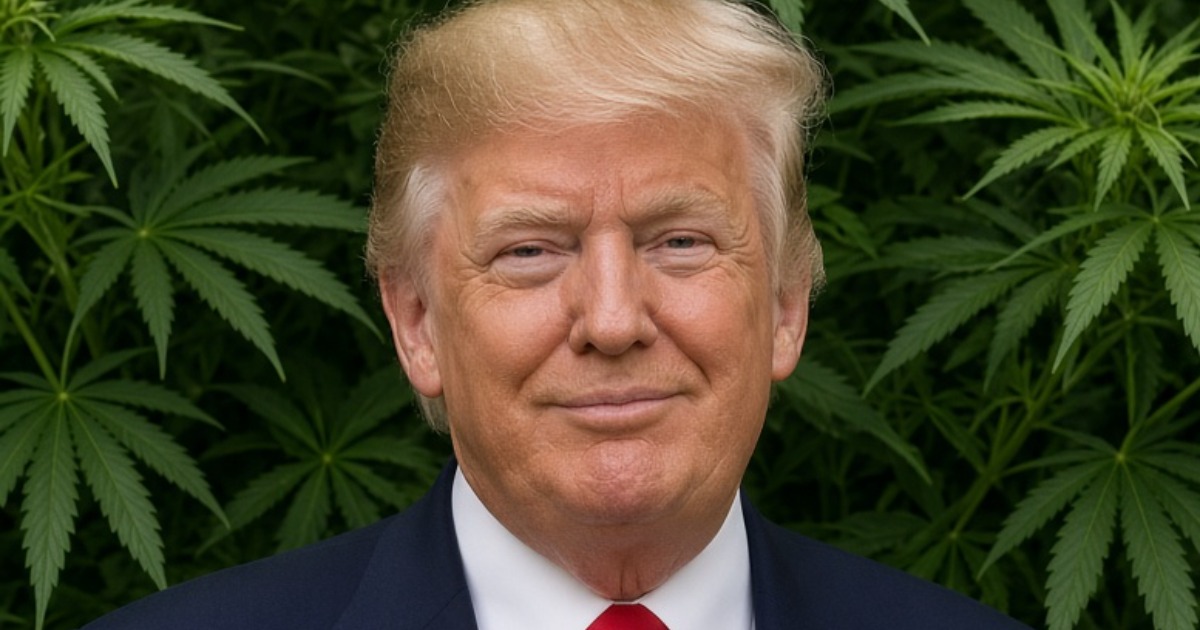

President Donald Trump's plans to change the federal classification of marijuana have encountered an unexpected development, raising questions about when the proposed reforms will take effect.
The administration has been pursuing a wider reclassification of marijuana from Schedule I to Schedule III under the US Controlled Substances Act.
The move would represent a significant change in federal drug policy, recognising accepted medical uses for cannabis and potentially reducing restrictions affecting businesses and researchers.
However, a new procedural dispute has complicated the process, leaving the timeline uncertain.
What is the unexpected development in Trump's marijuana plans?
The Drug Enforcement Administration's chief administrative law judge has temporarily paused proceedings concerning the wider reclassification of marijuana.
On September 29, 2026, Judge Derek C. Julius ordered a stay while considering whether to admit a newly published Government Accountability Office report into the hearing record.
The report raises questions about the procedures federal agencies use when evaluating how controlled substances should be classified.
Three parties involved in the proceedings requested that the report be considered and that additional written arguments be permitted before the judge makes his recommendation.
The pause does not mean the proposal has been rejected, but it could delay a decision on the broader rescheduling of marijuana.
Why has the marijuana rescheduling process been paused?
The Government Accountability Office, commonly known as the GAO, published a report in September examining how federal agencies make drug-scheduling decisions.
The report identified gaps in written policies and procedures used by the DEA and the Food and Drug Administration.
In particular, it found that the DEA lacked comprehensive written policies defining staff responsibilities and procedures for drug scheduling.
The FDA was also found to lack certain written procedures governing how its staff conduct evaluations and develop scheduling recommendations.
These findings prompted DUID Victim Voices, physician Kenneth Finn and the National Drug and Alcohol Screening Association to ask the judge to consider the report.
They argued that the findings could be relevant to the ongoing marijuana proceedings.
The judge agreed to temporarily pause the case while deciding how to handle their request.
However, the GAO's findings do not automatically establish that the existing marijuana rescheduling proposal is unlawful or scientifically unsound.
What has the DEA said about the report?
According to subsequent reporting, the DEA opposed allowing the report to create additional delays in the proceedings.
In its response, the agency argued that the GAO findings did not undermine the scientific basis for the proposed move to Schedule III.
The government was required to respond to the motion by October 13, 2026.
That date was a procedural deadline rather than a guaranteed date for a final decision on marijuana.
The judge must determine whether to admit the report, whether additional briefing is necessary and when the proceedings can resume.
What does moving marijuana from Schedule I to Schedule III mean?
Under the Controlled Substances Act, drugs are divided into five schedules based on factors including accepted medical uses and potential for abuse or dependence.
Schedule I substances are classified as having no currently accepted medical use under federal law and a high potential for abuse.
Schedule III substances have accepted medical uses and a lower potential for abuse than substances in Schedules I and II.
Moving marijuana into Schedule III would therefore represent an important shift in how the federal government regulates the drug.
It could also have significant implications for the cannabis industry, including the application of federal tax rules.
Would marijuana become legal across the United States?
No. Moving marijuana to Schedule III would not automatically legalise recreational cannabis nationwide.
Federal restrictions would still apply, and businesses would remain subject to relevant licensing and regulatory requirements.
Individual states would also continue operating their own cannabis laws.
Medical and recreational marijuana are already permitted under various state-level frameworks, although the details differ considerably between jurisdictions.
Rescheduling and legalisation are separate legal processes, meaning a change in drug classification should not be confused with removing federal restrictions entirely.
Has any marijuana already been moved to Schedule III?
Yes. An important distinction in the current debate is that a narrower federal rule took effect in April 2026.
That rule placed certain FDA-approved marijuana-containing drug products and marijuana subject to a state medical marijuana licence into Schedule III, subject to additional requirements.
The ongoing proceedings concern the broader proposal to reschedule marijuana more generally.
It is this wider proposal that has been temporarily paused.
As a result, reports suggesting that all marijuana remains exclusively in Schedule I do not fully reflect the changes already introduced in 2026.
How could the changes affect cannabis businesses?
A broader move to Schedule III could have major financial consequences for businesses operating in the cannabis sector.
Under Section 280E of the US Internal Revenue Code, businesses trafficking in Schedule I or II controlled substances generally cannot deduct ordinary business expenses in the same way as other businesses.
If marijuana activities fall outside those schedules, affected businesses could potentially become eligible for ordinary deductions, depending on the applicable rules and their circumstances.
This could reduce federal tax burdens for some operators.
However, rescheduling would not automatically remove every federal restriction affecting cannabis businesses, nor would it guarantee access to banking or other services.
When could Trump's marijuana reforms take effect?
There is currently no confirmed date for completion of the broader rescheduling process.
The administrative judge must first resolve the procedural dispute surrounding the GAO report.
Further stages of review and decision-making may then be required before a final rule can take effect.
The September stay did not specify an end date, meaning the timetable remains uncertain.
For supporters of marijuana reform, the development represents another complication in a process that began with a federal proposal in 2024.
For those calling for additional scrutiny, the pause provides an opportunity to examine concerns about the government's scheduling procedures.
Ultimately, the latest development does not settle the debate over marijuana's classification. It means the broader federal decision remains unresolved.
Sources: VT, October 13, 2026; US Government Accountability Office report GAO-26-108623; DEA proceedings; and legal analysis published by Vicente LLP and Ogletree Deakins.