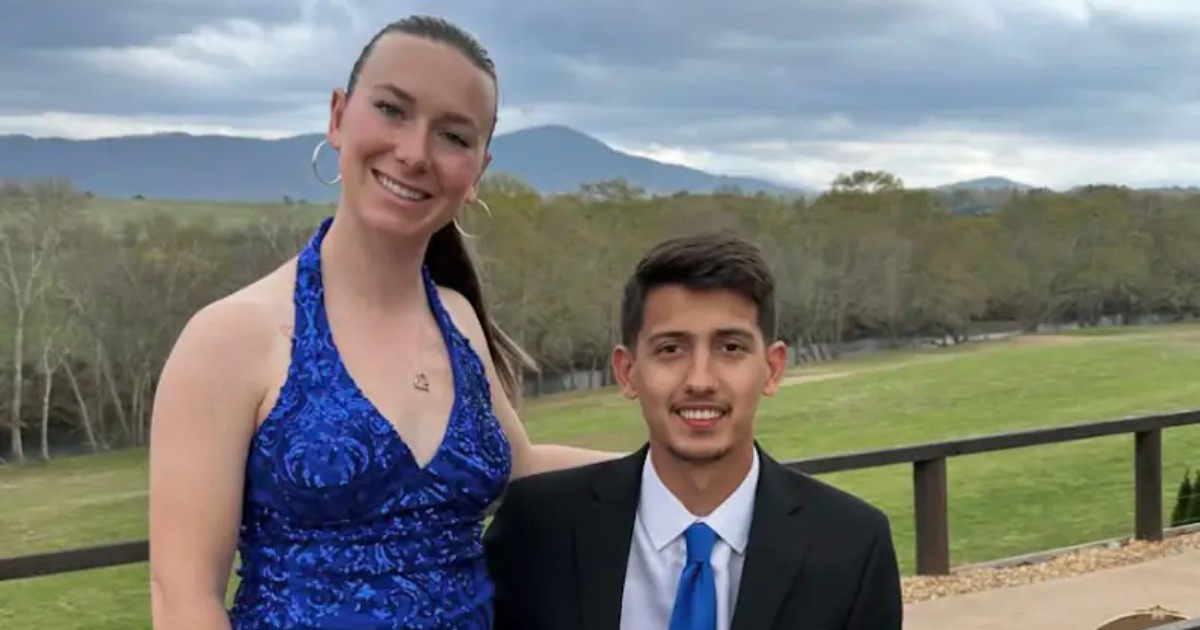
A 37-year-old man who lost his penis to cancer has spoken about the emotional moment he was able to be intimate with his wife again following an extraordinary reconstructive operation.
Paul Lucas underwent surgery after being diagnosed with penile cancer, a rare disease that forced him to confront the possibility of losing an important part of his body.
His wife, Nicky, stood by him throughout his treatment, even after he offered her the opportunity to leave their marriage.
Appearing together on ITV's This Morning, the couple explained how surgeons used tissue from Paul's arm to reconstruct his penis, before revealing what happened when they resumed physical intimacy.
What happened when Paul Lucas was intimate with his wife after surgery?
Paul and Nicky revealed that they had already been physically intimate following the reconstruction, despite Paul not yet having completed all the planned stages of surgery.
Nicky described the experience as incredibly emotional, explaining that being able to reconnect in that way meant a great deal to them both.
She emphasised that their relationship had never depended on whether Paul had a penis, but said the experience of physical closeness following everything they had endured was overwhelming.
Speaking on This Morning, she described the moment as "really emotional" and added: "I've got no complaints."
However, Paul also acknowledged that the reconstruction presented some unusual practical challenges.
Because his reconstructed penis does not contain natural erectile tissue, it does not become erect in the same way as a typical penis.
Instead, its size remains relatively constant, something Paul admitted could sometimes be awkward.
He was still awaiting further surgical procedures, including a planned stage involving an erectile implant intended to improve functionality.
How did Paul Lucas lose his penis?
Paul's ordeal began when he noticed unusual symptoms affecting his penis and urination.
He told the presenters that he had been urinating at an abnormal angle, but initially chose not to seek medical advice.
As time passed, he noticed a growth that continued to increase in size.
Rather than arranging an appointment, Paul admitted that he attempted to manage the problem himself, even purchasing medication online.
Eventually, his wife Nicky intervened and booked him a doctor's appointment.
He was subsequently diagnosed with penile cancer.
Although the diagnosis was frightening, Paul said he initially experienced a sense of relief because he finally understood what was happening.
Doctors recommended surgery to treat the cancer, beginning with a total penectomy, a procedure involving removal of the penis.
Paul later explained that he had not fully understood the extent of the surgery until shortly after it had taken place.
He also underwent two lymph node operations to investigate whether the cancer had spread.
According to his account, he did not require additional chemotherapy.
Why did Paul tell his wife she could leave him?
Beyond the physical consequences of the operation, Paul struggled with feelings of guilt about how his diagnosis might affect his marriage.
He and Nicky had been married for only a few months when he underwent treatment.
Paul worried that losing his penis would fundamentally change their relationship, particularly their physical intimacy.
He admitted that his understanding of masculinity had been closely connected to his anatomy, something he later came to reconsider.
At one point, he told Nicky that she could leave him if she wanted.
But she immediately rejected the suggestion.
Nicky made it clear that her love for Paul was not conditional on his body and that she had no intention of ending their marriage.
Her reassurance became an important part of his emotional recovery.
How did surgeons make a new penis using his arm?
Following his cancer treatment, Paul underwent a complex reconstructive operation known as phalloplasty.
The procedure involves using tissue from another part of the body to construct a new penis.
In Paul's case, surgeons used tissue taken from his arm.
Urological surgeon Wai Gin Lee, who appeared alongside the couple on This Morning, explained that the operation involved reconstructing both the penis and the urethra.
The urethra is the tube through which urine leaves the body.
Surgeons also connected nerves from the transplanted tissue to nerves in the pelvic region, with the aim of allowing sensation to develop.
Such procedures require specialist microsurgical techniques because blood vessels and nerves must be carefully connected.
Recovery and the degree of sensation achieved can vary considerably between patients.
Why does Paul's reconstructed penis work differently?
One of the key differences between a surgically reconstructed penis and a typical penis is the absence of natural erectile tissue.
In a typical penis, erectile tissue fills with blood during arousal, producing an erection.
Paul's reconstructed penis was made using transplanted tissue, meaning it does not have the same natural mechanism.
As a result, he explained that it remains approximately the same size rather than changing significantly between flaccid and erect states.
Surgeons can sometimes address this limitation by inserting a penile prosthesis during a later stage of reconstruction.
These devices are designed to provide rigidity for penetrative sexual activity.
However, they involve additional surgery and carry risks that must be discussed with the patient's specialist team.
Paul explained that he hoped to undergo further procedures as part of his reconstructive treatment.
Did Paul's wife help design his reconstructed penis?
In one of the lighter moments of the couple's television interview, Nicky revealed that she had been involved in discussions about the measurements for Paul's reconstruction.
She explained that when the subject of size came up, they decided to ask whether it might be possible to make the reconstructed penis slightly larger.
Paul responded with humour, describing himself as having a "designer phallus".
His joke reflected the couple's ability to find moments of laughter despite the seriousness of everything they had experienced.
However, the final outcome of reconstructive surgery depends on individual anatomy, medical considerations and the techniques available.
What further operations does Paul need?
At the time of his interview, Paul had completed the initial reconstructive stage but was awaiting additional procedures.
According to surgeon Wai Gin Lee, later stages can involve constructing the glans, which forms the head of the penis, and inserting an erectile device.
These procedures may improve appearance and certain aspects of sexual function.
Paul said he hoped to undergo the second stage in November, with a third operation planned further into the future.
The couple's account did not establish that these additional procedures had already taken place.
What are the warning signs of penile cancer?
Penile cancer is a relatively rare form of cancer that develops in the skin or tissues of the penis.
According to NHS guidance, possible symptoms include:
These symptoms can also have causes other than cancer, but persistent or unexplained changes should be assessed by a healthcare professional.
Early diagnosis can make a significant difference to the treatment options available.
Paul's experience highlights the importance of seeking medical advice rather than ignoring symptoms or attempting to treat them with unprescribed medication.
How are Paul and Nicky coping after the surgery?
Despite the challenges of cancer treatment and reconstruction, Paul and Nicky have spoken positively about their relationship.
The couple emphasised that their marriage remained strong throughout the experience.
For Nicky, the emotional connection between them was more important than the physical changes Paul had experienced.
And while their intimate life required adjustments, they described reconnecting after surgery as a meaningful milestone.
Paul has also used humour when discussing his reconstructed anatomy, reflecting a growing sense of confidence following treatment.
Their story offers insight into both the possibilities and limitations of modern reconstructive surgery, while highlighting the emotional impact of a life-changing cancer diagnosis.
Above all, the couple's experience shows that recovery can involve far more than medical procedures, including rebuilding confidence, adapting to physical changes and finding new ways to maintain intimacy.
Source: VT, October 22, 2026, reporting on Paul and Nicky Lucas's appearance on ITV's This Morning, including comments from urological surgeon Wai Gin Lee.