
A YouTube video attempting to recreate the experience of dying has attracted renewed attention, with some viewers claiming it has completely changed the way they think about death.
The simulation, originally published in 2023, uses computer-generated imagery to take viewers through an imagined near-death experience.
Created by the YouTube channel HandintheBoxInc, the video has resurfaced online, prompting discussions about consciousness, the afterlife and the experiences people report after coming close to death.
Some viewers have described the footage as surprisingly comforting, while others have questioned whether any computer-generated simulation could accurately portray such a deeply personal experience.
Although the video has been described as hyper-realistic, its depiction is entirely speculative and should not be mistaken for scientific evidence of what happens after death.
What happens in the 4K death simulation?
The video, titled Near Death Experience Simulation, follows a fictional man as he experiences a life-threatening incident and appears to leave his physical body.
It begins with the man falling and injuring himself inside his home.
After losing consciousness, the perspective changes, suggesting that his awareness has separated from his body.
He appears to rise upwards, eventually passing beyond the ceiling of the building.
From there, the simulation moves through several dramatically different environments intended to represent possible stages of a near-death experience.
The simulation first takes viewers through a disturbing environment
Following the apparent out-of-body experience, the character enters a dark and unsettling setting.
The surroundings feature strange objects, including imagery resembling human remains, alongside red and brown tones.
Fire appears to emerge from the ground while tense music plays in the background.
The sequence appears intended to evoke a vision of hell, drawing on imagery commonly associated with religious and cultural interpretations of the afterlife.
However, the video does not establish that such an environment exists.
It is one of several imagined stages included by the creator.
What happens when the man moves towards the light?
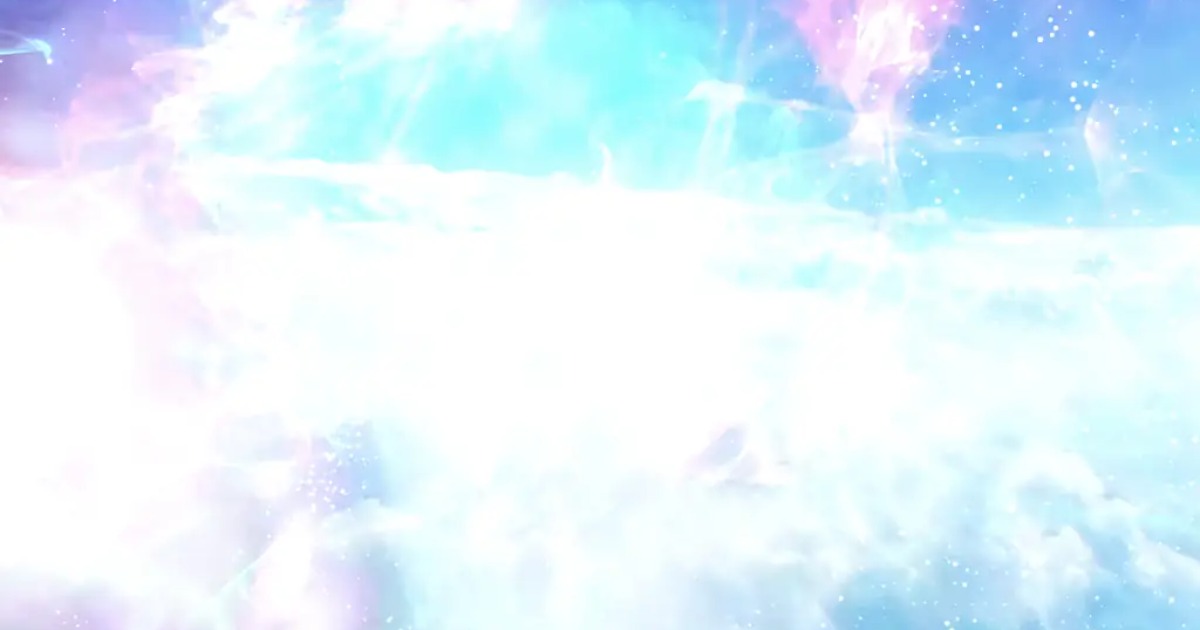
After the darker sequence, the character travels towards a bright light at the end of what resembles a long, shadowy passage.
The imagery then changes dramatically.
Instead of the unsettling surroundings, the viewer is transported through clouds accompanied by calmer music.
Bright colours and sparkling visual effects appear as the character continues moving forwards.
The sequence draws on descriptions sometimes reported by people who have survived near-death experiences, including accounts of bright lights, feelings of peace and sensations of movement.
These reports vary considerably between individuals, and scientists have not established that they demonstrate the existence of an afterlife.
The video then shows a colourful version of heaven
The next stage initially appears to show the character approaching what could be interpreted as the gates of heaven.
However, the environment soon reveals itself to be an open field.
The landscape begins changing colours, with pink tones spreading across the surroundings.
As the character moves, the colours continue shifting, creating a dreamlike effect.
Plants and wildlife appear unusually vivid, while the environment seems to respond to movement.
The experience is presented as peaceful and visually overwhelming, in contrast with the darker scenes shown earlier.
Some viewers have compared the changing colours and unusual visual effects to experiences associated with psychedelic substances.
Those similarities are observations made by viewers rather than evidence that the simulation represents an actual near-death experience.
How does the death simulation end?
After moving through the colourful landscape, the character begins interacting with objects in the environment.
He is shown feeling different textures on a table, suggesting a heightened awareness of his surroundings.
Then the scene changes again.
The man wakes up, revealing that he has survived the incident rather than permanently died.
The ending suggests that the entire sequence represented a near-death experience rather than a confirmed journey into an afterlife.
By returning the character to ordinary consciousness, the creator leaves viewers to consider what the experience might mean.
It is this combination of frightening imagery, peaceful landscapes and eventual survival that has made the video particularly memorable for some audiences.
Why are people saying the video made them less afraid of death?
After the footage circulated online, viewers began sharing their reactions in the comments.
Some described feeling reassured by the simulation's more peaceful sequences.
One commenter thanked the creator and said the video had helped them feel less frightened about dying.
They explained that watching the imagined experience had given them courage and a sense that things might ultimately be okay.
Another viewer, writing from Maryland in the United States, said they had always been fascinated by near-death experiences and appreciated the opportunity to see a visual interpretation.
For these viewers, the simulation appeared to offer a comforting way to think about a subject that can otherwise feel frightening or difficult to discuss.
However, emotional reassurance does not mean that the events depicted are scientifically accurate.
Not everyone agrees with the depiction
Other viewers were less convinced by the computer-generated experience.
One commenter who claimed to have personally experienced a near-death event argued that it would be impossible to recreate the sensation accurately.
They suggested that the simulation fell short of the complexity and intensity of their own experience.
Another viewer compared the colourful environments to the visual effects associated with psychedelic mushrooms.
These contrasting reactions demonstrate how differently people interpret experiences involving consciousness and death.
Some find artistic depictions reassuring, while others feel that they oversimplify something that remains poorly understood.
What is a near-death experience?
A near-death experience, often abbreviated to NDE, refers to an unusual subjective experience reported by some people who have been close to death or faced a perceived threat to their lives.
Reported features can include:
Not everyone who survives a life-threatening event reports such an experience.
Among those who do, the details can vary significantly.
Some accounts are comforting, while others involve fear, confusion or distress.
What does science say about near-death experiences?
Researchers have investigated near-death experiences for decades, particularly among people who have survived cardiac arrest or other medical emergencies.
Several explanations have been proposed for the sensations people report.
These include changes in brain activity, altered oxygen availability, neurological responses to extreme stress and the effects of medications or other physiological processes.
Researchers have also explored how the brain processes perception, memory and awareness during periods of severe medical distress.
However, the precise mechanisms behind all reported near-death experiences remain incompletely understood.
Scientific research has not established that people who report these experiences have literally visited heaven, hell or another form of afterlife.
Similarly, the absence of a complete explanation for every experience does not establish a supernatural cause.
Why do people report seeing a bright light?
Bright lights and tunnel-like visual experiences are among the best-known features of some near-death accounts.
Scientists have proposed several possible explanations involving changes in visual processing and brain function during extreme physiological conditions.
However, there is no single confirmed explanation that accounts for every report.
Not all people who describe near-death experiences report seeing a tunnel or bright light.
Individual expectations, memories, culture and circumstances may influence how an experience is recalled and interpreted.
Can anyone really know what happens after death?
Questions about what happens after death have been central to religious, philosophical and scientific discussions for thousands of years.
Different belief systems offer different interpretations, including the existence of heaven, reincarnation or other forms of continued existence.
Scientific research can investigate the biological process of dying and reports from people who survive life-threatening events.
However, a near-death experience is not the same as verified experience after irreversible death.
There is currently no scientifically established account of what, if anything, a person experiences after permanent death.
The YouTube simulation should therefore be understood as a creative interpretation inspired by reported experiences and cultural imagery.
Where can you watch the simulation?
The video was published on YouTube by HandintheBoxInc under the title Near Death Experience Simulation.
Viewers can search for that title and the creator's channel to find the original upload.
Its combination of unsettling scenes, bright landscapes and a surprising ending has continued to generate discussion years after its initial release.
While the footage cannot answer the question of what happens after death, it offers a visual interpretation of an experience that remains a source of fascination for many people.
And for some viewers, simply imagining a peaceful possibility has been enough to change the way they feel about their own mortality.
Source: VT, October 22, 2026, reporting on the 2023 YouTube video Near Death Experience Simulation by HandintheBoxInc and viewer reactions.