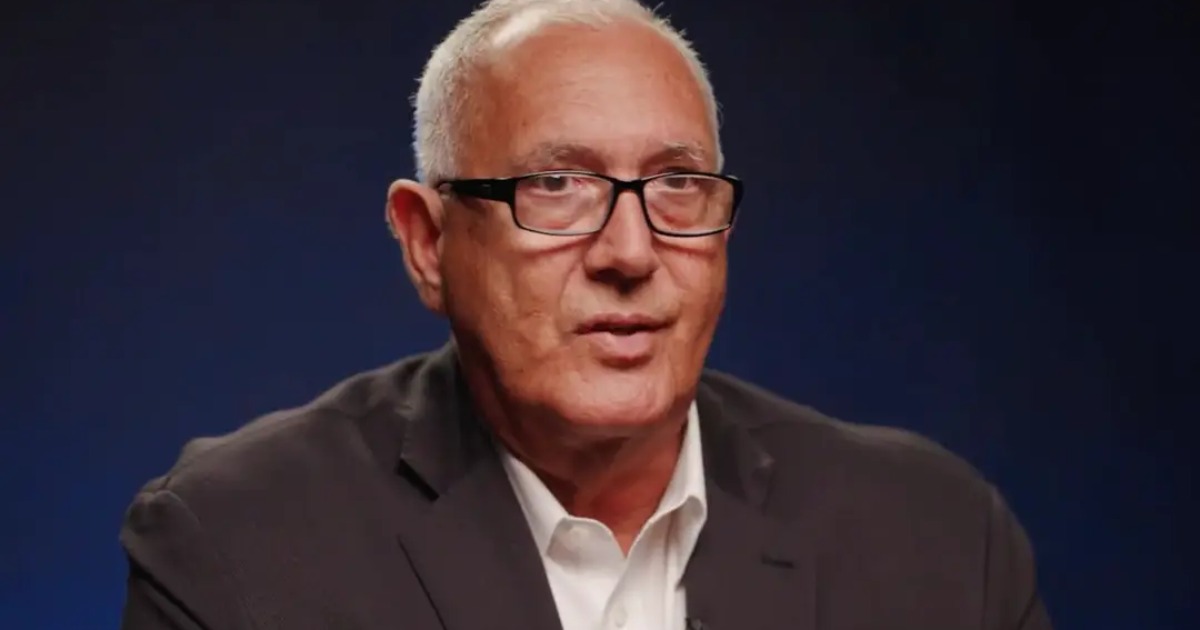

Former FBI agent Joe Navarro spent 25 years reading people for a living, working on cases involving one of Ted Bundy's victims and the investigation into 9/11. As a founding member of the FBI's National Security Behavioral Programme, he's one of the world's leading experts on body language. So when he says something about detecting lies, people listen.
Can body language actually reveal a lie?
According to Navarro, the answer is straightforward: no. He points to research dating back to 1986, when psychologist Paul Ekman's work established that there's no single behaviour that reliably indicates someone is lying. Navarro says that in his entire FBI career, he was never trying to spot deception through body language alone.
What he was actually looking for, he explains, was stress, anxiety, or discomfort, not dishonesty itself. He describes it as reading two broad states: comfort and discomfort, and using shifts between them to guide further questioning, rather than treating any single gesture as proof of a lie.
A cigarette that gave someone away
Navarro shared one case that illustrates the difference. While speaking casually with a man named Rod Ramsey about life in Germany in the 1980s, Navarro mentioned the name Clyde Lee Conrad, a US Army officer later convicted of selling classified NATO information to Hungary. Ramsey's cigarette immediately began shaking, though he claimed to barely know Conrad.
Navarro didn't push the point at the time, choosing to keep observing rather than react. Around 20 minutes later, after Ramsey had gone through several more cigarettes and grown visibly on edge, Navarro brought up Conrad's name again, and the same reaction followed. It later emerged that Ramsey and Conrad had been involved in espionage together.
What this actually tells you
Navarro is clear that Ramsey's reaction wasn't proof of a lie in itself, it was a sign of psychological distress tied to specific information, sometimes called guilty knowledge. He's described similar reactions in other cases, including a suspect whose eyelids and chin dropped the moment the phrase "ice pick" came up while listing possible murder weapons.
His overall message is one he's keen to repeat: body language can reveal stress, anxiety, or discomfort, but it can't reliably reveal deception on its own, no matter how convincing a shifting glance or nervous gesture might seem.