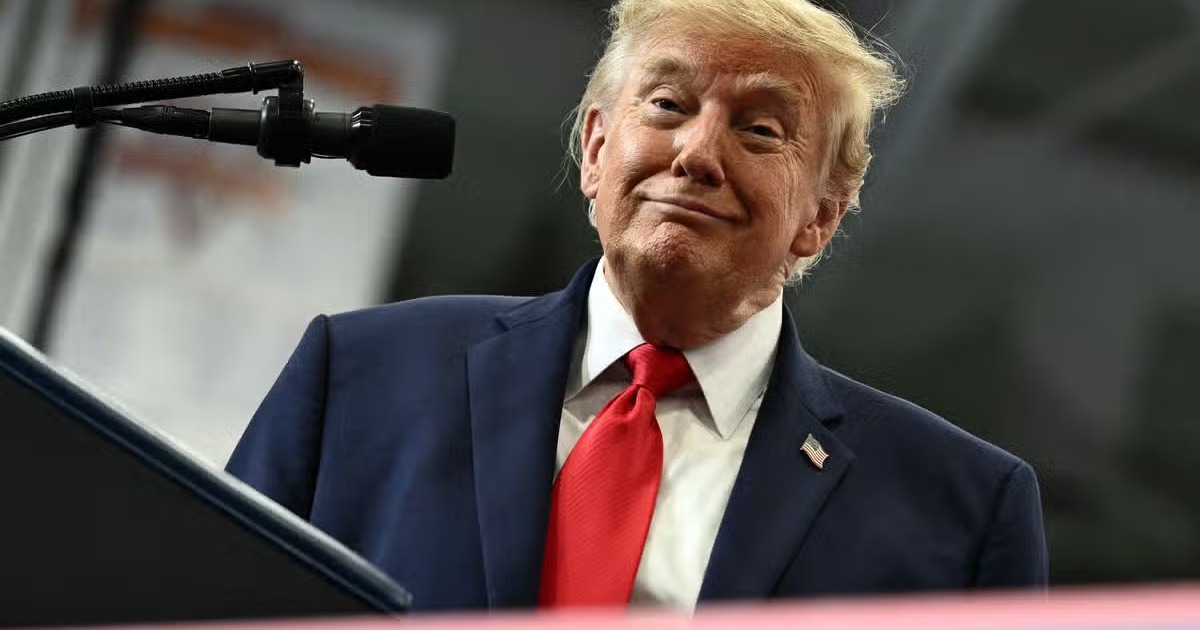

Millions of Americans are asking whether they qualify for a government payment after President Donald Trump promoted a proposed $5,000 dividend alongside several smaller financial assistance programmes.
With the November 2026 midterm elections approaching, the administration has highlighted payments to Medicare recipients, health insurance customers and military personnel.
However, there is an important difference between money that has already been distributed and the much larger $5,000 payment Trump has promised if Republicans retain control of Congress.
Some Americans may already qualify for a payment, while others will need to wait for further announcements.
Here is what has been reported about each programme, who may be eligible and how to check your payment status.
Who qualifies for Trump's proposed $5,000 check?
Trump has proposed sending $5,000 to adult American citizens if Republicans retain control of both the House of Representatives and the Senate following the November 3 midterm elections.
The president has described the proposed payments as a dividend intended to provide financial relief to Americans facing high living costs.
However, the $5,000 payments have not been authorised by Congress, and there is currently no official application process.
Based on Trump's public statements, the intended recipients would be adult US citizens, although the government has not published final eligibility rules.
Important questions remain unanswered, including whether there would be income limits, how citizenship would be verified and when any payments could be distributed.
There has also been discussion of requiring recipients to spend the money within the United States, but no final mechanism has been established.
How to check eligibility for the $5,000 Trump dividend
As of October 17, 2026, Americans cannot officially apply for the proposed $5,000 dividend or confirm that they have qualified.
The programme has not been established in law, meaning there is no approved eligibility checker or government payment portal.
Anyone hoping to receive the money should monitor announcements from the White House, US Treasury Department and Internal Revenue Service.
The relevant official websites are:
Americans should be particularly cautious about websites claiming they can register people for the $5,000 payment immediately.
Because no official application process exists, requests for Social Security numbers, banking information or application fees to secure the dividend should be treated as potential scams.
Who qualifies for the $90 Medicare payment?
Unlike the proposed $5,000 dividend, a separate $90 Medicare rebate has been officially announced and is being distributed in October 2026.
The one-time payment is intended to help eligible beneficiaries offset their Medicare Part B premium.
According to Medicare, eligibility is generally limited to people who:
People enrolled in Medicare Advantage plans are not eligible for this particular rebate.
The administration says more than 20 million Medicare beneficiaries are expected to receive the payment.
How to check your $90 Medicare rebate
Eligible beneficiaries should receive a notification letter from Medicare explaining the one-time payment.
Those with qualifying direct deposit arrangements should look for a $90 deposit, while others may receive a paper cheque from the US Treasury.
Payments are scheduled for October 2026.
To check eligibility or ask about a missing payment, beneficiaries can:
People should not assume that simply being over 65 guarantees eligibility, as the payment depends on the type of Medicare coverage and other conditions.
Who is receiving the $500 Obamacare payment?
Another payment attracting attention is a reported $500 rebate for certain Affordable Care Act health insurance customers.
According to reporting by The Washington Times and other news organisations, nearly one million people across approximately 30 states have received or been selected for these payments.
The programme is intended to compensate a particular group of health insurance customers facing higher premiums.
Those identified in the reporting were enrolled through the federal health insurance marketplace and did not receive federal premium subsidies.
Consequently, the payment is not intended for everyone with an Affordable Care Act insurance policy.
Eligibility depends on the circumstances of the person's marketplace coverage and the criteria used for the rebate programme.
How to check eligibility for the $500 healthcare rebate
People who purchased health insurance through the federal marketplace can begin by reviewing their coverage and premium assistance information.
They can:
These steps can help establish whether a person has the type of coverage described in the reporting, but they do not constitute a confirmed eligibility test for the $500 payment.
Anyone uncertain about a payment should seek confirmation through the marketplace or their insurer rather than relying on unofficial websites.
What is the $1,776 Warrior Dividend?
The Trump administration has also highlighted a separate payment to members of the US military.
More than 1.4 million service members reportedly received a one-time $1,776 payment in December 2025, described by the administration as the Warrior Dividend.
The amount was chosen as a reference to 1776, the year of American independence.
Unlike the proposed $5,000 dividend, this was a previously announced payment directed towards eligible military personnel rather than the general public.
Service members who believe they were eligible but did not receive the payment should review their military pay records and contact their service's finance or payroll office.
Military personnel can also access official pay information through the Defense Finance and Accounting Service at DFAS.mil.
Are Americans receiving all four payments?
No. The programmes have different purposes and eligibility requirements, and the $5,000 dividend has not been approved.
A Medicare beneficiary might qualify for the $90 rebate but have no connection to the military payment.
Similarly, an Affordable Care Act customer could qualify for a healthcare rebate without being eligible for the Medicare programme.
The proposed $5,000 payment is broader in scope, but its final eligibility rules remain undecided.
Americans should therefore avoid assuming that receiving one payment automatically makes them eligible for another.
When will the $5,000 Trump checks arrive?
There is no confirmed payment date for the proposed $5,000 dividend.
Trump has linked the proposal to Republican control of Congress following the November 3 elections, but an election result alone would not automatically release the money.
Congress would still need to approve the necessary legislation and funding arrangements.
The estimated cost of sending $5,000 to hundreds of millions of adults would exceed $1 trillion, raising significant questions about how the programme would be financed.
Until legislation is approved and an official distribution process is announced, there is no guarantee that the payments will take place.
What should Americans do now?
People hoping to receive a government payment should first identify which programme they may qualify for.
For the Medicare rebate, official eligibility guidance is already available, and qualifying payments are being issued.
For the reported Affordable Care Act rebate, customers should review their marketplace coverage and seek clarification through official channels.
Military personnel can review their service pay records for the previously issued Warrior Dividend.
Anyone interested in the proposed $5,000 dividend should wait for official government announcements rather than submitting personal information to third-party application websites.
The most important distinction is that several smaller payments have been reported or implemented, while Trump's much larger $5,000 proposal remains conditional and has not become an approved nationwide payment programme.