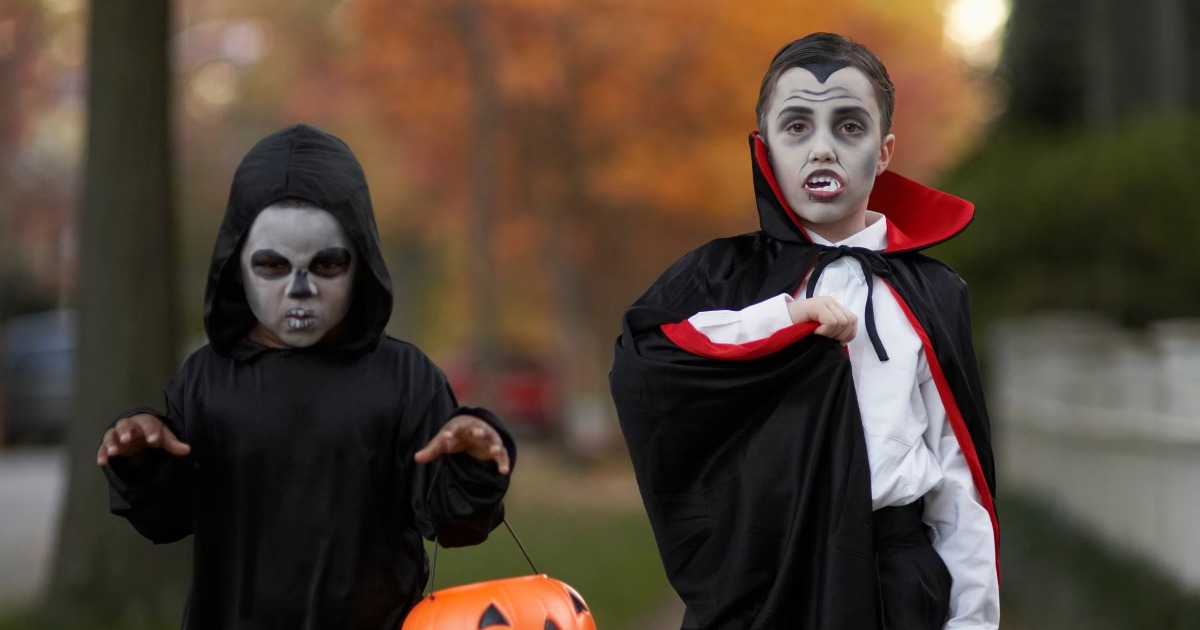

Millions of Americans are preparing to celebrate Halloween on Saturday, October 31, but some families could be surprised to discover that trick-or-treating isn't permitted for everyone.
While Halloween is traditionally associated with children dressing up and collecting candy, several communities across the United States have introduced rules restricting who can participate.
In some locations, older children are subject to age limits, while others have regulations governing costumes, masks and how late families can remain outdoors.
There are even communities where the official trick-or-treating celebrations take place on a completely different day.
With Halloween falling on a Saturday in 2026, it's worth checking the local rules before heading out for an evening of festivities.
Which US towns have age restrictions on trick-or-treating?
Several communities have rules restricting trick-or-treating to children below a certain age, with some setting the limit as low as 12 years old.
According to local regulations cited in reporting by UNILAD, the following locations have age-related restrictions:
These restrictions mean that teenagers who might otherwise participate in traditional door-to-door trick-or-treating could find themselves outside the permitted age range.
However, the existence of a local ordinance does not necessarily mean police will issue penalties to every older teenager participating. Enforcement practices can vary.
Where are Halloween masks restricted?
Some communities have also introduced rules concerning masks and other items that conceal a person's identity.
In Newport News, Virginia, adults accompanying children under the age of 13 while trick-or-treating are not permitted to wear masks.
Charleston, South Carolina, has a separate ordinance restricting people over the age of 16 from wearing masks or other items that conceal their faces.
Children aged 16 and under are exempt from that restriction until 10pm on Halloween night.
These rules are distinct from general advice about costume safety and are intended to regulate face coverings in certain circumstances.
Families planning elaborate costumes should check the precise wording of their local ordinances before heading out.
Which US towns have specific trick-or-treating hours?
Age restrictions aren't the only rules affecting Halloween celebrations.
Several communities designate official trick-or-treating hours, meaning families are encouraged to collect candy within a particular window.
For Halloween 2026, the following times have been reported:
These designated windows help communities coordinate celebrations and allow residents to know when to expect visitors.
However, official recommended hours should not automatically be interpreted as legally enforceable curfews unless local regulations specifically say so.
Which towns celebrate Halloween on a different day?
Not every community schedules its trick-or-treating celebrations for October 31.
In Dublin, Ohio, the designated trick-or-treating event took place on Thursday, October 29, between 6pm and 8pm.
That means families expecting the usual door-to-door celebrations on Saturday could discover that the community's official event has already happened.
Some towns schedule Halloween activities on alternative dates to accommodate local traditions, school schedules or community events.
Parents should therefore check local government announcements rather than assuming celebrations will always take place on Halloween night itself.
Are there Halloween curfews for children?
Woodbridge, New Jersey, is among the communities with additional rules affecting young people during Halloween.
According to the regulations cited by UNILAD, children are subject to a 7pm curfew on October 30 and October 31 unless accompanied by a parent, guardian or another responsible adult.
That means families planning to stay out later should be aware of the requirement for adult supervision.
Other communities may have separate curfew rules that apply throughout the year rather than exclusively during Halloween.
Because local ordinances differ, families should confirm the rules applicable to their neighbourhood.
Why do some towns restrict trick-or-treating by age?
Local restrictions are generally intended to manage Halloween activities and address concerns about public safety and neighbourhood disruption.
Age limits distinguish traditional trick-or-treating by younger children from activities involving older teenagers and adults.
Mask regulations can also be intended to address concerns about identification and public safety.
However, such restrictions can be controversial, particularly among families who believe older children should be encouraged to enjoy harmless Halloween traditions.
Enforcement approaches may differ considerably between communities, so the practical impact of these regulations is not always straightforward.
What are the biggest Halloween costume safety risks?
Alongside local restrictions, safety specialists have reminded families to consider the potential risks associated with Halloween costumes.
Missouri personal injury attorney Daniel Thomas warned that certain costumes can make it more difficult for children to see and hear what is happening around them.
Masks that restrict peripheral vision may increase the risk of accidents, particularly when children are crossing roads after dark.
He also highlighted fire hazards associated with Halloween decorations.
Traditional candles placed inside pumpkins or near decorations can create risks if costumes or other flammable materials come into contact with open flames.
Battery-powered candles and glow sticks offer alternatives that do not involve an exposed flame.
How can families stay safe while trick-or-treating?
Families planning to celebrate Halloween can take several practical steps to reduce potential risks.
Parents should also consider weather conditions and ensure children are dressed appropriately for the temperature.
Could children get in trouble for breaking Halloween rules?
Whether a child or teenager could face consequences depends on the wording and enforcement of the relevant local ordinance.
Some communities have formal restrictions, while others simply publish recommended trick-or-treating hours.
Those are not necessarily the same thing.
Families should not assume that every guideline carries a criminal penalty, but they should also avoid assuming that age limits or curfews are merely suggestions.
The most reliable approach is to consult local government or police department guidance for the specific community.
With Halloween celebrations varying significantly across the country, checking those details could help families avoid unexpected problems while enjoying the festivities.
Source: UNILAD, Mia Williams, October 31, 2026. Local restrictions and Halloween schedules as reported in the supplied article; families should confirm current rules with their local authorities.