
Donald Trump has renewed his promise to distribute $5,000 checks to millions of Americans, but the President has also reiterated a major restriction on how recipients would be allowed to use the money.
The proposed payments, which Trump has described as a dividend from America's economic success, remain dependent on the outcome of the November 2026 midterm elections.
During a recent campaign rally in Alaska, Trump repeated his pledge and emphasised that the money would have to be spent within the United States.
However, the programme has not received congressional approval, and significant questions remain about its funding, eligibility rules and implementation.
What is Trump's new condition for the $5,000 checks?
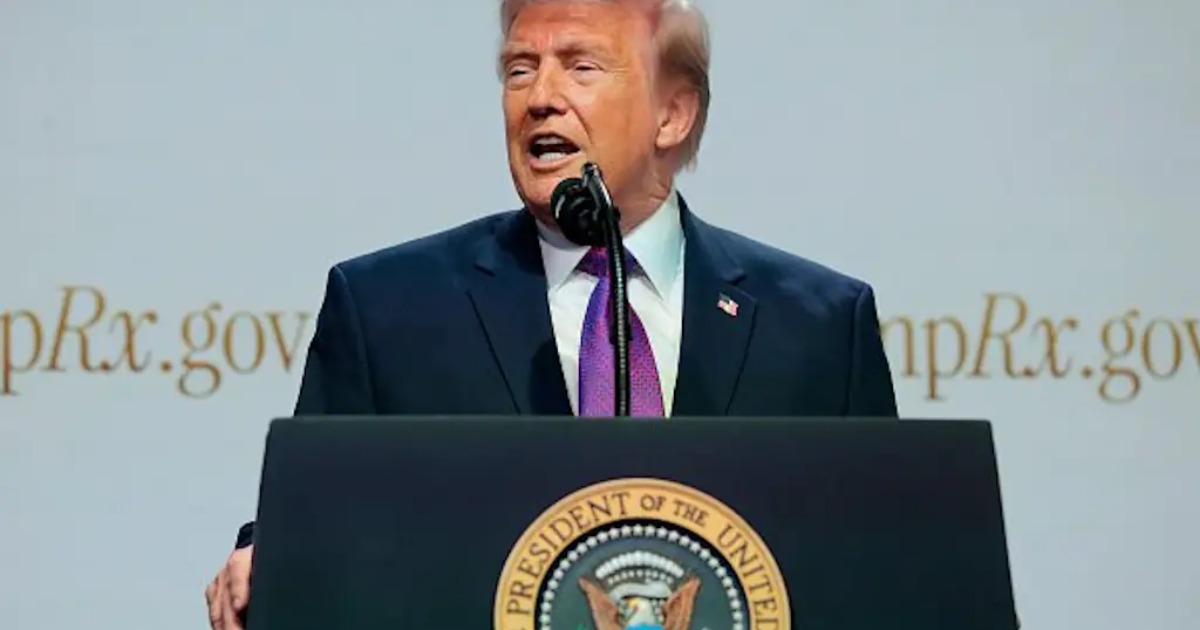
Speaking at a rally in Wasilla, Alaska, on 13 October, Trump told supporters that anyone receiving the proposed $5,000 dividend would be required to spend it in the United States.
He explained that he did not want Americans using the payments to finance spending in countries such as Japan or China.
Trump presented the restriction as a way of ensuring that the money would circulate through the American economy rather than being spent overseas.
Although the condition has attracted renewed attention following his Alaska speech, it is not entirely new. Trump had previously mentioned the same restriction when introducing the dividend proposal in September and during subsequent campaign appearances.
What remains unclear is how the government would enforce the requirement.
Officials have not published a system for monitoring purchases, preventing overseas transactions or determining whether recipients have complied with the proposed rule.
Who would qualify for Trump's $5,000 payments?
Trump has repeatedly said that the proposed dividend would be available to adult United States citizens.
Under the version of the proposal outlined in his speeches, the payment would potentially apply to American citizens aged 18 and over.
However, the administration has not released final eligibility regulations.
That means questions remain about whether income limits, residency requirements or other restrictions could eventually be introduced.
There is currently no official application process, and Americans cannot claim the proposed $5,000 payment.
What must happen before Americans receive the money?
Trump has made the proposal conditional on Republicans retaining control of both chambers of Congress in the midterm elections on 3 November 2026.
The President has repeatedly argued that continued Republican control would allow his administration to deliver the payments.
He has also suggested that the checks could be issued quickly following the election.
However, an election victory would not automatically authorise the government to distribute the money.
Congress would still need to approve the necessary spending legislation, and the administration would need to establish a workable funding and distribution system.
Even if Republicans retain control of the House of Representatives and Senate, lawmakers could reject or amend the proposal.
How much would Trump's $5,000 dividend cost?
One of the largest obstacles facing the proposal is its estimated cost.
Providing $5,000 to approximately 240 million adult American citizens would require around $1.2 trillion before administrative expenses.
Trump has suggested that revenue generated by tariffs, economic growth and increased domestic investment could help fund the programme.
However, no detailed financing plan has been approved.
The President has pointed to substantial private investment commitments in the United States as evidence of economic strength, although investment announcements are not the same as government revenue available to fund direct payments.
Economists and budget analysts have raised concerns about whether the administration could generate sufficient funding without increasing federal borrowing.
Some Republicans have criticised the proposal
Trump's $5,000 dividend has attracted criticism from figures within his own political party.
Former Republican congressman Justin Amash has described the proposal as an unrealistic form of voter inducement and warned about its enormous cost.
Former Arkansas Governor Asa Hutchinson has argued that Republicans should prioritise reducing the national debt rather than distributing large cash payments.
Republican donor and Palantir co-founder Joe Lonsdale has also expressed opposition to the proposed handouts despite supporting Republican electoral success.
Critics have questioned whether the payments would represent a responsible use of public funds, particularly given the size of the federal deficit.
Supporters of the administration, meanwhile, argue that the proposal would allow Americans to benefit directly from the economic gains Trump says his policies have produced.
Could the government really stop people spending the money abroad?
The domestic spending requirement presents another significant challenge.
In theory, the government could attempt to distribute the payments through a restricted payment system rather than ordinary unrestricted checks.
However, the administration has not announced any such mechanism.
There are also practical questions about how officials would distinguish between domestic and international spending, particularly when purchases involve online retailers, foreign-owned businesses or international travel.
Budget specialists have questioned whether such a restriction could be enforced effectively once money enters recipients' bank accounts.
Until detailed rules are published, Trump's statement remains a proposed condition rather than an operational spending restriction.
When will Americans receive the $5,000 checks?
There is currently no confirmed payment date.
Trump has suggested that the dividend could be distributed shortly after the November elections if Republicans retain control of Congress.
However, that timetable would depend on lawmakers approving the programme and the government establishing the necessary administrative arrangements.
Americans should also be aware that the proposed $5,000 dividend is separate from other government payment announcements involving Medicare and Affordable Care Act beneficiaries.
Those programmes have different eligibility criteria and should not be confused with the much larger, unapproved dividend proposal.
Are Trump's $5,000 checks guaranteed?
No. As of 15 October 2026, the $5,000 payments remain a political proposal rather than an approved federal benefit.
There is no confirmed funding mechanism, no final set of eligibility rules, no established distribution date and no official claims process.
The President has repeatedly expressed confidence that the payments could be delivered, but congressional approval would still be required.
For now, Americans should be cautious of websites, emails or social media posts suggesting they can already register for the $5,000 checks.
The next major milestone is the midterm election on 3 November, although the outcome alone will not determine whether the proposed payments become law.