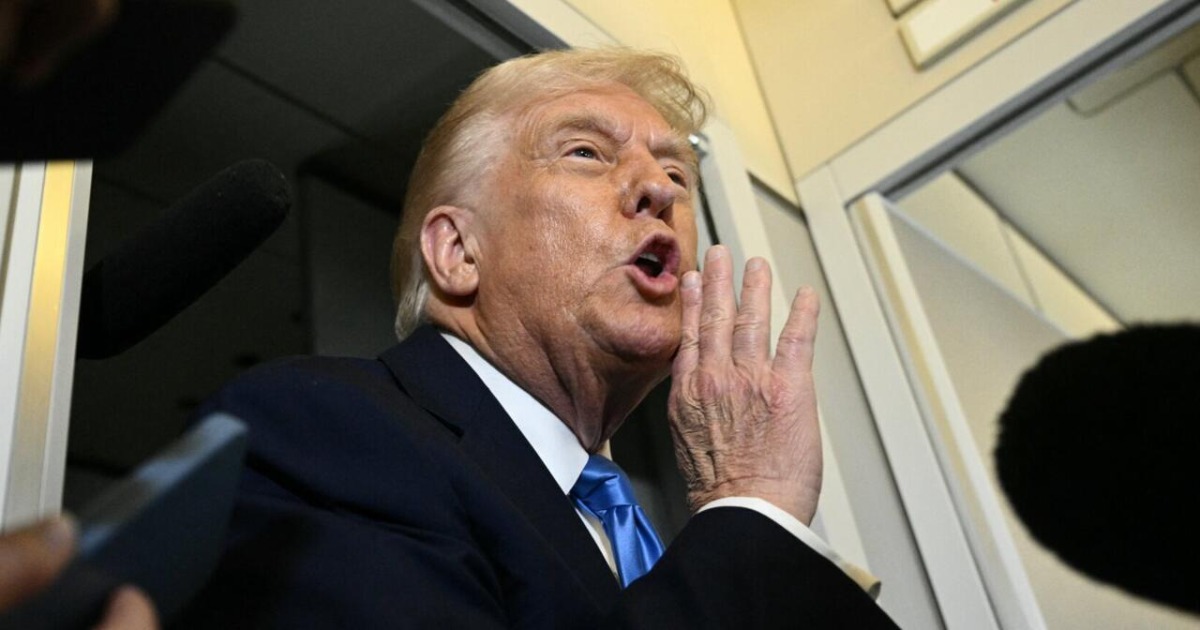
The White House has issued a direct warning to Democrats considering another impeachment attempt against Donald Trump following the Republican Party's defeat in the 2026 midterm elections.
Democrats secured control of both the House of Representatives and the Senate in Tuesday's elections, setting up a significant shift in Washington when the new Congress takes office in January 2027.
The result has prompted renewed discussion about whether Trump, who has already been impeached twice, could face a third attempt to remove him from office.
Several Democratic lawmakers have expressed concerns about the president's conduct, although party leaders have not announced a formal impeachment effort.
Now, the Trump administration has responded with a strongly worded statement addressing what it believes will happen if Democrats attempt to challenge the president's position.
What warning did the White House issue to Democrats?
In an official statement published on November 4, the White House warned that any attempt to impeach Trump or reverse his administration's policies would be unsuccessful.
The statement declared: "Attempts to impeach him, claw back his agenda, or reverse the gains of his Administration will meet the same fate as the Radical Left's previous attempts: failure."
It concluded with another message: "President Trump will never stop fighting."
The administration also accused its political opponents of attempting to undo the president's achievements during his final two years in office.
It listed several policy areas where it expected disagreements, including immigration enforcement, taxation, energy production and federal government programmes.
The White House characterised previous impeachment efforts against Trump as politically motivated, an assessment disputed by Democrats who supported those proceedings.
Its latest warning comes as the incoming Democratic majorities prepare to exercise greater oversight of the administration.
What did Donald Trump say about being impeached again?
Trump has also responded personally to questions about the possibility of facing a third impeachment.
Asked by Sky News whether he was worried about another attempt to remove him from office, the president replied: "Not even a little bit."
He then warned that pursuing impeachment could have political consequences for Democrats.
"I think it would destroy the Democrat Party if they did that," Trump said.
He questioned what grounds lawmakers would have for bringing proceedings and defended his administration's record.
The president also claimed that the United States was experiencing an exceptionally successful period under his leadership.
Those remarks reflect Trump's own assessment of his presidency rather than an independent measure of the country's performance.
Why are Democrats discussing another impeachment?
The possibility of impeachment has resurfaced following the Democrats' midterm election victories.
With the party preparing to control the House of Representatives, lawmakers will have greater influence over congressional committees and investigations.
Some Democrats have suggested that the president's conduct warrants renewed scrutiny.
Representative Adam Smith, who represents Washington's 9th congressional district, told TIME that he believed Trump had become increasingly dangerous in his approach to governing.
Smith argued that Democrats should consider attempting to remove the president even if the effort ultimately failed.
However, those comments do not establish that the Democratic Party has collectively agreed to pursue impeachment.
Other lawmakers have indicated that investigations and oversight should take priority over immediately beginning formal proceedings.
Could Donald Trump actually be impeached for a third time?
Yes. The US Constitution does not limit the number of times a president can be impeached.
Trump was previously impeached by the House of Representatives in December 2019 and January 2021.
He was acquitted by the Senate following both proceedings.
Under the Constitution, the House has the authority to approve articles of impeachment by a simple majority.
Those articles would then be sent to the Senate, where a trial would take place.
However, removing a president from office requires a two-thirds majority of senators present to vote for conviction.
That distinction is important because impeachment itself does not automatically remove a president from office.
Even with Democratic majorities in both chambers, securing the votes required for removal would be a separate challenge.
What would count as grounds for impeachment?
The Constitution identifies treason, bribery and other high crimes and misdemeanors as grounds for impeachment.
However, political disagreement or losing an election does not automatically meet that constitutional standard.
Political scientist Dr Daniel Schatz previously explained to UNILAD that any credible impeachment case would need to be supported by evidence of serious misconduct.
He identified possible categories including bribery, corrupt use of presidential authority for personal benefit, obstruction of investigations and other serious abuses of power.
Schatz emphasised that these were examples of potential grounds rather than findings that Trump had committed an impeachable offence.
Any formal proceedings would need to identify specific conduct and present evidence supporting the charges.
What investigations could Democrats launch?
Rather than immediately pursuing impeachment, Democrats could use their congressional majorities to investigate the administration.
Congressional committees have powers to conduct hearings, request documents and question officials about government decisions.
Potential subjects of scrutiny include the administration's financial dealings, immigration enforcement, foreign policy and the activities of senior government officials.
Investigations could also examine allegations concerning conflicts of interest and the relationship between public decisions and private business interests.
Such inquiries would not automatically establish wrongdoing, and the administration would have opportunities to respond to allegations.
Schatz suggested that investigations could allow lawmakers to establish an evidentiary record before deciding whether more serious constitutional action was justified.
What happens next?
The newly elected Congress is scheduled to take office on January 3, 2027.
Democratic control of both chambers will give the party greater influence over legislation, spending decisions and congressional oversight during the final two years of Trump's presidency.
However, it remains unclear whether party leaders will pursue impeachment proceedings or concentrate primarily on investigations and legislative priorities.
The White House has made clear that it intends to resist efforts to reverse the administration's policies or remove the president.
For now, another Trump impeachment remains a possibility rather than a confirmed plan.
Whether proceedings eventually take place will depend on decisions by lawmakers, any evidence uncovered through investigations and the constitutional requirements governing impeachment.