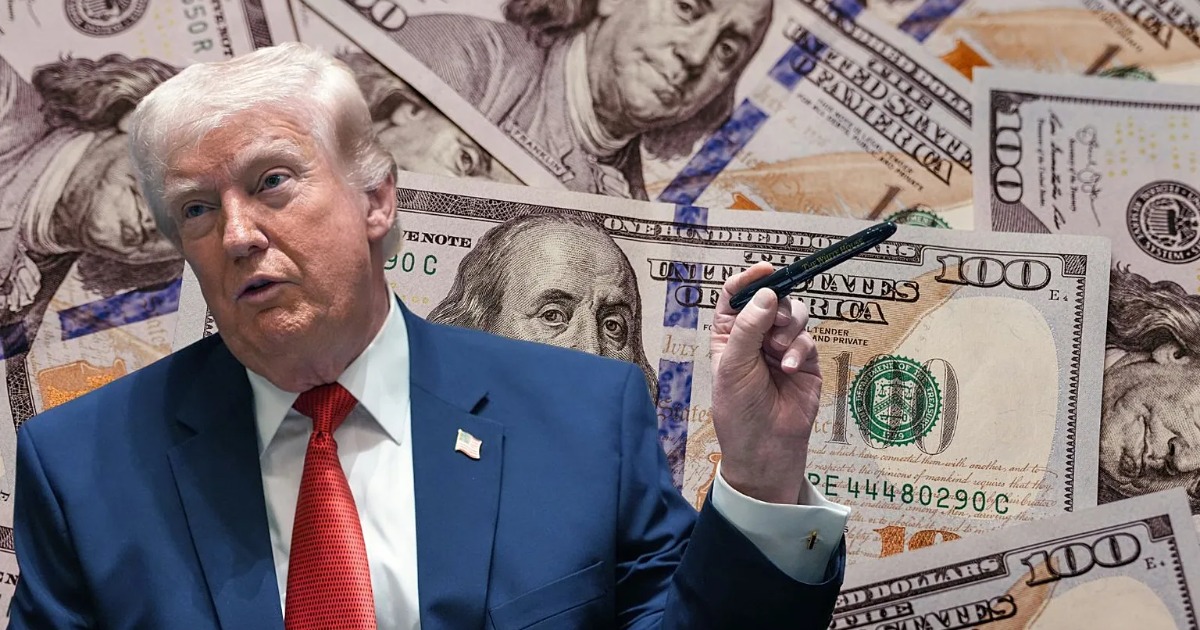

Donald Trump's promise to hand out $5,000 payments to Americans has sparked fresh controversy after a significant change in his wording raised questions about who would actually receive the money.
The president has repeatedly promoted the idea of a so-called "Trump Dividend", presenting it as a potential financial reward for Americans following what he describes as the success of his economic policies.
However, his latest comments suggest the proposal might not be quite as generous as originally advertised.
And with tens of millions of people potentially affected, the difference is far from insignificant.
Trump's original $5,000 promise
On September 9, Trump announced plans to distribute $5,000 payments if Republicans secured victory in the upcoming midterm elections.
He subsequently reinforced the pledge on Truth Social, suggesting that every American citizen would receive the money if his party won.
The announcement quickly attracted attention, particularly among households struggling with rising living costs.
For a family of four, the original wording could have suggested a combined payment of $20,000, an amount that would undoubtedly make a substantial difference to many households.
But a later statement introduced an important distinction.
Who would actually qualify for the $5,000 payment?
Despite initially suggesting that every US citizen would benefit, Trump later described the proposed payments as being intended for "all adult citizens" during an appearance in Alabama.
That change would mean Americans under the age of 18 would no longer qualify under the revised proposal.
With approximately 73 million children living in the United States, the difference could exclude a significant proportion of the population from receiving the money.
Under the original proposal, payments to approximately 343 million people would cost around $1.7 trillion.
Restricting eligibility to adults would reduce that figure to approximately 270 million recipients, with an estimated total cost of $1.35 trillion.
That still represents an enormous financial commitment, and there has been no confirmed legislation establishing the programme or guaranteeing that any payments will be made.
Americans remain sceptical
While the prospect of receiving $5,000 might sound appealing, many Americans appear unconvinced that the proposal will ever become reality.
According to polling referenced by The Economist and YouGov, 61 percent of respondents believed Trump would not follow through on the promise, compared with 21 percent who thought he would.
Opinions were also divided over whether the payments were a good idea in the first place, with 45 percent opposing the proposal and 43 percent supporting it.
The scepticism follows earlier discussions about a $2,000 tariff-funded dividend and a separate proposal linked to government savings identified by Elon Musk's Department of Government Efficiency.
Neither has resulted in the widely distributed payments that some Americans had anticipated.
Will the payments actually happen?
For now, the proposed $5,000 dividend remains a political pledge rather than an approved government payment programme.
Trump has linked the proposal to Republican success in the midterm elections, meaning its future could depend heavily on the political landscape.
Questions also remain about how such an expensive programme would be funded and whether Congress would approve the necessary spending.
Until those details are settled, Americans should not assume that a $5,000 payment is guaranteed, regardless of whether they meet the proposed eligibility requirements.