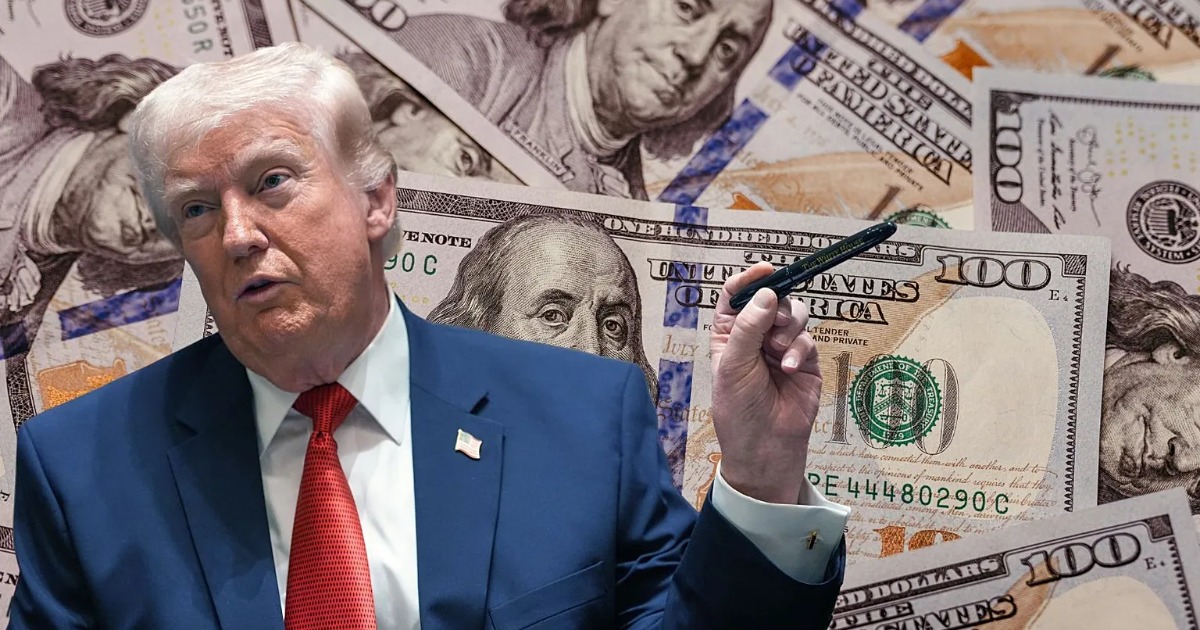

President Donald Trump has announced an extraordinary $1 million financial reward for Americans who meet a particular condition ahead of the 2026 midterm elections.
The president made the announcement on Truth Social on Monday, October 26, just over a week before Americans head to the polls on November 3.
The proposal has attracted attention because of the enormous sum involved, although significant questions remain about how the reward would be administered and funded.
Trump has also discussed the offer with reporters, confirming that he intends it to apply to certain cases involving both past and upcoming elections.
What do Americans have to do to receive Trump's $1 million reward?
Trump says anyone who reports voter fraud that leads to the arrest and conviction of those responsible could receive a $1 million reward.
In his October 26 Truth Social post, the president announced that the proposed payment would apply to information about alleged fraud in previous elections or the upcoming 2026 midterms.
Crucially, simply reporting a suspicion would not meet the condition Trump described.
The information would need to lead to an arrest and a criminal conviction.
Trump subsequently repeated the proposal while speaking with reporters before travelling to a campaign rally in Mississippi.
However, the announcement did not establish a formal application process or explain how a qualifying tip would be assessed.
How can Americans apply for the $1 million reward?
As of October 27, 2026, the White House has not announced an official application website, submission form or dedicated process for claiming the proposed reward.
Trump has publicly described the conditions under which someone could receive the money, but he has not explained how an individual would register for the programme.
According to reporting from NBC News and the Los Angeles Times, the White House did not provide additional operational details when contacted about the announcement.
Anyone who has credible, specific evidence of a possible election offence can report concerns through established channels, such as their state or local election authority or appropriate law enforcement agency.
However, submitting a report through those channels does not currently guarantee eligibility for Trump's proposed $1 million payment.
People should avoid websites or individuals claiming to process applications for the reward unless an official programme is formally announced.
What types of voter fraud could be reported?
Voter fraud refers to illegal activity intended to interfere with the lawful voting process.
Examples can include knowingly casting a ballot using another person's identity, voting more than once in the same election where prohibited, or deliberately submitting fraudulent voter registration information.
Whether a particular action constitutes a crime depends on the relevant federal and state laws and the circumstances involved.
Importantly, an administrative mistake, an unexpected election result or an unsupported allegation does not automatically establish fraud.
Any criminal allegation must be investigated and supported by evidence before a conviction can occur.
Election officials and investigators already have procedures for examining credible complaints.
Where would the $1 million payments come from?
One of the biggest unanswered questions concerns how Trump's proposal would be funded.
The president has not publicly identified a specific source of money for the rewards or explained whether congressional authorisation would be required.
The White House has also not clarified which government agency, if any, would administer the payments.
That distinction is important because a presidential announcement does not, by itself, establish a funded and operational compensation programme.
Until further details are published, Americans should treat the $1 million figure as a publicly announced proposal rather than a guaranteed payment.
Has Trump offered financial rewards before?
The announcement follows other financial proposals promoted by Trump ahead of the midterm elections.
He has discussed potential payments to Americans under separate initiatives, including a proposed $5,000 dividend.
Those proposals have raised questions about funding, eligibility and the legal authority needed to distribute money.
The administration has also announced a separate whistleblower initiative connected to identifying fraud involving government funds.
However, the terms of that initiative should not be confused with the newly announced voter fraud reward.
It remains unclear whether the $1 million proposal would operate independently or connect to an existing programme.
What evidence is there of widespread voter fraud?
Trump has repeatedly raised concerns about election integrity, including making allegations of widespread fraud in previous elections.
However, investigations, court proceedings and election reviews have not established widespread fraud capable of changing the outcome of the 2020 presidential election.
Former Attorney General William Barr previously said the Justice Department had not uncovered fraud on a scale that would have altered that result.
Individual election offences do occur, and authorities can investigate and prosecute them when supported by evidence.
But isolated cases should not be confused with proof of a coordinated or nationwide scheme.
Election officials continue to emphasise that allegations should be assessed using verifiable evidence and established legal procedures.
When are the 2026 midterm elections?
The US midterm elections are scheduled for Tuesday, November 3, 2026.
Voters will decide all 435 seats in the House of Representatives, along with the regularly scheduled Senate contests and numerous state and local races.
The results will determine which party controls each chamber of Congress for the following two years.
Trump's reward announcement comes during the final days of campaigning, when election administration and voting procedures are receiving heightened attention.
Could someone really receive $1 million?
Trump has publicly stated that he wants to reward people whose reports of voter fraud lead to an arrest and conviction.
However, as of October 27, no official mechanism has been announced for applying, determining eligibility or distributing the money.
It is therefore not possible to confirm that anyone will receive a payment under the proposal.
Americans with credible information about a suspected election crime should use established reporting channels and provide accurate evidence rather than relying on speculation.
For now, the $1 million offer remains a presidential pledge awaiting further details about its implementation.
Sources: Donald Trump's Truth Social statement, October 26, 2026; Reuters, NBC News, Los Angeles Times and VT reporting, October 26–27, 2026.