Investigators examining the devastating Florida Learjet crash that killed nine people believe evidence buried deep within the impact crater could help explain why the aircraft suddenly plunged towards the ground.
The Learjet 60 was travelling from Austin, Texas, towards the Bahamas on Sunday, November 1, 2026, when it experienced a catastrophic emergency over South Florida.
The aircraft reportedly lost approximately 35,000 feet of altitude before crashing near Greenacres in Palm Beach County and bursting into flames.
All nine people aboard were killed, including two young children and both members of the flight crew.
Now, investigators have identified several potentially significant pieces of wreckage that could help establish what happened during the aircraft's final moments.
What critical clue are investigators searching for?
According to reports from VT and CNN, investigators are focusing on recovering critical aircraft components from the enormous crater left at the crash site, while examining sections of the jet's tail found miles away.
One particularly important discovery is most of the aircraft's left elevator, a movable control surface on the horizontal tail that helps pilots control the aircraft's pitch.
The component is essential to understanding how an aircraft responds when pilots attempt to raise or lower its nose.
Investigators are now trying to establish whether parts of the tail separated before the aircraft lost control or broke away during its rapid descent.
That distinction could be crucial.
If a critical component detached before the aircraft began falling, investigators would need to determine whether its loss contributed to the emergency.
However, if the component separated after the aircraft was already descending uncontrollably, it could indicate that another problem occurred first.
Neither possibility has been established as the cause of the crash.
What has the NTSB said about the wreckage?
National Transportation Safety Board investigator Tom Chapman explained that the impact crater could contain important evidence.
"We expect to find critical airplane components within the crater," he said.
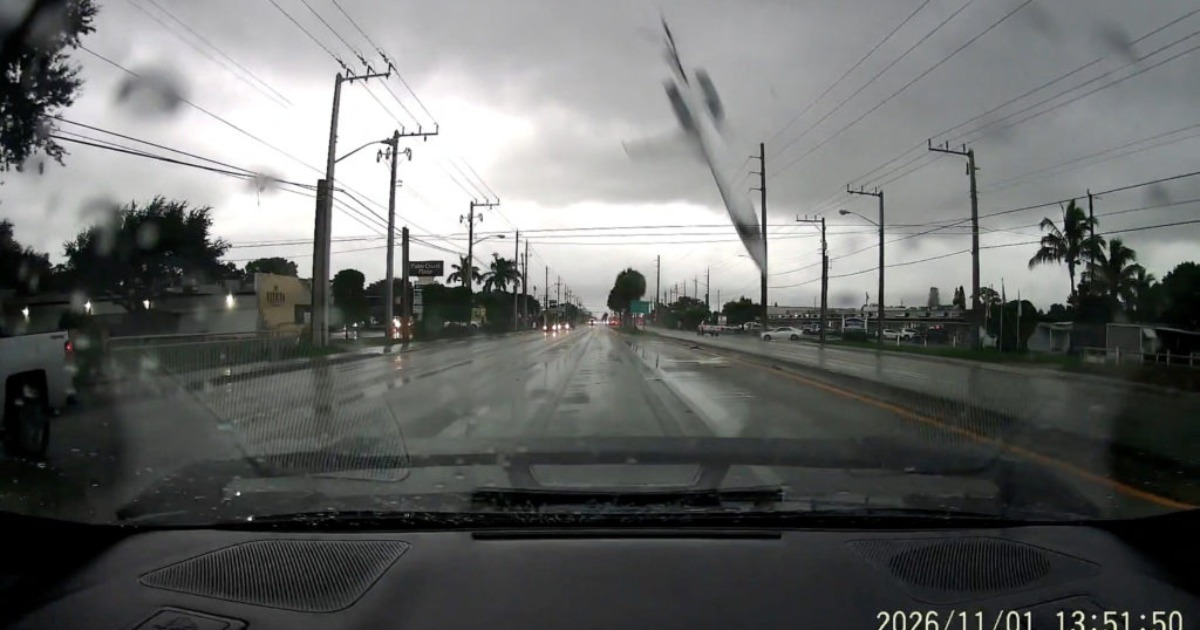
Investigators have already identified debris in three separate areas, with some pieces reportedly located almost four miles from the main impact site.
Former NTSB managing director Peter Goelz told CNN that additional wreckage could still be discovered in the coming days.
He explained that aircraft accident investigations sometimes uncover important pieces more than a week after the initial crash.
Because the Learjet was reportedly flying at approximately 35,000 feet before its descent, debris could have been scattered across a substantial geographical area.
Every recovered component may help investigators reconstruct the aircraft's final flight path and determine the sequence of events.
Why is the aircraft's elevator so important?
An aircraft's elevator is a flight control surface that helps regulate its pitch, meaning the angle at which its nose points upwards or downwards.
On a conventional aircraft, elevators are located on the horizontal stabiliser at the rear of the fuselage.
They allow pilots to make important adjustments during climbs, descents and other manoeuvres.
If an elevator becomes damaged, detached or otherwise unable to function correctly, the aircraft's handling can be seriously affected.
In extreme circumstances, a significant loss of pitch control can make recovery extremely difficult or impossible.
However, the discovery of detached elevator wreckage does not automatically establish that the component failed before the crash.
Investigators must examine fracture surfaces, impact damage and other physical evidence to determine when and how the separation occurred.
Why do experts believe the Learjet should never have been flying?
Separate concerns have emerged about the weather conditions the aircraft encountered before the disaster.
Reports indicate that the flight crew experienced icing conditions and turbulence while travelling through a storm system.
Experienced pilot Justin Crabbe, who heads charter-flight booking platform Jettly, questioned the decision to continue through the weather.
"They certainly should have gone around [the storm]," he said.
Former US Navy fighter pilot Matthew 'Wiz' Buckley has also criticised the operational decisions surrounding the flight.
He argued that the aircraft should not have been operating in the hazardous conditions it encountered.
Ice accumulation can interfere with an aircraft's aerodynamic performance by changing the shape of critical surfaces and disrupting airflow.
It can increase drag, reduce lift and potentially contribute to a loss of control.
However, some business jets are certified to operate in certain icing conditions when properly equipped and operated within their approved limitations.
The available reporting does not establish whether this Learjet encountered conditions beyond its certification, whether its anti-icing systems were functioning correctly or whether the crew violated any operating procedures.
The pilots' decisions remain subject to investigation, and no official finding has assigned responsibility for the crash.
What happened during the Learjet's final moments?
According to previously reported air traffic control communications, the crew encountered serious difficulties before the aircraft began descending at an extraordinary rate.
The pilots reportedly declared an emergency as the situation deteriorated.
One transmission indicated that the aircraft was descending at approximately 10,000 feet per minute.
Later reports suggested that its descent rate exceeded 25,000 feet per minute.
For comparison, a commercial aircraft making a routine descent may typically lose around 1,500 to 2,000 feet of altitude per minute.
The Learjet's reported descent rate therefore indicated an exceptionally serious emergency.
However, a rapid descent alone cannot establish whether the aircraft experienced an aerodynamic stall, structural failure, mechanical malfunction or another form of loss of control.
Are investigators still searching for the black box?
According to VT's November 6 report, investigators are also searching for the aircraft's flight-recording equipment.
Flight data and cockpit voice recordings, where available, can provide crucial information about an aircraft's final moments.
Such evidence may help establish the aircraft's operating conditions, the crew's actions and the sequence of events before impact.
However, investigators have not publicly established in the supplied reporting what recording equipment was installed and recoverable on this particular Learjet.
Physical wreckage, radar information, air traffic control recordings and maintenance records may therefore also play important roles in the investigation.
Who were the nine people killed in the crash?
The aircraft was carrying technology entrepreneur Adam Robinson, his wife Helen Sharp and their two young children, Emma, four, and Charlie, two.
Also aboard were family friends Rachael Reed and Charmi Fehr, alongside caretaker Anita Maria Cetina.
The flight crew consisted of pilot Jeffrey Gregory, 55, and co-pilot Nathalia Gadelha Filgueiras, 20.
All nine occupants died in the crash.
The tragedy has prompted tributes to the victims and renewed scrutiny of the circumstances surrounding the flight.
What happens next in the investigation?
The National Transportation Safety Board is continuing to examine the wreckage and other evidence to determine the probable cause of the accident.
Investigators will need to establish whether the aircraft began breaking apart before or during its descent, alongside assessing the potential role of weather, aircraft systems and crew decisions.
The timing of any structural separation could prove particularly important in reconstructing what happened.
For now, the discovery of wreckage miles from the crash site has raised significant questions, but it has not provided a definitive explanation.
Until the investigation is completed, claims about what caused the Learjet to crash remain unconfirmed.
Source: VT, November 6, 2026, citing statements from NTSB investigator Tom Chapman, former NTSB managing director Peter Goelz and aviation expert Justin Crabbe.