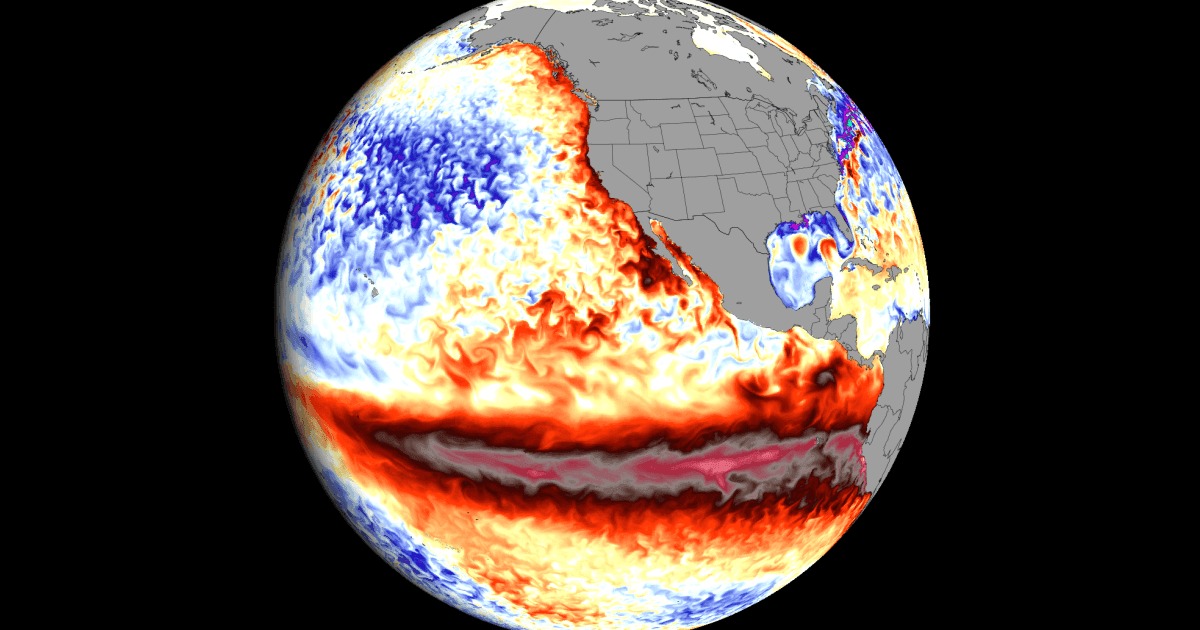

Climate scientists are warning that a Super El Niño event is now 90 percent likely to rank among the strongest on record over the coming fall and winter, up from 81 percent just a month ago, with four US states identified as facing the most extreme consequences.
El Niño conditions are already underway in the tropical Pacific, according to the National Oceanic and Atmospheric Administration, and are expected to intensify significantly as the year progresses. NOAA's August forecast marked a notable jump in confidence from its July outlook, with experts now describing the potential for a never-before-seen level of impact across parts of the United States and beyond.
El Niño occurs when trade winds that normally push warm surface water westward weaken or reverse, causing warm water to spread toward the central and eastern Pacific and altering where heat is released into the atmosphere. An event becomes classified as a Super El Niño when sea surface temperatures exceed two degrees Celsius above average for several months, a threshold that triggers a cascade of extreme weather across the globe.
For the US, the primary concern is heavy rainfall and flooding, particularly across the southern states. Johanna Infanti, a meteorologist at NOAA's Climate Prediction Center, said experts are predicting above-normal precipitation across much of the southern US during fall and winter, with the Gulf States and parts of the Southeast to Mid-Atlantic identified as the areas of highest confidence.
Four states face a more specific threat in the form of significant snowfall: New Hampshire, Vermont, New York and California, particularly the Sierra Mountain range.
While the US faces flooding and winter weather, the effects of a Super El Niño are felt globally, with Australia, Indonesia and parts of Southeast Asia typically experiencing severe drought as the warm Pacific water shifts eastward.
There have only been a handful of Super El Niño events on record since the 1950s, and experts say the coming months could produce the strongest one yet.