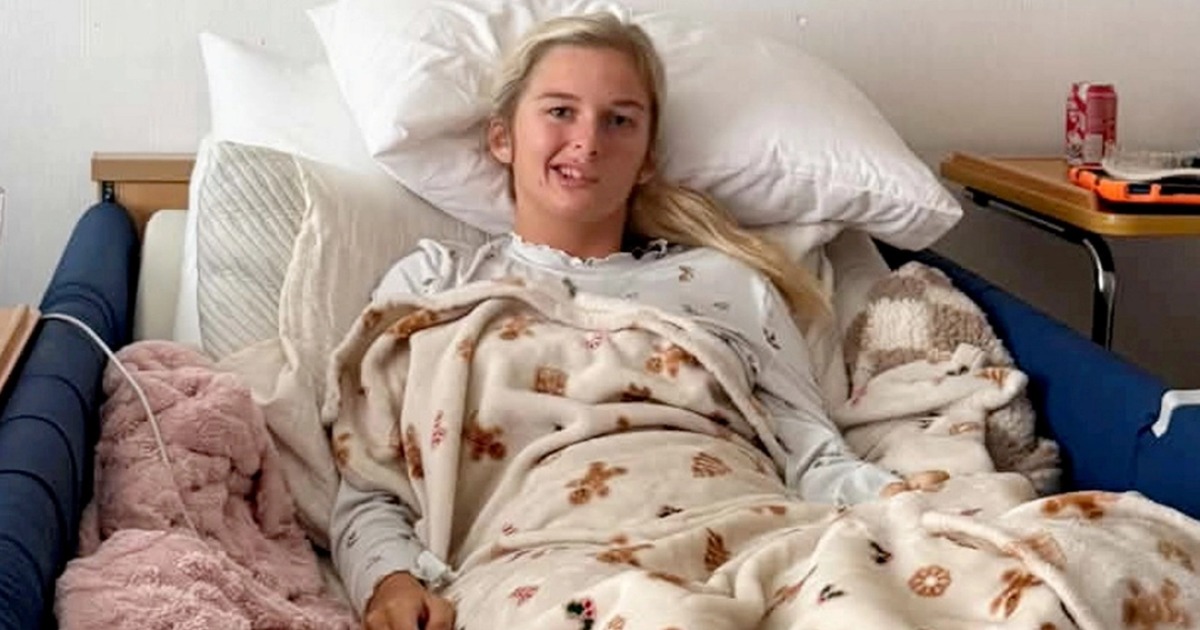
A 22-year-old healthcare assistant who went to bed feeling completely healthy has been left unable to walk after developing a neurological condition that dramatically changed her life in just a matter of days.
Lillie Thorne, from Barrow-in-Furness, Cumbria, was described by her family as fit and healthy before waking up on October 2 with an unexpected change to her face.
What initially appeared to be a relatively common medical problem quickly developed into a far more serious situation, leaving her family struggling to understand what had happened.
Within days, Lillie had been admitted to hospital, where doctors carried out investigations as her condition continued to deteriorate.
Her family have now spoken publicly about the ordeal, revealing the diagnosis doctors eventually reached and the challenges she continues to face.
What happened when Lillie woke up?
According to her family, Lillie went to sleep on October 1 without experiencing any unusual symptoms or signs of illness.
However, when she woke the following morning, she discovered that the left side of her face was drooping and partially paralyzed.
The sudden change prompted her to seek medical attention at hospital, where doctors initially diagnosed her with Bell's palsy.
Bell's palsy is a condition that causes temporary weakness or paralysis of the muscles on one side of the face.
According to the NHS, symptoms can develop rapidly, sometimes over just a few hours, and may include difficulty closing an eye, facial drooping and changes to taste.
Lillie was prescribed steroids and reportedly told that her symptoms could improve over the following six months.
However, the situation took an alarming turn the very next day.
What symptoms did Lillie develop?
On October 3, Lillie began experiencing difficulties with her speech, including slurring her words.
Concerned by the new symptoms, she returned to hospital for further assessment.
Doctors performed a CT scan to investigate whether she had experienced a stroke, but the examination did not reveal evidence of one.
Medical professionals also considered Ramsay Hunt syndrome, a condition associated with the varicella-zoster virus that can affect facial nerves.
Lillie was prescribed antiviral medication, but her symptoms continued to worsen.
By Wednesday, October 7, she had reportedly lost the ability to walk and speak.
She also began experiencing frequent seizure-like episodes, with her family reporting as many as 30 in a single day.
The severity of her symptoms left her relatives devastated as they watched her struggle with activities she had previously performed without difficulty.
What condition was Lillie diagnosed with?
After further investigations, doctors diagnosed Lillie with Functional Neurological Disorder (FND).
FND is a genuine neurological condition involving changes in how the brain controls and processes bodily functions.
According to Cleveland Clinic, the disorder affects the way the brain sends, receives and processes signals.
Unlike neurological diseases caused by identifiable structural damage to the nervous system, FND involves problems with nervous system functioning.
These problems can cause significant physical symptoms even when conventional scans do not show structural abnormalities that explain them.
Symptoms can include difficulties with movement, weakness, speech problems, sensory changes and episodes resembling epileptic seizures.
The condition is not imaginary or something a person deliberately produces.
Symptoms can be disabling and may interfere significantly with everyday life.
What causes Functional Neurological Disorder?
The exact causes of FND are not fully understood.
Healthcare professionals believe a combination of biological, psychological and social factors may contribute to its development in some people.
Physical illness, injury or stressful experiences can sometimes be associated with the onset of symptoms.
However, not everyone diagnosed with FND has experienced psychological trauma or significant stress, and the condition should not automatically be attributed to emotional causes.
In Lillie's case, her family said doctors had suggested stress as a possible contributing factor.
They have not identified a definitive explanation for why her symptoms developed so suddenly.
Her family also said doctors were uncertain what had caused her initial facial paralysis.
Family describe heartbreaking change in 22-year-old's life
Lillie's aunt, Ashleigh Thorne, has spoken about how difficult the experience has been for the family.
She explained that her niece had been feeling well before the first symptoms appeared.
"What is so heartbreaking is that it is completely random, it came out of nowhere," Ashleigh said.
"She was fit and healthy before."
Describing the emotional impact of watching Lillie's condition deteriorate, she added that seeing such a dramatic change in someone so young had been devastating.
Despite the challenges, Ashleigh praised her niece's positive attitude.
"She is staying very positive and has a great sense of humour which is helping her get through it," she said.
The family have continued to support Lillie as she adjusts to her diagnosis and begins working towards recovery.
Can Functional Neurological Disorder be treated?
FND can be treated, although recovery varies considerably between individuals.
Specialist treatment often involves a multidisciplinary approach, bringing together healthcare professionals with expertise in neurology, physiotherapy, occupational therapy and other relevant areas.
Physiotherapy tailored to FND may help patients retrain movement patterns and improve their ability to carry out everyday activities.
Speech and language therapy can also support people experiencing difficulties with communication.
Other interventions may be recommended depending on the individual's symptoms and circumstances.
Some patients experience substantial improvement, while others continue to experience symptoms over longer periods.
Early access to appropriate specialist care can be important, but there is no single treatment that guarantees recovery.
How is Lillie doing now?
Lillie was discharged from hospital on October 22, approximately three weeks after her symptoms first appeared.
According to her family's latest account, she has regained some ability to speak, although her speech remains affected.
She also continues to experience seizure-like episodes and is still unable to walk independently.
Her relatives have established a GoFundMe campaign to help cover the cost of private consultations and rehabilitation.
They said Lillie had not met the relevant threshold for the NHS treatment pathway they were seeking, prompting them to explore additional options.
Ashleigh explained that the family hope specialist rehabilitation will help Lillie regain control over her movements and improve her quality of life.
She also described the emotional difficulty of seeing someone who had been living a normal, active life suddenly become dependent on others for everyday activities.
What should people know about sudden facial paralysis?
Although Lillie's initial symptoms were attributed to Bell's palsy, sudden facial weakness can also be a warning sign of a stroke.
The NHS advises that anyone experiencing sudden facial drooping, arm weakness or speech difficulties should receive emergency medical attention.
In the UK, people should call 999 if they suspect a stroke, even if the symptoms subsequently improve.
It is important not to assume that sudden facial paralysis is caused by Bell's palsy or another less immediately dangerous condition without medical assessment.
Similarly, new seizures, sudden inability to walk or significant changes in speech require prompt medical evaluation.
Lillie's experience highlights how quickly neurological symptoms can develop and why further assessment may be necessary when a person's condition changes.
Family remain hopeful as Lillie begins recovery
For Lillie and her family, the priority is now finding appropriate treatment and supporting her through rehabilitation.
Her relatives say she remains determined and has continued to show resilience despite the dramatic changes to her daily life.
While her long-term recovery remains uncertain, the family hope that specialist support will help her regain some of the independence she enjoyed before October.
Her story has also brought attention to Functional Neurological Disorder, a condition that can produce severe and life-changing symptoms despite often being poorly understood by the wider public.
For now, Lillie's family are focused on helping the 22-year-old move forward, one stage of her recovery at a time.