Donald Trump's proposal to send $5,000 checks to millions of Americans has come under renewed scrutiny after a senior Treasury adviser acknowledged that the administration has yet to establish a specific funding plan.
The US president has repeatedly promised to distribute the substantial payments if Republicans retain control of both chambers of Congress following the November 2026 midterm elections.
However, with the programme potentially costing more than $1 trillion, questions remain over how the government would finance the payments and when eligible Americans could expect to receive them.
Now, comments from an adviser to Treasury Secretary Scott Bessent have offered a revealing insight into the administration's current position.
What did the Treasury adviser say about Trump's $5,000 checks?
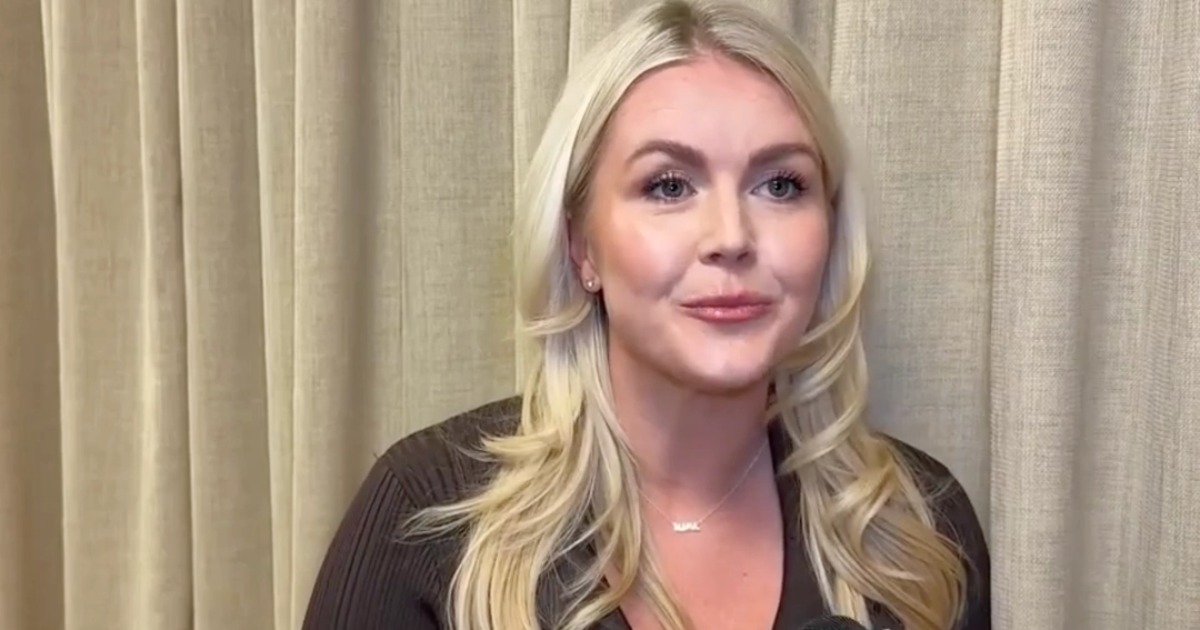
David Zervos, a counsellor to Treasury Secretary Scott Bessent, discussed the proposed payments during an interview with The National News Desk's Ahtra Elnashar.
Asked about how the administration would fund the programme, Zervos suggested that the details would be addressed after the upcoming elections.
"We'll cross that bridge when we get there," he said, explaining that the outcome of the congressional elections would become clear within weeks.
The response indicated that a definitive funding mechanism had not yet been established.
Despite the uncertainty, Zervos appeared optimistic about the government's ability to finance the proposed payments if Republicans remained in control.
He suggested that stronger economic growth and favourable government policies could eventually provide greater financial flexibility.
However, he did not identify a specific source of revenue that would cover the full cost of the programme.
Who would be eligible for Trump's proposed $5,000 payments?
Trump has said the payments would be made to adult citizens of the United States.
Under the president's stated proposal, American citizens aged 18 and over could potentially qualify for a $5,000 check.
However, the administration has not released detailed eligibility criteria.
It remains unclear whether income restrictions, tax-filing requirements or other conditions would apply.
There is also no confirmed application process or distribution timetable.
Importantly, the $5,000 checks have not been authorised by Congress and are not currently being distributed.
How much would Trump's $5,000 checks cost?
The United States has approximately 270 million adults, of whom an estimated 240 million are citizens.
Providing every adult citizen with $5,000 would therefore cost approximately $1.2 trillion.
Depending on how eligibility was defined, the total cost could rise towards $1.35 trillion.
That level of spending has prompted questions about the potential consequences for the federal budget.
Critics have warned that financing the programme through additional borrowing could increase the federal deficit and potentially contribute to inflationary pressures.
Supporters, meanwhile, have suggested that stronger economic growth or alternative revenue sources could help finance the payments.
Could tariffs pay for the checks?
One possible funding source previously discussed by members of the Trump administration is revenue generated from tariffs.
Vice President JD Vance suggested following Trump's announcement that tariff revenue could potentially be used to support the proposed dividend.
However, no detailed plan has been published demonstrating how tariffs would generate enough money to cover payments on this scale.
Zervos also indicated that the administration could explore several different approaches to financing the programme.
His comments suggest that officials have not yet committed to one particular mechanism.
Republican senator promises legislation after midterms
Ohio Republican Senator Bernie Moreno has indicated that he intends to introduce legislation following the November elections to turn Trump's proposal into law.
That would represent a necessary step towards establishing a federal payment programme.
Even if Republicans retain control of Congress, the proposed checks would still require legislative approval and agreement on funding.
The election outcome alone would not automatically result in money being sent to Americans.
What happens if Democrats win control of Congress?
Trump has explicitly tied the payments to Republicans retaining control of the House of Representatives and the Senate.
During his interview, Zervos was also asked whether the administration would be able to work with Democrats if the election resulted in divided government.
He said he was not particularly concerned about that possibility, suggesting that lawmakers could still find ways to cooperate on important economic priorities.
However, there has been no confirmation that the proposed $5,000 payments would proceed if Democrats gained control of either chamber.
Has Trump sent similar payments before?
Trump has previously supported direct payments to Americans during his time in office.
His administration distributed a $1,776 payment to approximately 1.5 million military service members in 2025, described as a Warrior Dividend.
During his first presidency, Congress also authorised several rounds of pandemic stimulus payments.
However, other cash payment proposals announced by Trump have not materialised.
These include an earlier $5,000 DOGE dividend proposal and a separate tariff-funded payment plan.
The mixed history of delivered and undelivered payment proposals has contributed to uncertainty surrounding the latest announcement.
When will Americans receive the $5,000 checks?
There is currently no confirmed date for the proposed $5,000 payments.
Trump has made the pledge conditional on the November 2026 midterm election results, while Treasury adviser David Zervos has acknowledged that funding arrangements remain unresolved.
Any payments would require further government action, including approval of the necessary legislation and the establishment of a distribution system.
Until those steps are completed, the proposed $5,000 checks remain a political pledge rather than an approved federal benefit.
Americans should be wary of websites or messages claiming that applications for the payments are already available.