An artificial intelligence simulation predicting the winner of the 2028 US presidential election has resurfaced following the Republican Party's major defeat in the midterm elections.
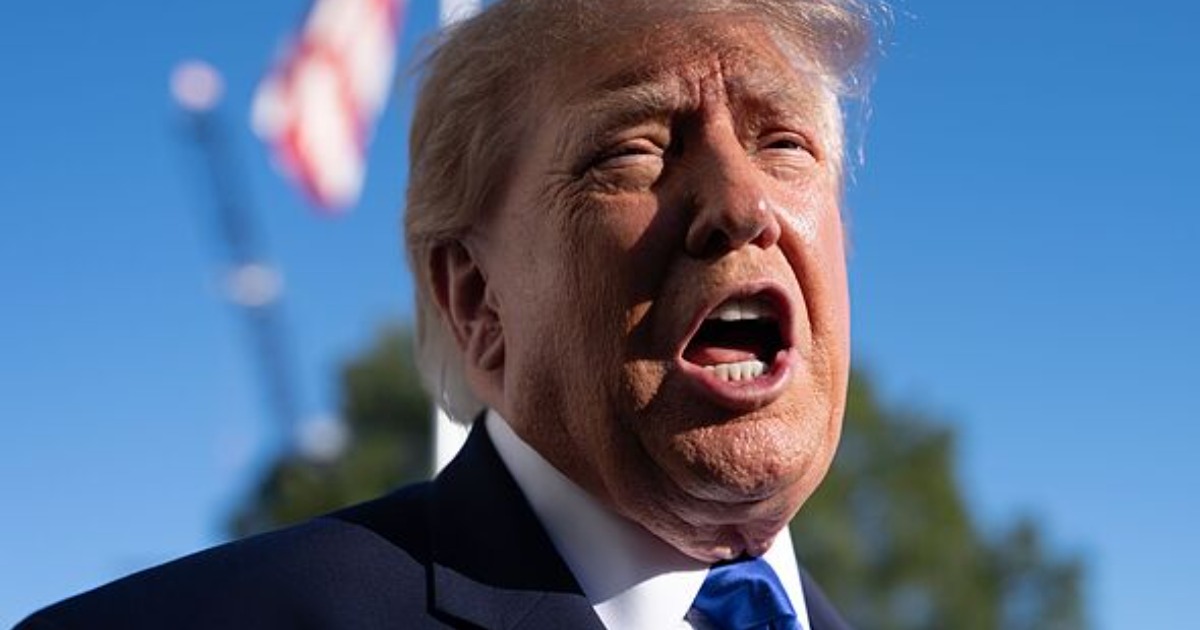
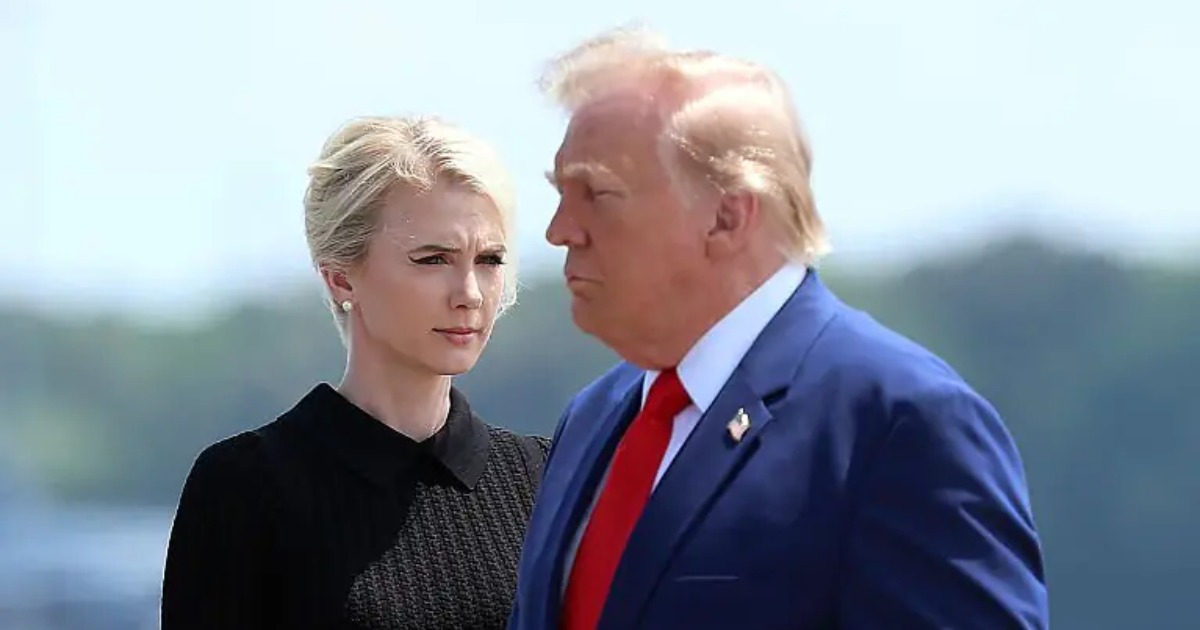
President Donald Trump has faced renewed scrutiny after Democrats secured control of Congress in the November 3 elections, raising questions about the future of the Republican Party and who might succeed him in the White House.
While the next presidential election is still two years away, speculation about potential candidates is already growing.
Earlier this year, a political YouTube channel asked an AI chatbot to forecast the outcome of the 2028 election, including the likely candidates and a state-by-state Electoral College map.
The results produced a striking prediction, although the simulation was created before the latest midterm results and should not be treated as a reliable forecast of the eventual outcome.
Who did AI predict would win the 2028 presidential election?
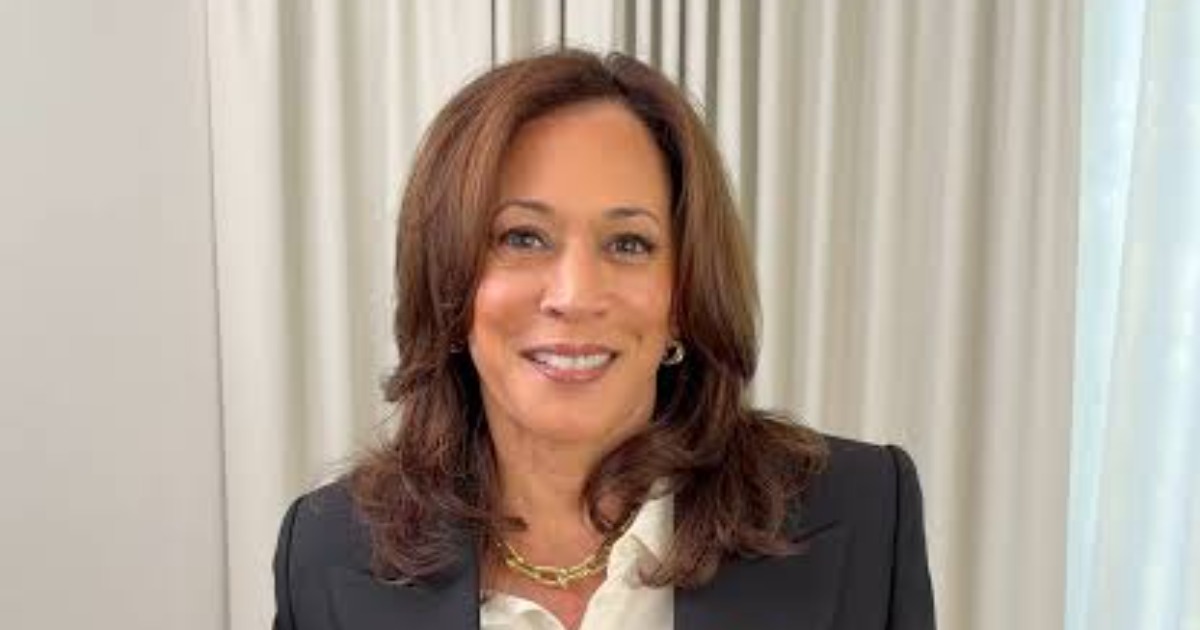
The simulation, published by YouTube channel Election Time in February 2026, used Elon Musk's Grok AI to model a hypothetical presidential election between Republican Vice President JD Vance and former Democratic Vice President Kamala Harris.
According to the simulation, JD Vance would defeat Kamala Harris by 326 electoral votes to 212.
That would represent a decisive Electoral College victory for the Republicans, despite the party's recent midterm losses.
The AI-generated map projected Vance winning every state Donald Trump carried in the 2024 presidential election, along with two additional states that have historically favoured Democrats.
However, the prediction was produced months before the November 2026 midterms, meaning it did not account for the latest election results or any subsequent changes in public opinion.
Why did the simulation choose JD Vance and Kamala Harris?
The creator of the Election Time video used early primary polling and betting market probabilities to identify a possible matchup.
On the Republican side, Vance was presented as the leading contender, with approximately 49.2 percent support in the primary polling cited by the video.
Donald Trump Jr. and Marco Rubio were among the other potential candidates discussed, alongside Florida Governor Ron DeSantis.
The simulation also cited betting market estimates giving Vance a 46 percent probability of securing the Republican nomination.
For Democrats, Harris was shown leading the early primary field with 32 percent support.
California Governor Gavin Newsom followed with 23.8 percent, while former Transportation Secretary Pete Buttigieg, Representative Alexandria Ocasio-Cortez and Pennsylvania Governor Josh Shapiro were also discussed.
The video's host noted that Harris's position might surprise people who had written off her political future following her defeat to Trump in 2024.
These figures were snapshots used in the February simulation, rather than confirmed November 2026 polling.
Which states did the AI predict Republicans would win?
Grok's projected map gave Vance a substantial advantage across traditionally Republican states.
These included Texas, Florida, Ohio, Tennessee, Indiana, Missouri, Alabama, Louisiana, Kentucky and South Carolina.
The simulation also projected Republican victories in several important battleground states, including Arizona, Georgia and Nevada.
Most significantly, it predicted that Vance would carry the three closely watched Upper Midwest battleground states of Pennsylvania, Michigan and Wisconsin.
Those states have played a decisive role in recent presidential elections, helping Trump secure victories in both 2016 and 2024.
According to the simulation, Vance would retain them by relatively narrow margins.
The prediction suggested that holding these states would be enough to put the Republican candidate comfortably above the 270 electoral votes needed to win the presidency.
Which two Democratic states did Grok predict would flip?
Perhaps the most surprising element of the AI-generated forecast involved Minnesota and New Hampshire.
Both states voted for Kamala Harris in the 2024 presidential election, but the simulation predicted that they could narrowly favour Vance in 2028.
Minnesota has not voted for a Republican presidential candidate since Richard Nixon's victory in 1972.
However, Grok classified the state as a potential Republican pickup, suggesting that the outcome could be decided by less than one percentage point.
New Hampshire was also placed in the Republican column by a similarly narrow margin.
The video described both contests as extremely competitive rather than certain Republican victories.
These two projected flips would increase Vance's Electoral College total to 326 votes.
It is important to note that the simulation does not establish that either state will actually change parties in 2028.
Which states did the AI predict Kamala Harris would win?
Harris was projected to retain many traditional Democratic strongholds, including California, Washington, New York, Illinois, Massachusetts, Maryland and Connecticut.
The simulation also placed Colorado, Oregon, New Mexico, Virginia and Rhode Island in the Democratic column.
New Jersey was projected to remain Democratic, although by a narrower margin than in previous elections.
Despite those victories, the AI-generated map showed Harris falling short of the 270 electoral votes required to win.
Her projected total of 212 electoral votes would leave her 58 votes below the winning threshold.
How could the 2026 midterm elections change the prediction?
The most significant limitation of the simulation is its timing.
It was produced in February 2026, several months before Democrats achieved their major victories in the November midterm elections.
Those results may affect how both political parties approach the next presidential campaign, including their choice of candidates, campaign priorities and strategies in competitive states.
Midterm elections can provide information about voter dissatisfaction, but they do not necessarily predict the outcome of the next presidential race.
Turnout patterns, candidate popularity, economic conditions and major events can change considerably between elections.
Trump has responded to the Republican losses by arguing that his absence from the ballot contributed to the result.
However, the November election has intensified scrutiny of the party's political direction and its prospects heading into 2028.
Can artificial intelligence accurately predict presidential elections?
AI tools can analyse polling figures, historical voting patterns and demographic information to produce hypothetical election scenarios.
However, their results depend heavily on the information supplied, the assumptions made and the methodology used.
A chatbot-generated Electoral College map is not equivalent to a scientifically validated election forecasting model.
Even professional election forecasts involve substantial uncertainty, particularly when produced years before voters go to the polls.
In this case, Grok's prediction was based on a hypothetical matchup between two politicians who have not yet secured their parties' 2028 nominations.
There is also no guarantee that either Harris or Vance will ultimately become a candidate.
Therefore, the 326-212 result should be understood as an illustrative scenario rather than a definitive prediction.
Who will win the 2028 US presidential election?
For now, the answer remains unknown.
Grok's February simulation projected a decisive victory for JD Vance over Kamala Harris, but the political environment has already changed significantly following the 2026 midterm elections.
Neither major party has selected its presidential nominee, and voters will not make their final decision until November 2028.
The resurfaced simulation offers an interesting glimpse at how one AI system interpreted the electoral landscape earlier this year.
But whether its projected Republican victory bears any resemblance to the eventual result will depend on developments over the next two years.