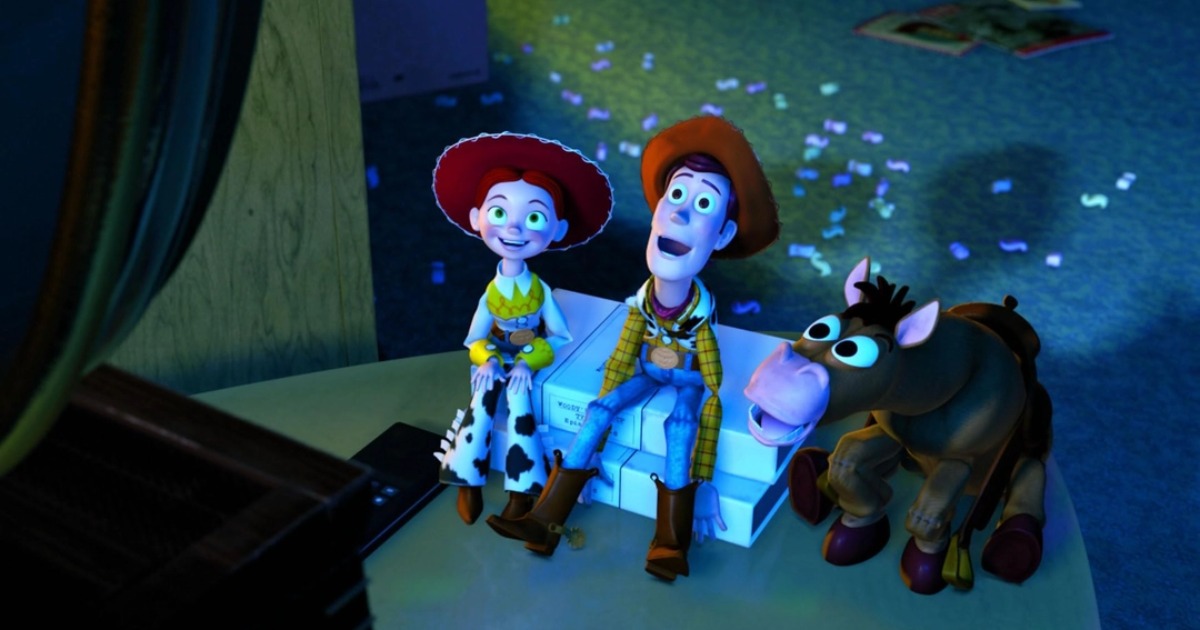
For millions of people, Toy Story 2 is a childhood classic, featuring Woody, Buzz Lightyear and some of Pixar's most memorable animated characters.
Released in November 1999, the sequel became a huge success and helped establish Pixar as one of the most influential animation studios in Hollywood.
But what many viewers don't realise is that the movie came astonishingly close to being lost before it ever reached cinemas.
During production, an accident at Pixar's headquarters caused enormous amounts of work to disappear, leaving employees facing the possibility that years of effort had been wiped out.
To make matters worse, the studio discovered that the system designed to protect against exactly this kind of disaster had not been functioning properly.
With the production in jeopardy, an unlikely solution emerged thanks to an employee who had recently become a mother.
Her actions helped rescue the film from what could have been a devastating setback for the young animation studio.
What happened to Toy Story 2 during production?
The disaster unfolded in 1998, while Pixar employees were working on the highly anticipated sequel to the original Toy Story.
According to former Pixar technical director Oren Jacob, members of the production team suddenly noticed that files were disappearing from the studio's computer systems.
At first, the problem appeared to involve individual characters.
Jacob recalled that an employee named Larry Cutler had been working on a directory containing files related to Woody.
When Cutler first looked at the directory, it contained approximately 40 files.
Moments later, there were only four.
As employees investigated, they realised the problem was spreading.
Entire sequences and character files were vanishing, with important production assets disappearing before their eyes.
Jacob later described the terrifying experience of watching the studio's work seemingly evaporate in real time.
It quickly became clear that Pixar was dealing with something far more serious than a routine computer malfunction.
What caused Pixar to lose almost the entire film?
The incident was reportedly caused by an accidental computer command issued while an employee was working on the studio's servers.
The command unintentionally triggered the deletion of large amounts of production data.
Jacob has suggested that the command may have been a variation of rm -r -f *, a Unix command capable of recursively deleting files and directories.
When executed in the wrong location, such a command can remove vast quantities of information without the usual safeguards associated with manually deleting individual files.
In Pixar's case, the consequences were immediate.
Employees watched as the digital assets used to create the film began disappearing.
They attempted to stop the process by disconnecting affected systems, but significant damage had already occurred.
According to accounts of the incident, approximately 90 percent of the work on Toy Story 2 was affected by the accidental deletion.
That included valuable character models, animation assets and other materials essential to completing the movie.
For a computer-animated production, losing these files was particularly serious.
Unlike traditional filmmaking, where physical footage might still exist independently of editing equipment, Pixar's animation depended on complex digital assets stored on its computer systems.
Without those files, much of the film would have needed to be recreated.
Why couldn't Pixar simply restore the missing files?
Under normal circumstances, a company facing a major data loss would attempt to recover the missing information from its backups.
Pixar had a backup system intended to protect its work against computer failures and accidental deletions.
However, employees discovered that the backups had not been functioning properly for weeks.
That meant the studio could not simply restore the most recent version of the production from its usual recovery system.
The realisation caused considerable alarm.
Pixar co-founder Ed Catmull later discussed the incident in his 2014 book Creativity, Inc., explaining that the mechanism intended to protect the company against data loss had itself failed.
In a subsequent interview with The Wall Street Journal, Catmull reflected on how serious a lengthy production delay could have been for Pixar at the time.
The studio was still relatively young and did not have the financial resources or production capacity of a much larger Hollywood company.
Recreating an enormous portion of the film could have placed significant pressure on its schedule and finances.
With conventional recovery options looking increasingly uncertain, the team needed another solution.
How did a new mum save Toy Story 2?
The breakthrough came from Galyn Susman, the film's supervising technical director.
Susman had recently given birth to her son, Eli, and had spent time working from home while caring for her baby.
That seemingly ordinary arrangement turned out to be extraordinarily fortunate for Pixar.
Because she had been working remotely, Susman had a copy of the film's production files stored on her computer at home.
When the team realised the studio's usual backups could not be relied upon, she remembered that her home computer might contain the material they desperately needed.
It was a moment that could change the course of the entire production.
Susman and Jacob travelled to her home to retrieve the computer.
Rather than risk damaging the machine during transport, they carefully placed it inside her Volvo, surrounding it with pillows and blankets.
The computer contained potentially invaluable production data, and they wanted to ensure it reached Pixar's headquarters safely.
When they arrived back at the studio, employees were waiting to help carry the machine inside.
Jacob later recalled that approximately eight people used a sheet of plywood to transport the computer from the car into the building.
He compared the extraordinary procession to carrying an ancient Egyptian pharaoh.
Once the computer was connected, the team was able to recover a recent copy of the film's production work.
Susman's decision to work from home after the birth of her son had inadvertently created the backup that helped save Toy Story 2.
Without that copy, Pixar could have faced the enormous task of rebuilding much of its lost work from scratch.
Why was the rescue so important for Pixar?
At the time, Pixar was still establishing itself as a major force in feature animation.
The original Toy Story, released in 1995, had been a landmark achievement as the first fully computer-animated feature film.
Its success raised expectations for the sequel, which was intended to bring audiences back into the world of Woody, Buzz and Andy's toys.
But producing a feature-length animated movie required enormous amounts of technical and creative work.
Every character, environment and movement had to be built and refined through complex computer processes.
The loss of these assets could therefore have delayed the production substantially.
Catmull has since indicated that Pixar would have struggled to absorb a delay of that magnitude at the time.
Susman's backup provided the studio with a way to recover a significant portion of its progress and avoid the worst consequences of the deletion.
However, that was not the end of the film's difficult production.
Why did Pixar end up remaking much of Toy Story 2 anyway?
Remarkably, after surviving the accidental deletion, Toy Story 2 faced another major challenge.
Pixar's creative leadership was dissatisfied with the film's existing story and overall quality.
Rather than release a version they believed fell short of expectations, the studio decided to undertake a substantial creative overhaul.
This meant that much of the recovered production work would ultimately be replaced.
Jacob explained that the team discarded significant amounts of animation, layout and camera work as it rebuilt the movie.
Lighting and other visual elements also had to be reconsidered.
New characters were introduced, including Buster, Andy's dog.
According to Jacob, the team managed to develop and incorporate the animated dog into the finished movie within an extraordinarily demanding schedule.
Additional characters, environments and visual effects were also created as the production moved towards its release date.
The overhaul required enormous effort from the studio's artists, animators and technical staff.
Catmull later compared the process to a major surgical operation on the film itself.
Although the original files had been rescued, Pixar effectively rebuilt substantial portions of the movie for creative reasons rather than because of the earlier computer accident.
When was Toy Story 2 released?
Despite the extraordinary setbacks, Toy Story 2 reached cinemas in November 1999.
The sequel reunited audiences with Tom Hanks as Woody and Tim Allen as Buzz Lightyear.
It also introduced several memorable characters, including Jessie, Bullseye and Stinky Pete.
The film received widespread critical acclaim and became a major box-office success.
It earned approximately $497 million worldwide during its original theatrical run, according to widely reported box-office figures.
The success helped reinforce Pixar's reputation for producing animated films that appealed to both children and adults.
The franchise subsequently continued with Toy Story 3 in 2010 and Toy Story 4 in 2019, alongside further projects involving the characters.
For audiences, the finished sequel offered little indication of the extraordinary crisis that had unfolded behind the scenes.
What happened to Galyn Susman after saving the film?
Susman continued working at Pixar following the production of Toy Story 2.
She went on to hold senior roles at the animation studio and contributed to several projects during her career.
Her role in recovering the film became one of the most widely discussed stories about Pixar's early years.
The incident has frequently been cited as an example of how an unexpected backup can prevent a catastrophic loss of digital work.
It also highlights how a seemingly minor decision, such as keeping a working copy of a project on a home computer, can have enormous consequences.
In this case, Susman's maternity leave and remote working arrangements helped preserve material that the studio otherwise feared it had lost.
What did Pixar learn from the Toy Story 2 disaster?
The incident demonstrated the importance of maintaining reliable backups and regularly checking that recovery systems are functioning properly.
Simply having a backup system is not enough if the information it stores cannot be successfully restored.
For organisations working with valuable digital files, multiple independent backups can provide protection against accidental deletion, hardware failures and other unexpected problems.
Recovery procedures also need to be tested to ensure they will work when required.
Pixar's experience became a particularly dramatic example of these principles because the lost information represented years of creative work by a large team.
Ultimately, the studio was fortunate that a recent copy existed outside its main systems.
And the fact that the copy belonged to a new mother who had been working from home made the rescue all the more remarkable.
More than a quarter of a century after Toy Story 2 reached cinemas, the story remains a reminder that even the world's most successful creative projects can come dangerously close to disaster.
For Pixar, the difference between losing an enormous amount of work and recovering it came down to one employee, one home computer and a very carefully planned journey back to the studio.