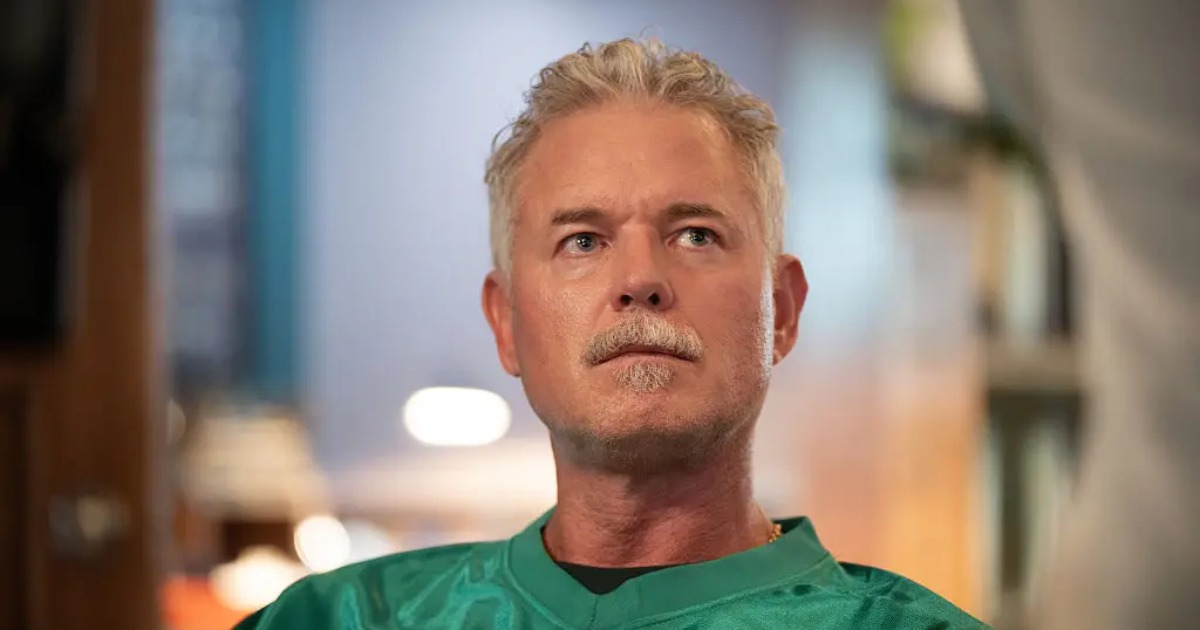
Eric Dane's posthumous memoir has revealed that the actor was initially diagnosed with a rare but treatable neurological condition before doctors discovered he had amyotrophic lateral sclerosis (ALS).
The Grey's Anatomy and Euphoria star died in February 2026 at the age of 53, approximately a year after publicly revealing his diagnosis with the progressive neurological disease.
In his memoir, My Book of Days: A Memoir in Moments, Dane described the lengthy process of seeking medical answers after noticing that he was gradually losing the use of his right hand.
What initially appeared to be a potentially manageable condition eventually led to a devastating diagnosis that the actor described as a "death sentence".
What was Eric Dane initially diagnosed with?
According to his memoir, Dane was initially diagnosed with multifocal motor neuropathy (MMN), a rare immune-mediated neurological disorder that causes progressive muscle weakness.
Unlike ALS, MMN is considered treatable, and the condition does not generally reduce life expectancy.
The disorder occurs when the immune system attacks parts of the peripheral nervous system, interfering with signals travelling from nerves to muscles.
It most commonly affects the arms and hands, although weakness can also develop in the legs.
According to Cleveland Clinic, MMN affects fewer than one in 100,000 people worldwide.
Symptoms often develop gradually and can include difficulty gripping objects, weakness in the hands and reduced muscle function.
Because some of these symptoms overlap with those of ALS, distinguishing between the two conditions can be challenging during the early stages.
Why did doctors initially believe he had a treatable condition?
Dane explained that his medical journey began when he noticed problems using his right hand.
He initially visited a hand specialist before being referred to another specialist and eventually a neurologist.
The actor underwent numerous investigations, including electromyography, commonly known as an EMG.
An EMG examines electrical activity in muscles and can help doctors investigate conditions affecting nerves and muscle function.
At one stage, a neurologist suggested that Dane might be developing a form of neuropathy, a broad term for disorders involving nerve damage or dysfunction.
Further testing led doctors to diagnose MMN.
In his memoir, Dane described the condition as a rare autoimmune disorder associated with severe muscle weakness.
He also recalled being told that an available treatment had a high likelihood of helping.
For someone experiencing unexplained and worsening symptoms, the diagnosis appeared to offer a more hopeful outlook.
What treatment was Eric Dane given?
The main established treatment for multifocal motor neuropathy is intravenous immunoglobulin, often abbreviated to IVIG.
IVIG involves administering antibodies obtained from donated blood plasma to help regulate abnormal immune activity.
Many patients experience improvements in muscle strength or a slowing of disease progression with treatment.
However, the effectiveness of treatment varies, and some patients require repeated infusions to maintain their response.
Dane's memoir describes his initial diagnosis as having a treatment with a high success rate.
But his symptoms did not improve as doctors had hoped.
That lack of response prompted his medical team to reconsider the original diagnosis and investigate other possible explanations.
How did doctors discover he had ALS?
After Dane failed to respond to treatment for MMN, his doctors began considering the possibility of amyotrophic lateral sclerosis.
He underwent further examinations, including a lumbar puncture and brain imaging.
A lumbar puncture involves collecting a sample of cerebrospinal fluid, which surrounds the brain and spinal cord, to help investigate neurological conditions.
Doctors may use this and other tests to rule out illnesses that can produce symptoms resembling ALS.
There is no single definitive test that independently diagnoses every case of ALS, so specialists typically assess symptoms, neurological findings and test results while excluding other possible causes.
Following the additional investigations, Dane was diagnosed with ALS.
He later described the news as emotionally devastating, comparing the experience to having the wind knocked out of him.
What is ALS and how is it different from MMN?
Amyotrophic lateral sclerosis is a progressive neurodegenerative disease affecting motor neurons, the nerve cells responsible for controlling voluntary muscle movement.
As these neurons deteriorate, muscles become weaker and eventually lose their ability to function normally.
The disease can affect walking, speaking, swallowing and breathing.
ALS is the most common form of motor neuron disease in adults.
Unlike MMN, which can often be managed with immune-based treatment, ALS currently has no cure.
Some medications and supportive treatments can slow aspects of disease progression or help manage symptoms, but they cannot reverse the underlying condition.
Life expectancy varies considerably. Many people live approximately two to five years after symptoms begin, although some survive substantially longer.
MMN, by comparison, generally does not shorten life expectancy, although it can cause lasting disability and require ongoing treatment.
What were Eric Dane's first symptoms?
Dane previously revealed that one of the earliest warning signs occurred while he was eating sushi with his daughters.
He noticed that he was struggling to use chopsticks because his fingers were not responding normally.
Initially, he did not realise that the difficulty could indicate a serious neurological condition.
As the weakness continued, he sought medical advice.
The problems eventually became significant enough to prompt visits to several specialists.
His experience illustrates why persistent or progressive muscle weakness should be assessed by a healthcare professional rather than dismissed as an ordinary strain.
However, symptoms such as hand weakness have many possible causes, and most people experiencing them do not have ALS.
What are the early warning signs of ALS?
According to the ALS Association, the disease can initially affect the hands, arms, legs or feet.
Early symptoms may include:
Some patients also experience episodes of uncontrollable laughing or crying, known as pseudobulbar affect.
As the disease progresses, weakness can spread to additional muscle groups.
Breathing difficulties can develop when the muscles involved in respiration become affected.
Anyone experiencing persistent, unexplained or worsening muscle weakness should seek medical advice for an appropriate assessment.
Why can ALS be difficult to diagnose?
ALS can resemble several other neurological or muscular conditions during its early stages.
Some of these illnesses are treatable, making it particularly important for doctors to investigate alternative explanations.
Multifocal motor neuropathy is one recognised condition that can sometimes mimic ALS, especially when symptoms begin with weakness in one hand or arm.
Doctors may use neurological examinations, EMG testing, nerve conduction studies, blood tests and imaging to help distinguish between different conditions.
The process can take time because clinicians need to establish the pattern of neurological changes and exclude other possible causes.
Dane's memoir describes the frustration of moving between specialists while waiting for an explanation.
His experience also highlights the importance of reassessing a diagnosis when symptoms continue to progress despite treatment.
What did Eric Dane write about his daughters?
Beyond documenting his medical journey, Dane used his memoir to share personal reflections about his life and family.
He dedicated the book to his two teenage daughters, Billie and Georgia, whom he shared with actress Rebecca Gayheart.
The final chapter included his hopes for their futures and advice he wanted them to remember.
He also reflected on his experiences in the entertainment industry and offered light-hearted observations about his daughters' interests.
Gayheart later spoke about the importance of the memoir, describing it as something their children would be able to return to as they grew older.
She explained that the book would allow them to understand their father's experiences through his own words.
Eric Dane's memoir offers a personal account of his final years
Dane became internationally recognised for his portrayal of Dr Mark Sloan, nicknamed McSteamy, on Grey's Anatomy.
He later reached another generation of viewers through his role as Cal Jacobs in HBO's Euphoria.
His diagnosis brought renewed attention to ALS and the challenges faced by patients and their families.
Through his memoir, Dane documented not only the physical progression of his illness but also the uncertainty and emotional strain of searching for answers.
His account of initially receiving a treatable diagnosis before learning he had ALS provides insight into the complexities of identifying neurological diseases.
For his family, the book also preserves his memories, reflections and advice in a form that his daughters can revisit in the years ahead.